




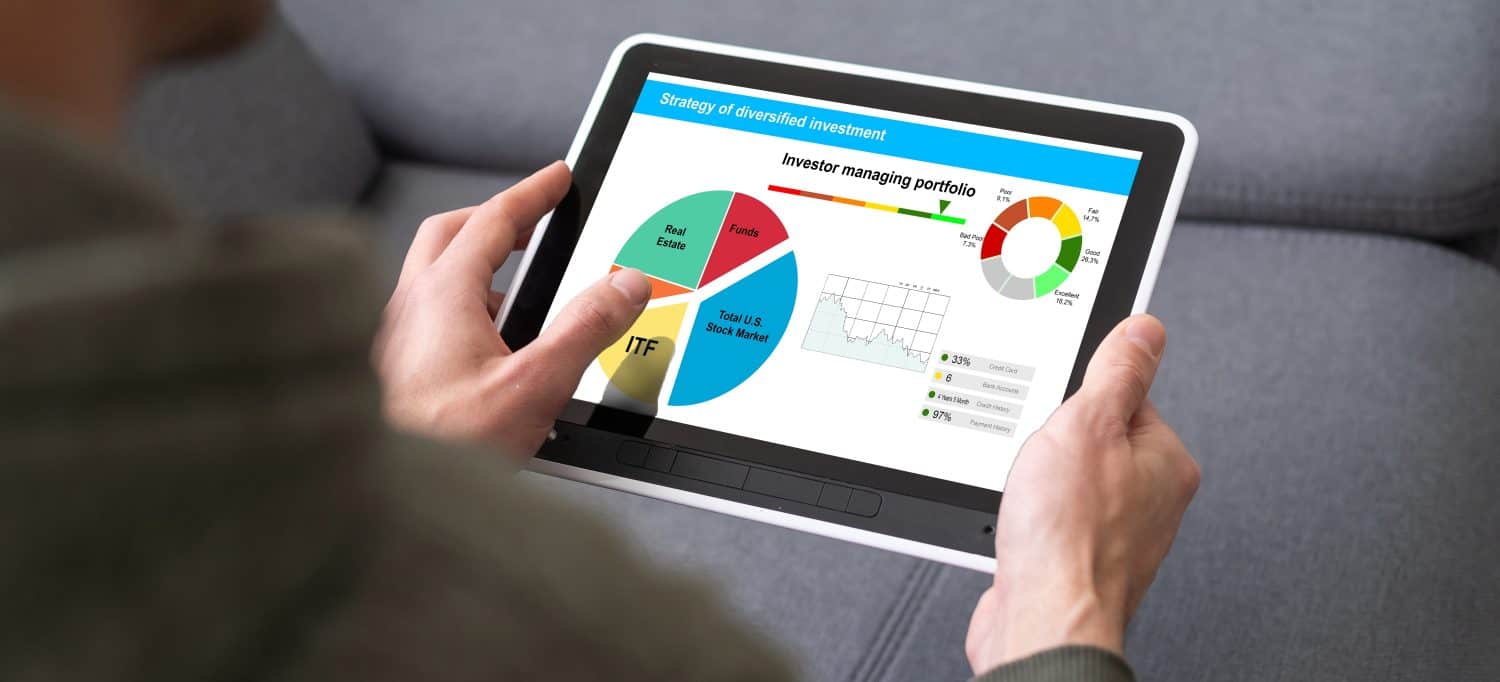
A young saver opens a Schwab account, picks the Schwab U.S. Large-Cap Growth ETF (NYSEARCA:SCHG) over a plain S&P 500 fund because they want a growth tilt at almost no cost, and assumes 197 holdings buys them diversification. The math says otherwise. SCHG’s top 10 names drive 59% of the portfolio, which means more than half of what SCHG does on any given day is determined by ten companies, not 196.
What SCHG actually owns
The fund tracks the Dow Jones U.S. Large-Cap Growth index, charges 0.04%, and holds $55 billion in assets. The pitch is straightforward growth exposure cheaper than peer large-cap growth funds. The return engine is simpler still. You own the largest U.S. companies that screen as growth, weighted by market cap, and ride whatever those names do.
Current weights tell you what you actually own. NVIDIA (NASDAQ:NVDA | NVDA Price Prediction) sits at 11.82%, with Apple (NASDAQ:AAPL), Microsoft (NASDAQ:MSFT), Amazon (NASDAQ:AMZN), and Alphabet (NASDAQ:GOOG) rounding out the top five. When someone pitches SCHG as “diversified large-cap growth,” what they mean in practice is a concentrated AI and mega-cap tech bet wearing a 196-stock costume.
Whether the concentration actually delivered
It has, until it hasn’t. Over the past year SCHG returned 26%, while VUG returned 29% and IWF returned 27%. Over five years SCHG’s 103% edges VUG’s 96% and IWF’s 97%. The three funds run the same race because they own essentially the same horses.
The engine has been uneven. Alphabet ran 133.58% over the trailing year and NVIDIA added 62.77%, while Microsoft, the third-largest holding, fell 8.5% over the same stretch and is down 13.49% year to date. The fund kept producing because two horses sprinted while one stumbled. That arithmetic flips when more than one stumbles at the same time.
The tradeoffs hiding inside a 196-stock fund
Run the scenario the way it actually plays out. Put $100,000 into SCHG and assume the top 10 holdings collectively fall 25% in a tech-led drawdown.
Roughly $14,300 of paper losses come from ten names alone, before the other 187 stocks contribute anything. Those 187 cannot pull you back, because together they account for less than half the portfolio.
Three constraints follow from that structure.
- Single-stock risk wearing index clothing. An NVIDIA earnings miss or a regulatory move against Alphabet hits SCHG harder than a holder skimming a fact sheet would expect. The top three holdings each account for more weight than entire sectors like healthcare, industrials, and financials.
- Correlation among the top names. NVIDIA, Microsoft, Amazon, and Alphabet are all AI-infrastructure plays now. When the AI capex narrative wobbles, they tend to wobble together, which is the opposite of what diversification is supposed to buy.
- A 0.04% expense ratio does not insulate you from any of this. Low fees protect compounding. Concentration risk is a separate problem the fee structure cannot solve.
Who SCHG fits and who should look elsewhere
SCHG makes sense as a deliberate growth tilt for an investor who understands they are buying mega-cap tech with a long tail attached, and who already owns something broader as the foundation. Pair it with a broad large-cap core fund for genuine breadth, or an equal-weight S&P 500 vehicle if you want to deliberately underweight the same names SCHG overweights.
The saver who picked SCHG because 197 sounded safer than 500 has the logic backwards. SCHG is a concentrated AI and platform-tech bet that has been right for a decade. That is a legitimate position to take. It is also a position worth taking deliberately.
Contact [email protected] for any questions or corrections.










 Top Gaining Stocks
 Top Losing Stocks