Should You Buy Solana Before the Alpenglow Upgrade?
Solana (CRYPTO: SOL) is trading at $84 today, down 42% from its January high and hovering just above the $68 low it hit in April. The Alpenglow upgrade—the biggest consensus replacement in Solana’s history—is now live in validator testing, with…

This post may contain links from our sponsors and affiliates, and Flywheel Publishing may receive compensation for actions taken through them.

Solana (CRYPTO: SOL) is trading at $84 today, down 42% from its January high and hovering just above the $68 low it hit in April. The Alpenglow upgrade—the biggest consensus replacement in Solana’s history—is now live in validator testing, with mainnet possible as early as Q3.
Almost every major Solana upgrade since 2023 has produced a price move before or after launch. The question now is whether the window to position ahead of this one is still open, or whether the risks around a delay outweigh it. We looked at what Alpenglow would do, what SOL could be worth if it launches on schedule, and what happens if it slips.
What Is the Alpenglow Upgrade and When Does It Go Live?
Alpenglow is set to be the biggest replacement Solana has ever attempted. It will swap out the current consensus system—a combination of Proof-of-History (PoH) and TowerBFT—for two new components: Votor, a faster voting protocol, and Rotor, a faster block distribution system.
The result will cut transaction finality from 12.8 seconds to roughly 150 milliseconds—faster than a standard Visa card authorization. Alpenglow will also free up roughly 75% of Solana’s block space by removing on-chain voting transactions, which puts downward pressure on fees.
After Solana developer Anza put Alpenglow live on a community test cluster on May 11, co-founder Anatoly Yakovenko said at Consensus Miami that mainnet could arrive “next quarter” if testing holds up.
Moreover, the Agave 4.1 software release is on track for Q3, with security audits to follow. Late Q3 to early Q4 is the most reliable window for mainnet activation—which is what makes the timing worth thinking about now rather than later.
What Could SOL Be Worth When Alpenglow Goes Live?
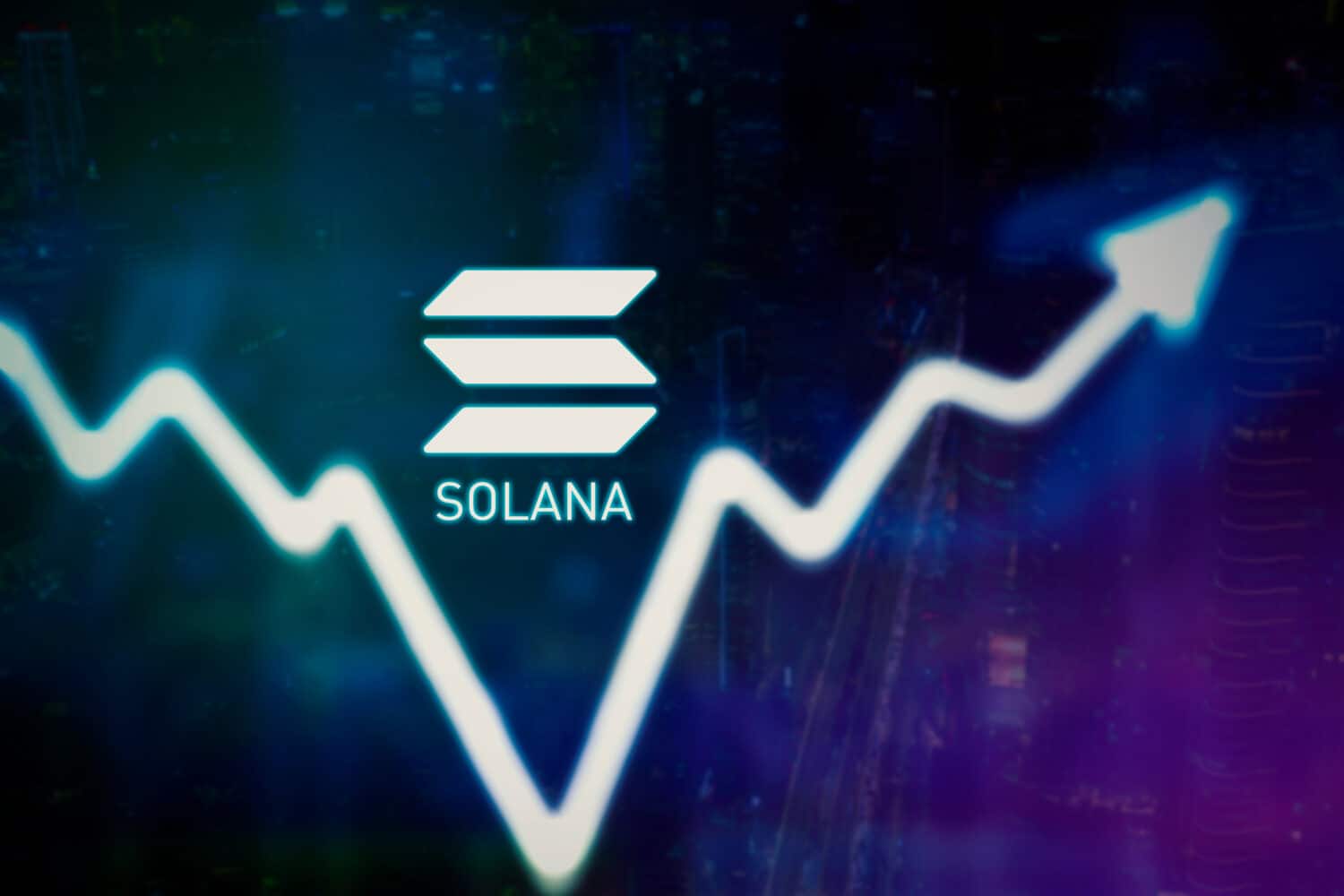
If Alpenglow launches on schedule in late Q3 and Bitcoin holds above $80,000, we think SOL has a real shot at reaching $100 to $150 around the mainnet event—a 19% to 79% gain from today’s $84, with the top of that range depending on the wider market.
That estimate is grounded in how SOL has moved on past upgrades. Firedancer’s December 2025 mainnet launch lifted the price about 6% in its first week, the Frankendancer debut in September 2024 produced a move of around 9%, and Solana’s 2023 Breakpoint event delivered a roughly 20% rally in under a week.
Those were validator-client and conference catalysts that moved the price somewhere between 6% and 20%. Alpenglow is bigger—it will replace the entire consensus layer—so the upgrade alone could push SOL toward the top of that historical range, call it $100 to $110.
That said, the Solana price getting to $130 to $150 takes more than the upgrade: it needs Alpenglow to launch as the trigger while a broader altcoin rally is already underway. That was the same type of market tailwind that turned past Solana upgrades into outsized runs. That combination is how the higher target comes into play, and it is also why it is a bull case rather than a base forecast.
The case for positioning now is that SOL is down 42% from its January high and barely moved on the May 11 testing news, which suggests the upgrade isn’t yet priced in. The catch is that none of this is guaranteed, and a delay would hurt as much as a launch would help.
What Happens if Alpenglow Gets Delayed?
Much of Solana’s recent recovery has been tied to expectations of faster transaction speeds and better network reliability. If those expectations disappoint, traders who bought in anticipation could take profits quickly, and the same “not yet priced in” setup that looks like upside on the way up works against the price on the way down.
So if Alpenglow slips into 2027 or launches with technical problems, SOL could struggle through the second half of 2026. The bigger risk is confidence: Solana has a history of network outages and validator concerns, and a messy rollout would feed straight into that.
If institutions read a failed or delayed launch as a reason to hold off deploying capital, the Solana price could fall back toward the $70 to $80 range—and further if Bitcoin weakens at the same time. A delay isn’t a remote scenario either, as consensus-layer replacements are exactly the sort of upgrade that gets delayed.
Should You Buy Solana Before Alpenglow?
Buying Solana before Alpenglow comes down to one judgment: whether you believe the upgrade goes live on time and without trouble. At $84, SOL is down 42% from its January high and the price barely flinched following the testing news, so buying here means getting in before the upgrade is priced in. That’s where past Solana cycles have paid off—but it cuts both ways, because a delay could drop the price just as fast.
If you trust the late-Q3 timeline, the current price is a decent place to get in. The signal that the timeline is holding would be the validator testing clearing without major bugs, with the Agave 4.1 release on track for Q3. If you’re not convinced, that signal is the one to wait for—it costs more once mainnet is locked in, but it removes the guesswork. Either way, this is a bet on execution rather than a sure thing, and a launch delay into 2027 is the downside to weigh against the upside.
Contact [email protected] for any questions or corrections.
Sam Daodu is a crypto analyst who's spent nearly a decade making blockchain understandable—no easy task when most whitepapers read like fever dreams. He writes for 24/7 Wall St., covering Bitcoin, altcoins, and crypto market analysis for investors. Before crypto, he was a tech writer (back when explaining "the cloud" was peak innovation). Since 2018, he's written for CoinTelegraph, Yahoo Finance, The Block, Cryptonews, Zypto, Rain, and more—basically anywhere people want crypto news without the headache. Sam runs MacLabs Marketing, a content agency for crypto brands tired of sounding like AI wrote their website. He also publishes free crypto education on his site for Web3 enthusiasts who think "gas fees" is a typo. When he's not writing or staring at charts, Sam's either: - Watching anime (currently convinced One Piece has better tokenomics than most altcoins) - At the gym sculpting himself into a Greek god - Listening to the music your mum warned you only bad boys listen to Connect: LinkedIn | Email | MacLabs Marketing