




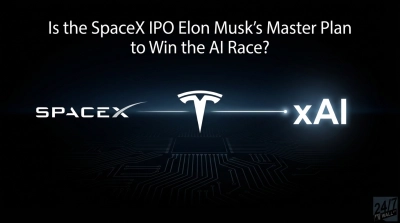
A recent episode of Moonshots with host Peter Diamandis focused on how SpaceX could become the largest IPO in financial history. SpaceX has filed paperwork for a $75 billion public offering at a valuation of $1.75 trillion. For context on scale, the panel noted the deal would be over 2.5 times larger than Saudi Aramco’s record IPO.
The prospectus breaks down SpaceX’s reported $28.5 trillion, a figure approaching the size of the entire current U.S. economy:
- Space-Enabled Solutions: $370 billion
- Starlink: $870 billion
- Starlink mobile: $740 billion
- X digital advertising: $600 billion
- AI infrastructure: $2.4 trillion
- Consumer Subscriptions: $760 billion
- MacroHard / Enterprise Applications (the Tesla partnership): $22.7 trillion
SpaceX Is Pitching Itself as AI Infrastructure
One of the more interesting parts of the Moonshots discussion was the argument that SpaceX does not appear interested in becoming another foundation-model company competing directly with OpenAI or Anthropic. Instead, the panel described the company as trying to become the infrastructure layer underneath the AI economy. “SpaceX AI seems relatively uninterested at this point in owning their own foundation model” and instead is “trying to transform itself into a Dyson Swarm version of Microsoft.”
According to the discussion, Anthropic is reportedly paying SpaceX $15 billion per year for access to Colossus 1 and Colossus 2 compute infrastructure. SpaceX is being paid by the foundation-model leader to host its compute. The implication is that SpaceX wants to become the landlord powering AI workloads rather than the application layer competing for end users.
That framing helps explain why the prospectus leans so heavily into cloud and infrastructure language familiar to capital markets, which would make the business more akin to hyperscale infrastructure businesses like Microsoft and Amazon. Microsoft currently carries a market value around $3.1 trillion, while Amazon sits near $2.9 trillion and continues investing heavily into Project Kuiper, now called Amazon Leo, as a direct Starlink competitor.
The Entire Thesis Depends on Launch Scale
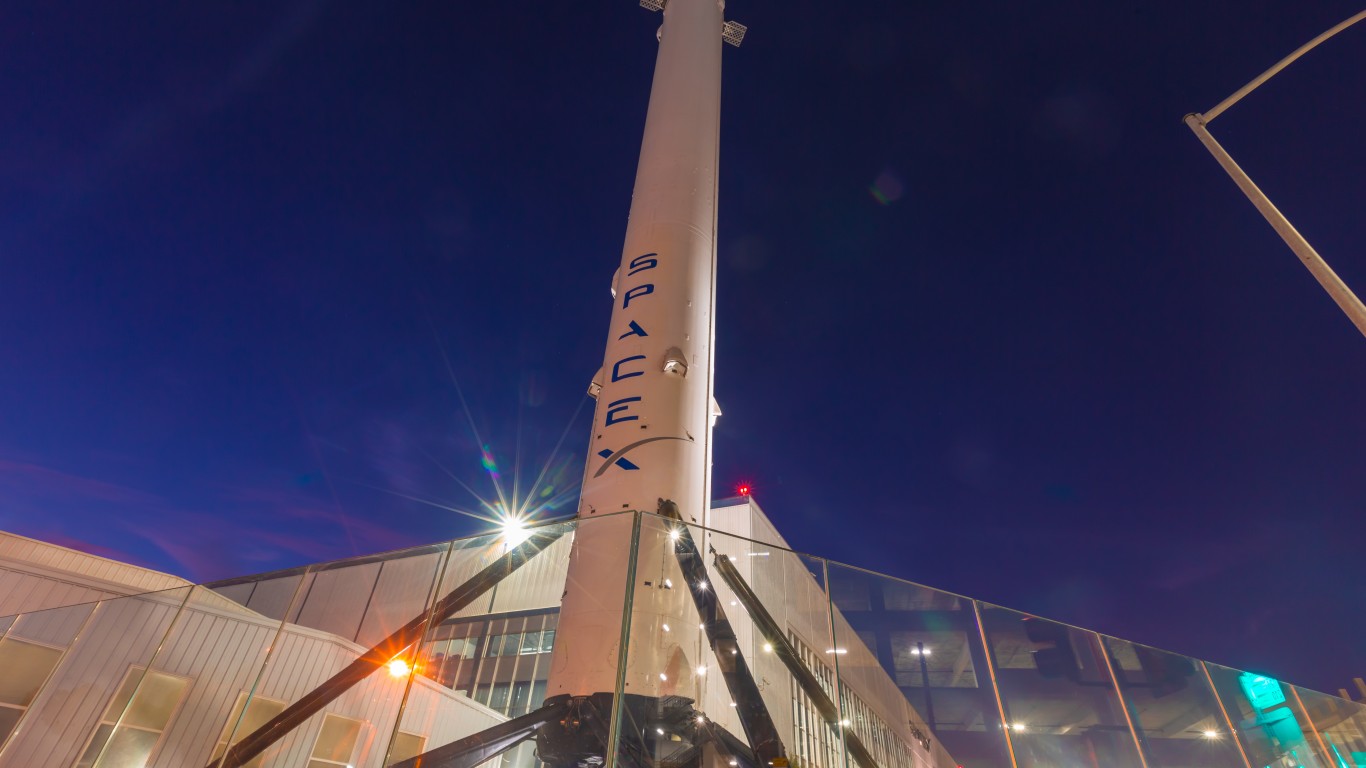
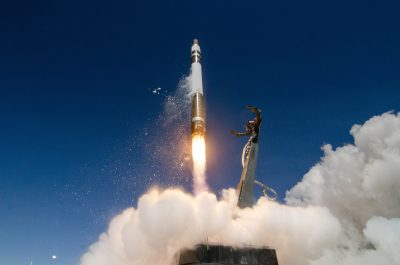
The SpaceX bull case ultimately comes down to launch cadence and physical infrastructure. Falcon 9 currently launches roughly every 2.5 days. The long-term Starship goal is to eventually launch once per hour. That difference in launch frequency is what supports many of the prospectus’s larger TAM assumptions.
Diamandis tied the opportunity directly to resource expansion beyond Earth. “What SpaceX is doing is opening up the space frontier, and everything we hold of value, you know, metals, minerals, energy, real estate, is in near infinite quantities in space,” he said during the segment.
The Tesla relationship adds another layer to the story because Tesla and SpaceX remain tightly linked through Elon Musk. Tesla (NASDAQ:TSLA | TSLA Price Prediction) carries a market cap of roughly $1.6 trillion, and prediction markets now reportedly assign a 92% probability that SpaceX’s valuation will surpass Tesla’s by June 30, 2026. Separate prediction market contracts also place roughly 34.5% odds on a formal Tesla-SpaceX merger announcement before year-end.

SpaceX’s prospectus appears designed to position the company as a foundational infrastructure layer for communications, AI compute, and, eventually, the broader space economy itself. Whether the $28.5 trillion TAM survives deeper scrutiny is a separate debate. The current goal appears to be making the story easy for mega-cap tech investors to understand and buy into.
Contact [email protected] for any questions or corrections.







 Top Gaining Stocks
 Top Losing Stocks