Forget Expedia: This Unstoppable Monopoly Is a Far Smarter Bet
Expedia Group (NASDAQ:EXPE | EXPE Price Prediction) is back in the spotlight after a 42.34% Q1 adjusted EPS beat and a freshly minted $5 billion buyback authorization that has the travel-rebound crowd piling back in. But here’s what you should…


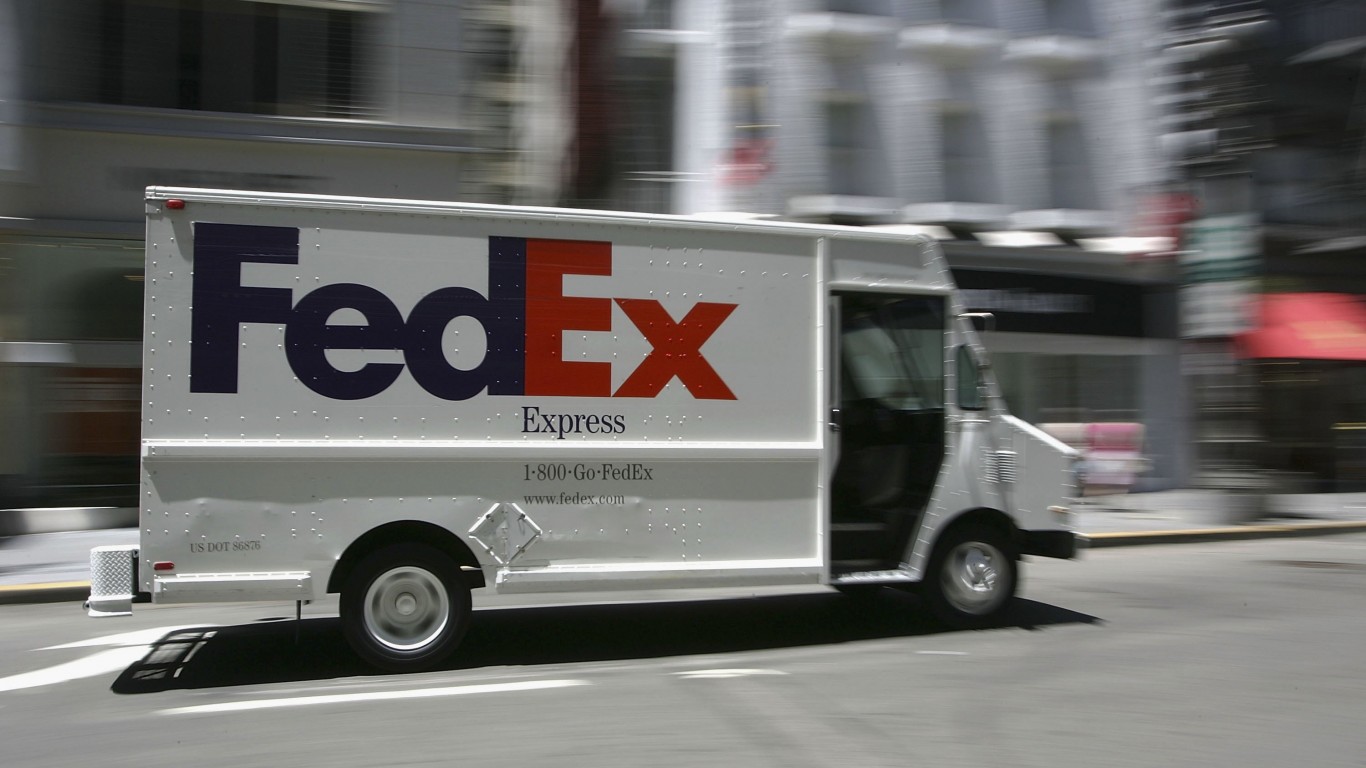
Expedia Group (NASDAQ:EXPE | EXPE Price Prediction) is back in the spotlight after a 42.34% Q1 adjusted EPS beat and a freshly minted $5 billion buyback authorization that has the travel-rebound crowd piling back in. But here’s what you should actually be watching: FedEx (NYSE:FDX), the irreplaceable logistics monopoly quietly compounding while everyone else chases hotel bookings.
The Case Against the Hot Ticker
Strip away the headline beat and Expedia’s quarter looks shakier than it reads. The company posted a -$6 million GAAP net income in Q1 2026 despite the adjusted fireworks, and trailing earnings are running -27.3% year over year. The balance sheet carries a debt-to-equity ratio of 5.19, with total liabilities of $24.623 billion against shareholders’ equity of just $1.836 billion.
The structural problem is worse. Expedia operates a commoditized online travel agency model competing with Booking, Google, Airbnb, and a wave of AI-powered search platforms. Management itself flags intense competition from OTAs, suppliers, search engines, and AI-powered platforms and dependence on search engine traffic as primary risks. The B2C segment crawled at 8% growth in Q1. Analysts are not buying the hype either: there are zero Strong Buy ratings on the stock, and shares are down 23.05% year to date.
The Redirect: An Infrastructure Moat You Cannot Replicate
FedEx is the opposite trade. While Expedia fights a saturated software war, FedEx owns physical infrastructure that no startup, no AI, and no aggregator can copy. Three reasons retirement-focused capital belongs here.
1. A true monopoly-like network. FedEx moves 17 million packages through its global network daily, generating an operational data platform competitors cannot reproduce. Q3 FY2026 delivered adjusted EPS of $5.25 against a $4.13 estimate, a 27% beat, on revenue of $24.00 billion. International Priority package yield expanded 11% to $66.16 per package. That is B2B pricing power in action.
2. A self-help story that keeps compounding. The DRIVE program has already delivered $4 billion in cumulative cost savings since FY2023, with another $1 billion-plus targeted in FY2026. Management has raised full-year guidance to adjusted EPS of $16.05 to $16.85, up from $14.80 to $16.00. The FedEx Freight spin-off scheduled for June 1, 2026 unlocks sum-of-parts value the market has not priced.
3. Cash return discipline retirees actually want. FedEx pays a $5.80 annual dividend after a 5% hike, repurchased roughly 10.9 million shares in FY2025 (about 4.5% of the float), and sits on $8.008 billion in cash. Capex is trimmed to no more than $4.1 billion, the lowest capital intensity in company history.
The Scoreboard
FedEx trades at a forward P/E of 17 with an analyst target of $400.96 and 16 Buy plus 2 Strong Buy ratings. Shares are up 34.46% year to date and 78.8% over twelve months while Expedia bled value.
The contrast is straightforward: an irreplaceable global shipping network with raised guidance, expanding cash returns, and a tangible spin-off catalyst weeks away stacks up favorably against a commoditized OTA fighting search-engine disintermediation. For investors weighing the two, the data favors the irreplaceable global shipping network over the commoditized travel platform.
Contact [email protected] for any questions or corrections.
Alex Sirois is a financial writer with experience spanning both retail and institutional investing. He has written for InvestorPlace and held roles at BNY Mellon and Bernstein, giving him a perspective that bridges Main Street portfolios and Wall Street analysis.
Alex holds an MBA from George Washington University and has built his career across multiple industries, including e-commerce, education, and translation — a breadth of experience that informs how he breaks down complex financial topics for everyday investors. His writing is conversational, actionable, and grounded in long-term, buy-and-hold investing principles.
At 247 Wall St., Alex focuses on delivering analysis that is both accessible and useful, with a clear emphasis on helping readers make more informed decisions with their money.