The AI Restraint Comes to Uber From an Unexpected Direction
AI is being pushed across many parts of corporate America and beyond, perhaps more aggressively in some places than others. Indeed, there’s a lot of hype building in the AI trade as investors await more signs of a monetization boom…

This post may contain links from our sponsors and affiliates, and Flywheel Publishing may receive compensation for actions taken through them.
AI is being pushed across many parts of corporate America and beyond, perhaps more aggressively in some places than others. Indeed, there’s a lot of hype building in the AI trade as investors await more signs of a monetization boom of sorts after a historic year for CapEx spend.
While time will tell if all the spending will pay off, I do think that for many companies, “flooring it” at any cost possible isn’t the way to go, even if it means spending first and making cuts to other parts of the business later. At the end of the day, every firm has unique needs and opportunities that AI can help unlock.
And, with that, companies are going to need to adjust their AI strategies in a way that makes the most sense. Whether that’s to prioritize ROI, which is what investors seem to want nowadays, or to take a step back in order to ensure that one stands to win the long game, I do think that restraint when it comes to AI spend might actually be an incredibly good thing and probably what the markets are asking for at a time like this when there’s a lot of uncertainty and perhaps even fear over swelling CapEx expenditures.
Why Uber is on the right path with its AI strategy
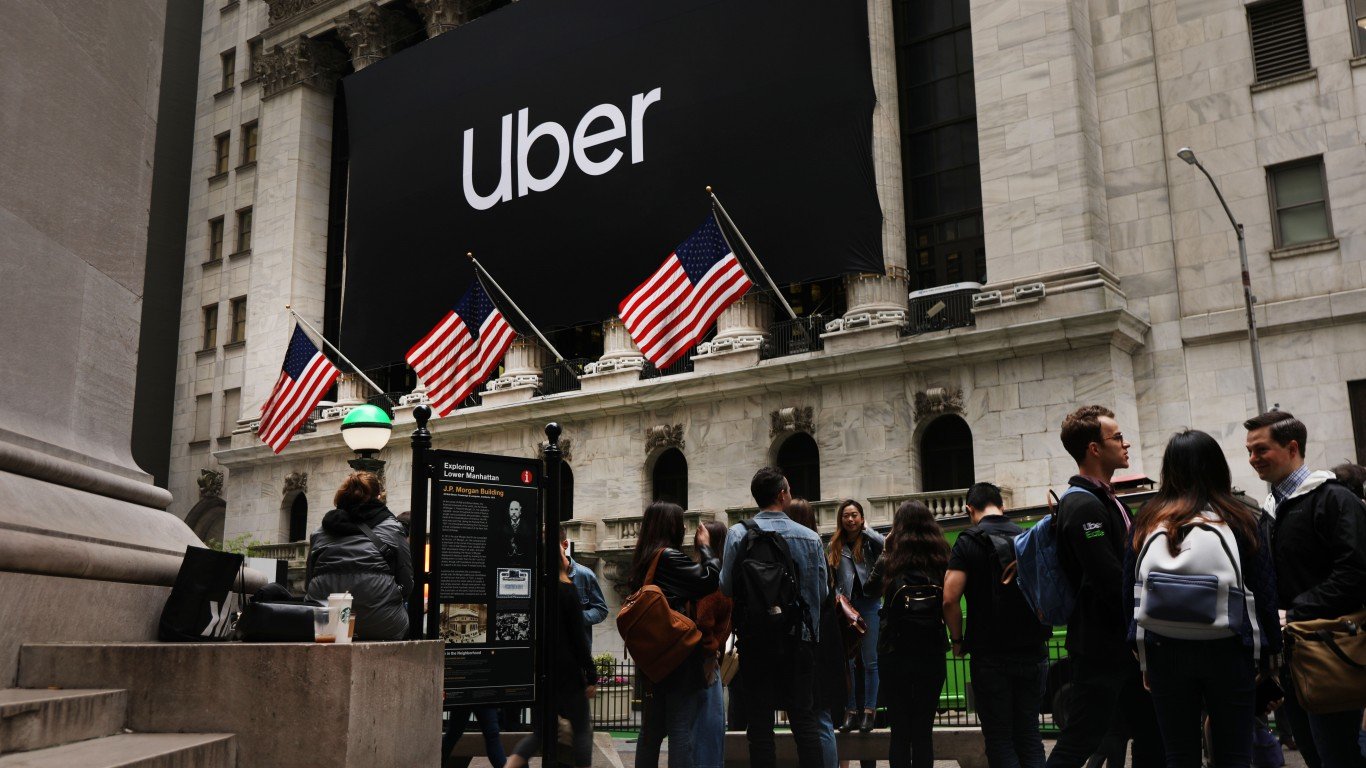
In any case, Uber (NASDAQ:UBER | UBER Price Prediction) seems to be more than willing to consider taking the foot off the pedal by just a little bit, a move that I think investors will welcome with open arms.
Uber’s president and COO, Andrew MacDonald, seems to think that all the AI spending is becoming “harder to justify.” And for many firms looking to adjust their longer-term AI strategies, he might be right on the money, especially in these earlier innings where being a faster mover in AI might actually come at the expense of ROI.
Either way, there’s a haze of uncertainty that might challenge the spend-aggressively-first-and-ask-questions-later mindset, especially since it’s become tougher to gauge the benefits in these earlier innings.
“I think over the coming quarters and years, maybe that will become clearer, but I think today it’s hard, even if some of the underlying metrics are trending in a really astronomical direction.” MacDonald said.
In my view, MacDonald is right on the money when it comes to Uber. It’s not a hyperscaler; it doesn’t need to scale up rapidly to meet the needs of a ton of clients embracing the AI shift.
Uber’s poised to find the sweet spot for AI spend. Other firms are bound to follow
As the AI benefits do come trickling in, Uber will be there to profit. But, in the meantime, I think that moving forward deliberately makes the most sense, especially since the company isn’t exactly going to see its economic moat challenged, even if it runs the risk of not being a frontrunner in AI adoption.
In my humble opinion, Uber fits the bill as a company that has the platform allowing for the stage to be set for the AI take-off, whenever it happens. And it’s this powerful, “moaty” platform that enables Uber to be a winner in AI without having to spend money hand over fist as some other firms might be doing these days.
The same can’t be said for other firms. Other firms looking to harness the power of AI might need to spend a bit more, while others ought to spend considerably less. When it comes to spending, there’s no one-size-fits-all amount, at least in my view. I believe that how and where AI is spent is far more important than how much is being spent.
For Uber, the big AI payoff lies in the rise of autonomous driving. But that doesn’t mean Uber drivers are going away anytime soon. By granting riders the option, Uber is the ultimate onramp. What’s more, though, is that it’s the same capital-light company it always was. It just has new technologies that stand to improve its sales growth and margin profile.
The bottom line
In my humble opinion, restraint when it comes to AI spend is a good thing. Not a sign of weakness, or a failed AI strategy, but a sign of a sound AI strategy focused on delivering real value over the long-term.
Apple (NASDAQ:AAPL) is a prime example of a company the market is rewarding right now for a solid, long-term-focused AI strategy. It’s not winning big because of its raw spend; it’s winning because its platform will prosper when the right time comes, and at a lower price of admission to the AI show than most other firms out there.
Contact [email protected] for any questions or corrections.
Joey is a 24/7 Wall St. contributor and seasoned investment writer whose work can also be found in publications such as The Motley Fool and TipRanks. Holding a B.A.Sc in Computer Engineering from the University of British Columbia (UBC), Joey has leveraged his technical background to provide insightful stock analyses to readers.
Joey's investment philosophy is heavily influenced by Warren Buffett's value investing principles. As a dedicated Buffett disciple, Joey is committed to unearthing value in the tech sector and beyond.