AMD’s $130,000 Decade: U.S. Chipmaker Rises from Near-Bankruptcy to AI Leader
Ten years ago, AMD (NASDAQ:AMD | AMD Price Prediction) was a punchline. The stock traded around $4.16 in June 2016, the company was bleeding share to Intel, and bankruptcy chatter was still fresh. Then CEO Lisa Su shipped the Zen…

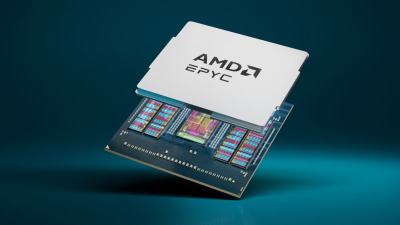
Ten years ago, AMD (NASDAQ:AMD | AMD Price Prediction) was a punchline. The stock traded around $4.16 in June 2016, the company was bleeding share to Intel, and bankruptcy chatter was still fresh. Then CEO Lisa Su shipped the Zen architecture, Ryzen launched in 2017, and EPYC began chewing through the data center.
The acquisition spree followed: Xilinx for roughly $49B in 2022 brought FPGAs and embedded, and ZT Systems closed in March 2025 for rack-scale AI systems. Then came the AI franchise itself. The MI300, MI350, and MI450 Instinct accelerators turned AMD into a credible NVIDIA alternative, capped by a 6-gigawatt OpenAI deployment and a Meta partnership for up to 6 GW of Instinct GPUs.
A 130x Decade, and the Last Year Was Wild Too
Here is what $1,000 invested in AMD would be worth as of June 3, 2026:
1-Year Return
- Initial Investment: $1,000
- Current Value: $4,625
- Total Return: 362.47%
- S&P 500 (same period): $1,265 (26.53%)
5-Year Return
- Initial Investment: $1,000
- Current Value: $6,650
- Total Return: 565.02%
- Annualized Return: 46.1%
- S&P 500 (same period): $1,785 (78.48%)
10-Year Return
- Initial Investment: $1,000
- Current Value: $130,413
- Total Return: 12,941.35%
- Annualized Return: 62.8%
- S&P 500 (same period): $3,587 (258.68%)
Holding through this was brutal. AMD got cut in half in 2022 on the PC and crypto bust, and again in summer 2025 when ~$800 million in MI308 export charges tanked Q2 margins. The stock bottomed near $117 last June before ripping to $542.52. Timing the entry mattered enormously; just sitting still mattered more. I’d put $1,000 into AMD today if you believe in the AI buildout.
The Bull Case, With Eyes Open
The bull case for AMD today rests on whether the AI buildout is real and AMD keeps converting Instinct design wins into shipped silicon. Q1 2026 revenue hit $10.25 billion, Data Center grew 57% YoY, and Q2 guidance points to ~$11.2B. With OpenAI, Meta, and Oracle all committed, the order book is genuine.
The bear case rests on valuation. The stock trades at a P/E of 204 and 73x forward earnings, with retail investors openly debating whether price has detached from earnings. Add China export risk and NVIDIA’s lead, and the margin for error is thin.
The balanced read: the thesis is intact, but after a 153% YTD run, I’d rather scale in than swing big.
Contact [email protected] for any questions or corrections.
Alex Sirois is a financial writer with experience spanning both retail and institutional investing. He has written for InvestorPlace and held roles at BNY Mellon and Bernstein, giving him a perspective that bridges Main Street portfolios and Wall Street analysis.
Alex holds an MBA from George Washington University and has built his career across multiple industries, including e-commerce, education, and translation — a breadth of experience that informs how he breaks down complex financial topics for everyday investors. His writing is conversational, actionable, and grounded in long-term, buy-and-hold investing principles.
At 247 Wall St., Alex focuses on delivering analysis that is both accessible and useful, with a clear emphasis on helping readers make more informed decisions with their money.