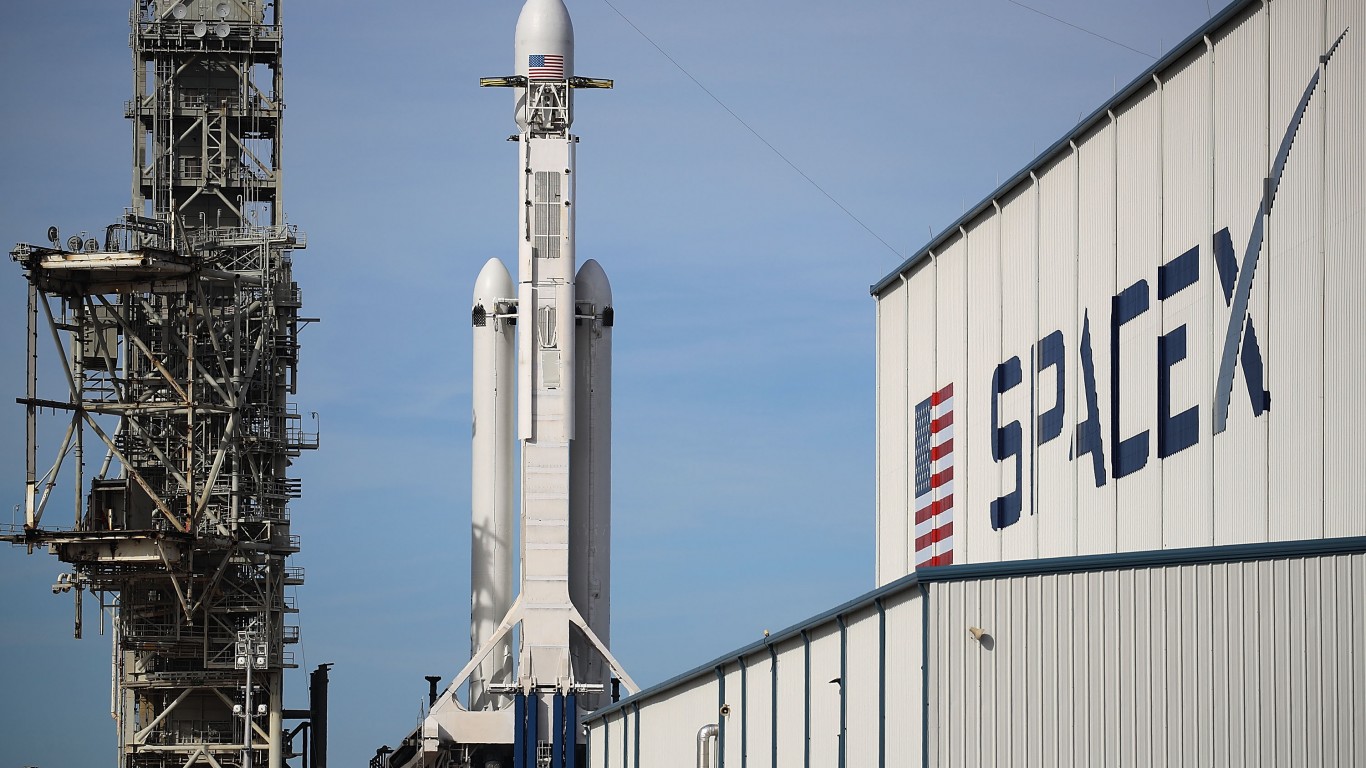
The S&P 500 Snubs SpaceX as Elon Musk Describes a Coming ‘Massive Growth Phase’
Elon Musk used a JPMorgan-hosted investor event this week to pitch SpaceX as entering a new chapter, telling Jamie Dimon that the company is “embarking on a massive new growth phase, and we need capital for that.” The IPO is…

Elon Musk used a JPMorgan-hosted investor event this week to pitch SpaceX as entering a new chapter, telling Jamie Dimon that the company is “embarking on a massive new growth phase, and we need capital for that.” The IPO is scheduled to price on NASDAQ on June 12, 2026. S&P Global declined to change its rules to fast-track SpaceX into the S&P 500, while NASDAQ agreed to do exactly that for its own benchmark.
Musk’s Pitch: Scale and Predictability
Musk framed the raise around two questions investors keep asking. Why now, and how stable is the revenue base? On the growth side, he cited plans for 100,000 satellites and space-based energy generation. On the durability question, he said, “Before, revenue was a little unstable. But now I feel like the revenue is much more predictable.” Starlink subscription revenue and a steadier launch cadence are the implied drivers behind that comment, addressing the historical lumpiness of contract-driven space revenue.
The Index Divergence at the Heart of the Story
NASDAQ agreed to fast-track SpaceX into the NASDAQ 100 within three months, rather than the standard one-year wait. S&P Global kept its traditional one-year requirement, with revenue and earnings conditions, meaning SpaceX has to earn its way in. CNBC’s Leslie Picker described the decision as “a blow to SpaceX by preventing it from fast entry into that benchmark,” contrasting it with NASDAQ’s quicker path.
Index inclusion forces passive funds to buy. NASDAQ’s fast-track sets up a near-term wave of required buying once SpaceX qualifies. The catch is that the S&P 500 has approximately 20 times more assets tracking it than the NASDAQ 100. Invesco QQQ Trust (NASDAQ:QQQ) is the most visible vehicle tracking the NASDAQ 100, and it has run hard, up 20.56% year to date through June 4 and 40.06% over one year, with concentrated weightings led by NVIDIA (NASDAQ:NVDA | NVDA Price Prediction) at 9.74%, Microsoft (NASDAQ:MSFT) at 8.63%, and Apple (NASDAQ:AAPL) at 7.95%.
The Incentive Question
A CNBC desk host laid out the structural read on why two index gatekeepers reached different answers: “NASDAQ has a financial incentive to put it in the index so that they can get the IPO right… So you have the people who do not have the incentive, are not doing it. The people who do have the incentive are doing it.” NASDAQ captures listing fees and trading volume. S&P Global, as an index provider, has no listing business at stake and held its standard rules.
Deal Architecture and What It Means for Investors
The offering looks engineered for index momentum. SpaceX is going public with a 4% float, and its S-1 confirms a 366-day lock-up covering 100% of the Founder’s shares, with Goldman Sachs & Co. LLC acting on behalf of the underwriters. As the desk host put it, “the deal creates this market of forced buyers very quickly after it goes public… they have this lockup structure to increase the float a bit quicker to make sure that it’s a bigger weighting into the NASDAQ 100.”
Retail access is built in. The S-1 names Charles Schwab, Fidelity, Robinhood, and SoFi as members of the selling group, and Fidelity lowered its account minimum to $2,000 for retail access to the allocation. Polymarket traders are pricing the listing as a near certainty, with the contract on a June 30, 2026, deadline trading at 99.4%.
The setup creates a two-tier dynamic for investors. NASDAQ 100 forced buying offers a near-term tailwind once the three-month clock runs, while the larger S&P 500 passive pool stays on the sidelines until SpaceX clears the revenue and earnings tests. The same engineered-scarcity features that can fuel early gains (tiny float, fast-track inclusion) also concentrate risk. SpaceX is not yet trading, the listing is days away, and S&P 500 inclusion remains conditional on the company meeting the standard requirements over the year ahead.
Contact [email protected] for any questions or corrections.
Thomas Richmond is a financial writer and content strategist with 5+ years of experience covering stocks and financial markets. He has published over 500 articles focused on individual stock analysis, helping investors better understand business fundamentals, stock valuations, and long-term opportunities.
Thomas previously served as a Content Lead at TIKR, a stock research platform, where he helped scale the company’s blog to hundreds of articles per month and contributed to a weekly newsletter reaching more than 100,000 investors.
Outside of work, Thomas enjoys weight lifting and soccer.