Craig Tindale: ‘The Financial Economy Is $400 Trillion, Only 1% Is Metals and Chemicals. That Table Has to Turn’
Craig Tindale walked into a debate with one of the most provocative capital allocation arguments of the year, and the physical bottlenecks he cites suggest the financial world may be running out of time to disagree with him.


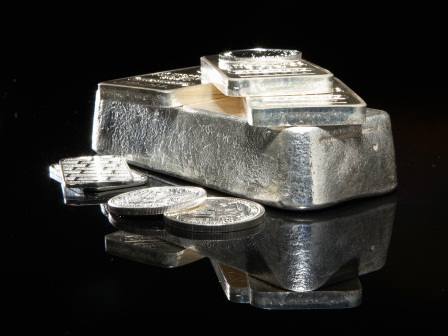
Craig Tindale walked into a debate on Adam Taggart’s Thoughtful Money show with one of the more arresting framings I’ve heard all year: "The financial economy in the US is about $400 trillion. I think we worked out, somebody worked out for me, 1% of that at the moment is metals and chemicals and refined products and all that kind of stuff. You know, that table has to turn."
That is the entire thesis in two sentences. Capital has piled into paper claims for decades while the physical economy that actually powers, builds, and maintains modern life has been starved. Tindale’s argument, debating Brent Johnson of Santiago Capital, is that the rebalancing has already begun and he is moving money "into that cycle, into the industrial economy and out of the financial economy."
The Scale Problem
Tindale’s $400 trillion number is directional rather than verified. The relevant data is real. M2 money supply alone sat at $22,804.5 billion as of April 1, 2026, the highest reading in the trailing 12-month window and a 90.9th percentile print. Inflation keeps grinding: CPI hit 332.4 in April 2026, up 0.6% month over month, and core PCE, the Fed’s preferred gauge, sits at 129.63, also a 90.9th percentile reading over the trailing year. More money, persistent inflation, and a relatively small physical-asset float create the asymmetry Tindale is leaning into.
The Three Bottlenecks
Tindale offered three pieces of physical evidence that supply cannot keep up with demand.
First, electrical infrastructure. "You can’t get transformers from Siemens for 5 to 6 years," he said, citing a €148 billion backorder. The underlying squeeze is real. The EIA’s Annual Energy Outlook 2026 projects U.S. electricity consumption growing 0.9% to 1.6% annually through 2050, with data center server electricity use growing more than 16 times by 2050 in the High Electricity Demand case.
Second, the AI power crunch. Tindale paraphrased Elon Musk warning that "everyone’s going to run out of electricity in the AI industry by the end of the year." The EIA itself flags that data center server demand grows fastest in the South Atlantic and West South Central census divisions, home to Virginia and Texas, which are already grid-constrained.
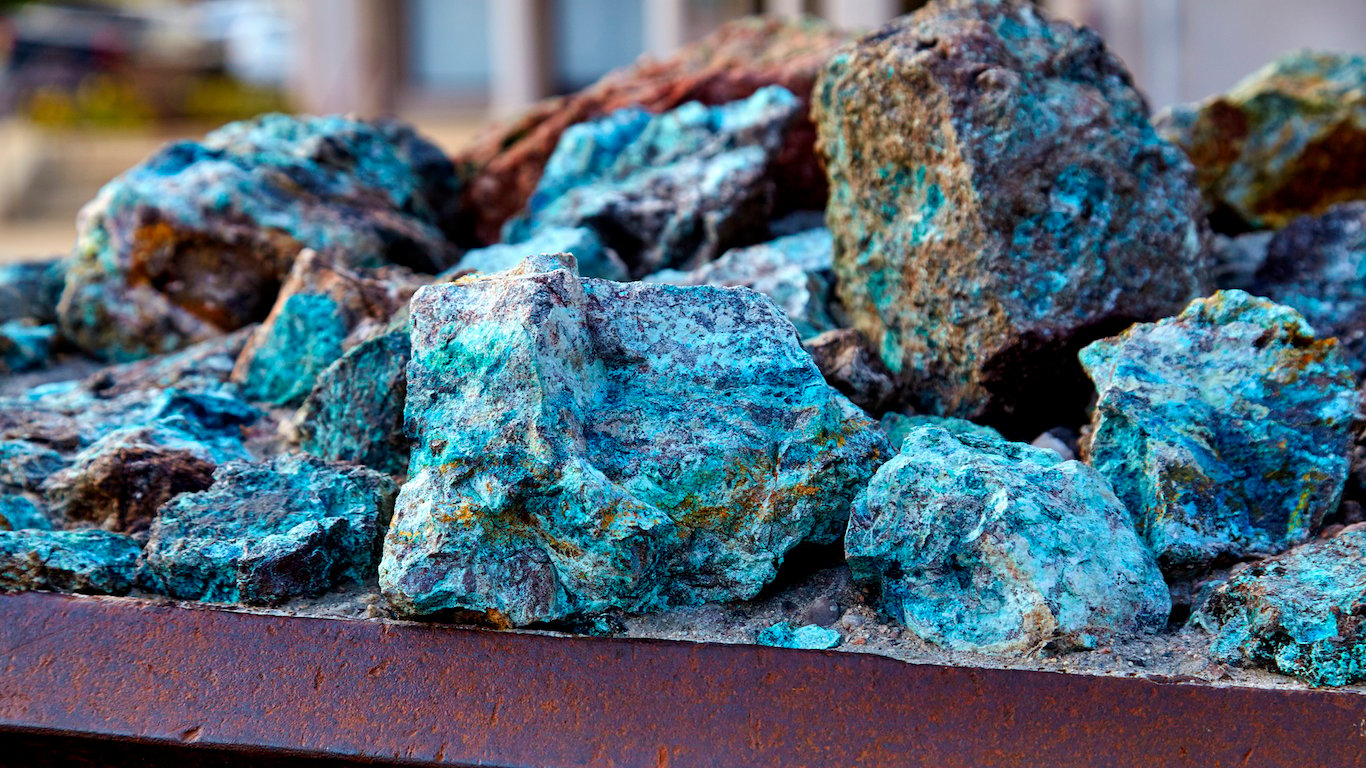
Third, the chemicals choke point. Even sulfuric acid furnaces, critical for copper and nickel mining, cannot be readily purchased due to customization backlogs. Copper prices tell that story: the global price hit $12,528.71 per metric ton in March 2026, up from $8,976.68 in January 2025. WTI crude has done the same: $97.63 on May 26, 2026, versus a 2025 May range of $59.42 to $65.04.
Johnson’s Qualified Pushback
Brent Johnson largely agreed with the direction. "We’re moving into a world that’s going to become more real as opposed to financialized," he said. He drew a line at the doom framing: "I see incredible challenges ahead of us, but there’s incredible opportunities too. And I think there is a danger in being overly bearish and overly apocryphal."
Johnson added two near-term wrinkles. Agricultural commodities look opportunistic. Abu Dhabi’s aircraft MRO hub, a critical node for wide-body maintenance, has a years-long backlog that could ground planes and tighten supply chains regardless of geopolitical headlines.
The Investment Read-Through
I’ve been reading energy and materials research for the better part of a decade, and the bottleneck signals Tindale is calling out are the kind of supply rigidity that creates durable pricing power. If you believe the rebalancing thesis, the read-through is sustained demand for industrial metals, electrical equipment makers, and miners. If you believe Johnson’s qualifier, you size the exposure rather than betting the farm.
The 10-year Treasury at 4.45% still offers a credible alternative to chasing every commodity narrative. That table Tindale wants to turn is heavy, and it will turn slowly. When transformers take half a decade to ship and copper has climbed to multiples of its 1990s range, the physical economy is demanding capital loudly.
Contact [email protected] for any questions or corrections.
I've been writing about stocks and personal finance for 20+ years. I believe all great companies are tech companies in the long run, and I invest accordingly.