One Factory to Rule Them All: How Musk’s Terafab Could Rewrite the Scale of U.S. Chip Production
The global race for artificial intelligence supremacy is rapidly becoming a race for semiconductor manufacturing capacity. AI models require vast amounts of computing power, data centers are consuming more chips than ever, and governments increasingly view semiconductor production as a…

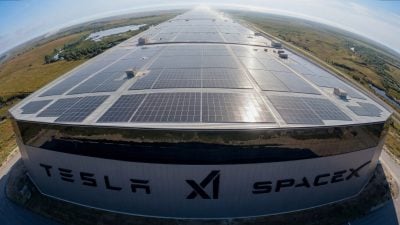
The global race for artificial intelligence supremacy is rapidly becoming a race for semiconductor manufacturing capacity. AI models require vast amounts of computing power, data centers are consuming more chips than ever, and governments increasingly view semiconductor production as a matter of national security.
Against that backdrop, Elon Musk has unveiled perhaps the most ambitious manufacturing proposal yet: a single U.S. facility capable of dramatically expanding domestic chip output at a scale the industry has never seriously attempted in one location. If it works, it could reshape the competitive landscape for decades.
A Factory Designed Around Extreme Scale
According to Musk, the proposed Terafab facility would span roughly 100 million square feet. That is about 10 times larger than Gigafactory Texas, already one of the world’s largest manufacturing facilities. Musk has framed the project as a direct answer to structural semiconductor constraints, stating that “fundamentally, Terafab is about scale.”
The scale extends far beyond the building itself. Musk says the facility would generate 1 terawatt of chip output annually. From a logic chip perspective, that translates to approximately 1 billion chips per year. But that is just the high-performance compute chips. The full-scale target is a staggering 100 billion to 200 billion total chips annually.
Musk suggested current U.S. fabrication capacity sits at roughly 0.5 “terawatt-equivalent” of chip output per year. In that framing, a fully scaled Terafab could double national production from a single site.
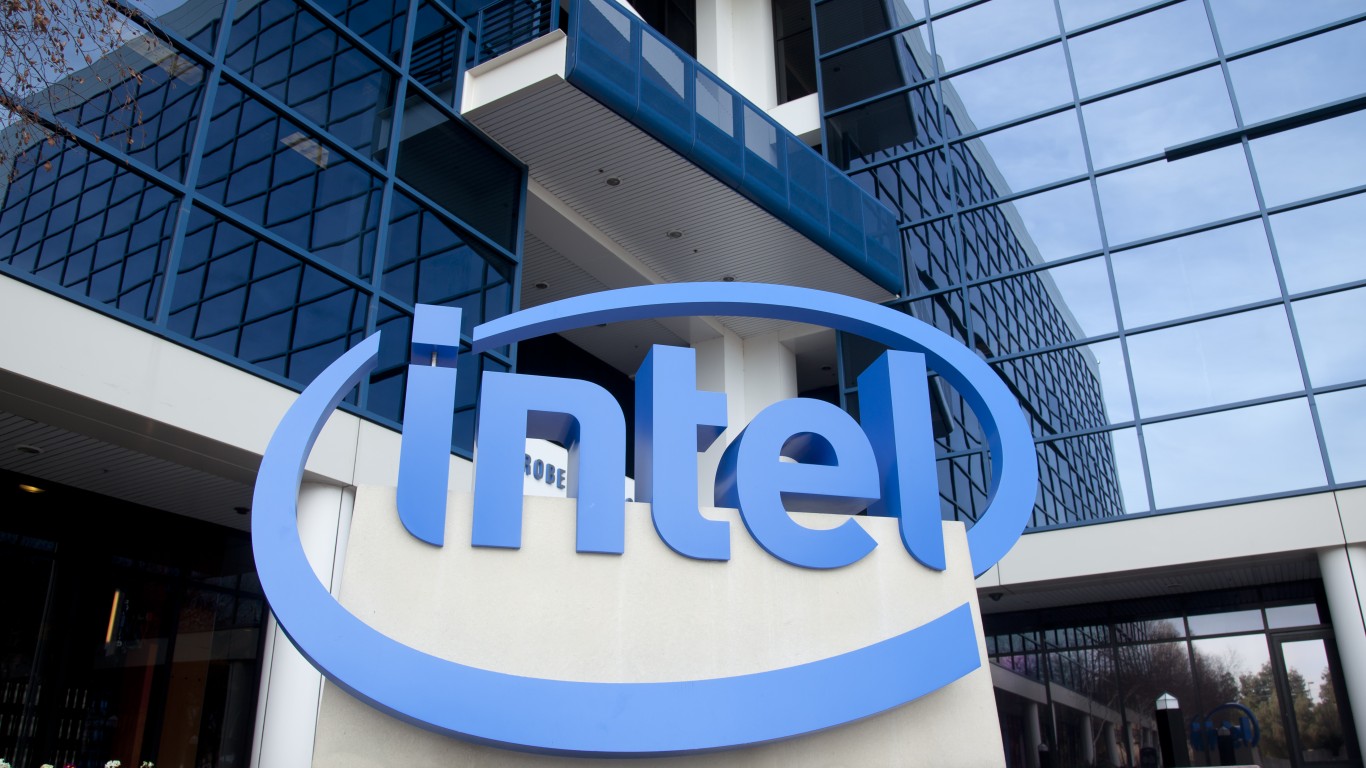
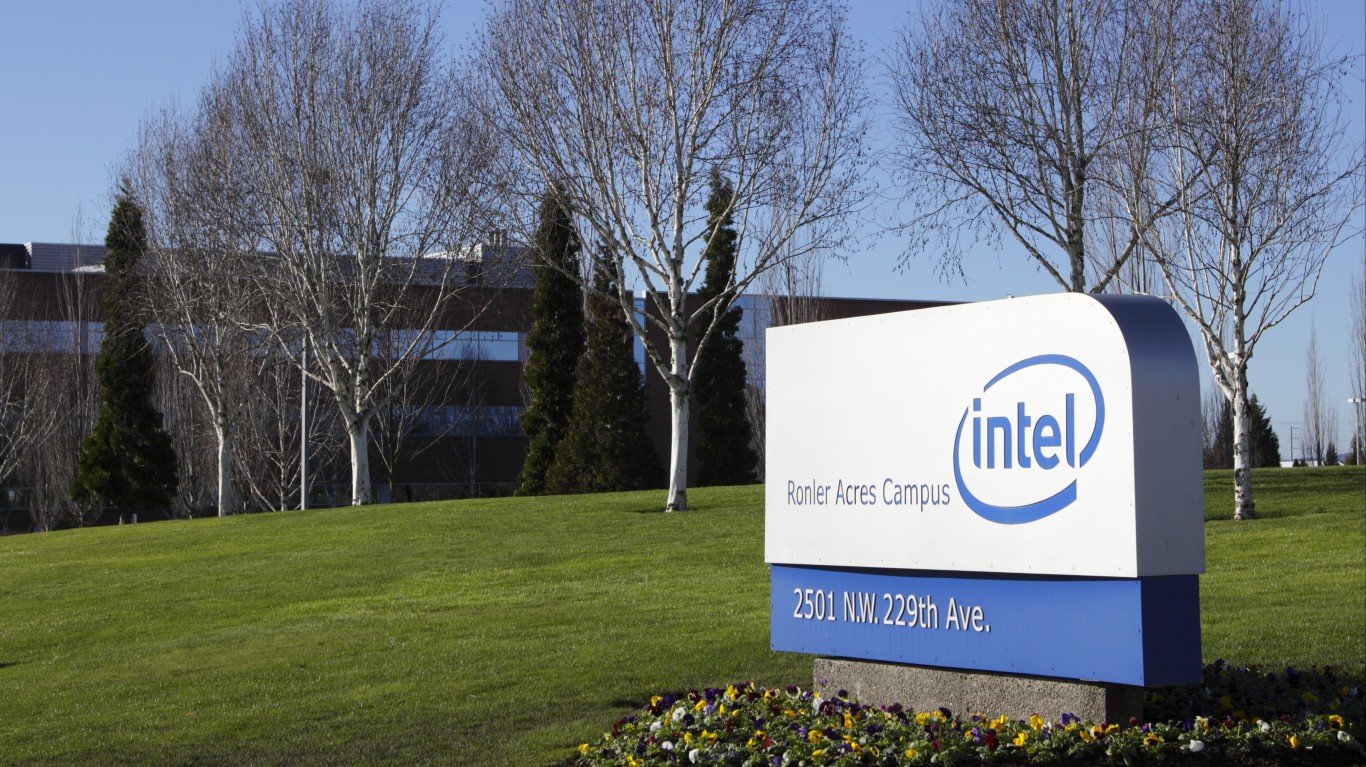
That would put the facility in direct competition with global leaders in advanced manufacturing, including Taiwan Semiconductor Manufacturing (NYSE:TSM | TSM Price Prediction), Samsung Electronics, and Intel (NASDAQ:INTC), which officially joined Terafab as its primary foundry partner on April 7, 2026, committing its advanced 14A process node to the project.
Formal Structure and the Intel Partnership
Terafab is formally structured as a joint venture between SpaceX, Tesla, and xAI. That context matters: in February 2026, SpaceX acquired xAI in an all-stock transaction that valued the combined entity at $1.25 trillion, making it the world’s most valuable private company. The merger was driven in part by Musk’s ambition to build orbital data centers, a concept that sits at the heart of Terafab’s longer-term rationale.
Intel’s role in the project is substantial. The company is contributing its 14A process node and advanced packaging capabilities to the consolidated Texas campus. For Intel, the deal represents the most significant external foundry contract in its history and hands the company the marquee anchor customer it has sought since pivoting to a foundry-first strategy. Tesla is the first major customer committed to Intel’s 14A technology, which is expected to deliver a 15% to 20% performance improvement over Intel’s prior 18A node along with a 30% increase in transistor density.
The confirmed site for the facility is the former Gibbons Creek Reservoir in Grimes County, Texas, roughly 70 miles northwest of Houston. Grimes County commissioners voted 4-1 on June 3, 2026 to approve a reinvestment zone designation and a 100% property tax abatement for the project. SpaceX CFO Bret Johnsen signed the finalized tax agreement on June 22, 2026, legally committing SpaceX to invest at least $5 billion in the county by 2030 and create at least 1,800 full-time jobs by 2035.
Supply Is Not the Only Constraint
AI infrastructure demand continues to scale aggressively, with hyperscalers expanding training clusters and inference capacity across cloud platforms. Tesla’s autonomy stack, SpaceX’s satellite network, and the xAI compute operations all represent internal demand channels that could absorb substantial portions of production. According to Musk, all current fabrication facilities on Earth only produce about 2% of what his conglomerate of projects needs, “and we need the chips, so we’re going to build the Terafab.”
That creates a structural difference from past chip cycles. Rather than relying on external customers to justify capacity, Terafab is designed to serve a vertically integrated ecosystem spanning vehicles, robotics, AI training, and long-duration compute systems tied to Musk’s “data centers in space” concept. Musk has said roughly 80% of Terafab’s compute output will ultimately be directed toward orbital infrastructure, with the remaining 20% for ground-based applications.
Is It Achievable?
The enormity of such an undertaking comes with significant practical hurdles. Cost is the primary one. Official filings with Grimes County show the first phase alone carries an estimated price tag of $55 billion, with the full buildout potentially reaching $119 billion. Separate estimates from Bernstein analysts suggest building enough chip capacity for a full terawatt of annual compute would cost between $5 trillion and $13 trillion across the broader supply chain. That gap illustrates how far the project must travel from its current phase to its stated ambition.
Musk is not targeting 100 billion chips from the outset. Initial production is set at 100,000 wafers per month, with the first chips expected in late 2027 and volume manufacturing targeted for 2028. Even at that relatively modest starting point, sourcing the necessary labor, materials, and equipment presents real challenges.
The equipment bottleneck is particularly acute. A 100,000 wafer starts per month leading-edge fab typically requires around 20 extreme ultraviolet lithography (EUV) machines, which only ASML (NASDAQ:ASML) manufactures. Scaling to 1 billion chips per year would require somewhere between 50 and 100 EUV machines, and a fully ramped Terafab could need as many as 400. ASML shipped 48 EUV lithography systems in all of 2025, up from 44 in 2024, and the company is working to grow that annual output to 60 systems in 2026 and 80 in 2027. The math alone illustrates the supply chain challenge: acquiring several hundred machines from a manufacturer with a current annual run rate well below 100 units is a multi-decade undertaking.
Key Takeaway
The Terafab story is about redefining what “production” means when logic equivalence, total chip volume, and vertically integrated demand all converge in one place. The formal site approval in Grimes County and Intel’s confirmed 14A foundry commitment represent the first concrete anchors beneath a vision that has, until recently, existed primarily as a presentation.
The signal for the broader semiconductor industry is clear even if execution remains highly uncertain. Musk is positioning Terafab as an attempt to rebuild the chip supply chain around his own technology ecosystem rather than participate in the existing market. Whether that becomes a structural shift in global chip economics, or an overextended ambition constrained by physics, capital, and a single-source equipment vendor, will depend entirely on execution over the next decade.
Editor’s note: This article has been updated to reflect the confirmed Terafab site in Grimes County, Texas, the official cost disclosures of $55 billion for the first phase and up to $119 billion for the full buildout, Intel’s April 2026 confirmation as primary foundry partner using its 14A process node, Grimes County’s June 2026 tax abatement approval and SpaceX’s signed agreement, the February 2026 SpaceX-xAI merger valued at $1.25 trillion, and the late 2027 initial production target with volume manufacturing expected in 2028.
Contact [email protected] for any questions or corrections.
After two decades of patrolling the dark corners of suburbia as a police officer, Rich Duprey hung up his badge and gun to begin writing full time about stocks and investing. For the past 20 years, he’s been cruising the markets looking for companies to lock up as long-term holdings in a portfolio while writing extensively on the broad sectors of consumer goods, technology, and industrials. Because his experience isn’t from the typical financial analyst track, Rich is able to break down complex topics into understandable and useful action points for the average investor. His writings have appeared on The Motley Fool, InvestorPlace, Yahoo! Finance, Money Morning, and, of course, 24/7 Wall St. He has been featured in both U.S. and international publications, including MarketWatch, Financial Times, Forbes, Fast Company, and USA Today.