Microsoft Signs 20-Year Power Deal With Chevron Showing How Far AI’s Energy Needs Have Grown
CNBC’s Brian Sullivan walked viewers through a landmark energy agreement that paints the picture for how much electricity the AI buildout actually needs. Chevron has signed a 20-year power purchase agreement with Microsoft to supply natural-gas-fired electricity to a Microsoft…


CNBC’s Brian Sullivan walked viewers through a landmark energy agreement that paints the picture for how much electricity the AI buildout actually needs. Chevron has signed a 20-year power purchase agreement with Microsoft to supply natural-gas-fired electricity to a Microsoft data center in far west Texas, about an hour southwest of Odessa. According to Sullivan, the project will deliver 2.7 gigawatts of capacity, roughly the equivalent of two million homes’ worth of power, and represents “one of the first we’ve seen of its kind, certainly of its size, by Chevron.”
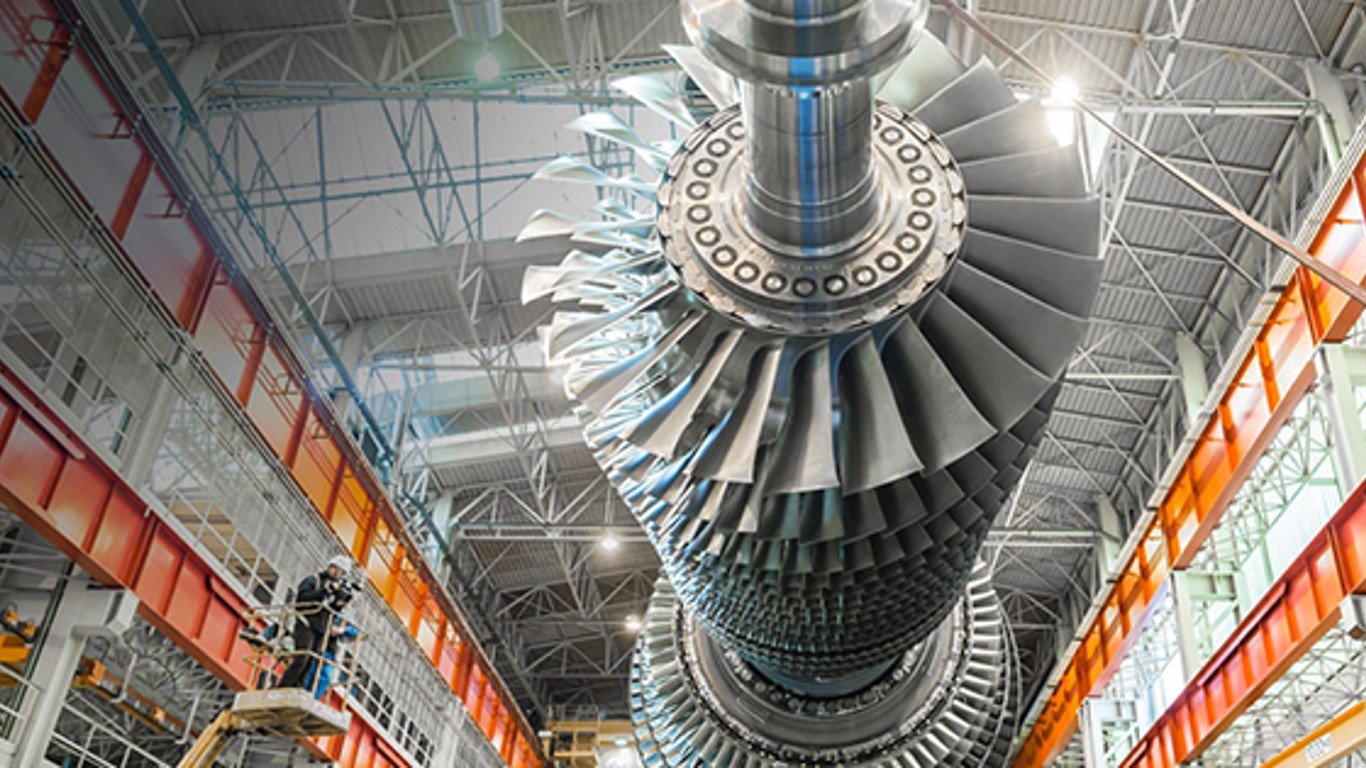
Four publicly traded names sit at the center of the project: Chevron (NYSE:CVX | CVX Price Prediction), Microsoft (NASDAQ:MSFT), GE Vernova (NYSE:GEV), and Caterpillar (NYSE:CAT). Sullivan noted that Caterpillar and GE Vernova supply the turbines that convert natural gas into electricity for the facility, while Chevron supplies the molecules from its Permian Basin position.
What the Deal Looks Like in the Filings
In its Q1 2026 8-K, Chevron disclosed an “exclusivity agreement with Microsoft” and Engine No. 1 for a power generation project in West Texas. The branded version, Project Kilby, will be operated through Chevron’s Energy Forge One LLC in partnership with Joulent, targeting a Final Investment Decision by the end of 2026 and delivering first power in 2028. According to Chevron’s press release, the project’s local impact figures include over $10 billion in expected tax revenue and almost 2,000 jobs.
For Chevron, this is a meaningful new growth wedge on top of an already-strong operating base. CEO Mike Wirth said, “2025 was a year of significant achievement. We successfully integrated Hess, started up major projects, delivered record production, and reorganized our business.” The company posted record full-year 2025 production of 3,723 MBOED, $33.9 billion in operating cash flow, and a 39th consecutive annual dividend increase. Shares closed at $173.63 on June 18, up 22.08% over the past year.
Why Microsoft Is Locking Up Power for Two Decades
The scale of Microsoft’s AI infrastructure spend explains the urgency. Satya Nadella told investors that “our AI business surpassed an annual revenue run rate of $37 billion, up 123% year-over-year.” Capital expenditures hit $30.88 billion in fiscal Q3 2026, up 84.39% year over year, with commercial remaining performance obligations of $627 billion. Shares trade at $379.40, down 21.2% year-to-date, as investors weigh capex intensity against future AI returns.
Other Picks-and-Shovels Beneficiaries
GE Vernova and Caterpillar are the most direct beneficiaries of agreements like this. On Q1 2026 results, GE Vernova CEO Scott Strazik said, “Our Q1 Electrification orders to data centers were more than full-year 2025 results,” with total Q1 orders of $18.3 billion and gas power gigawatts under contract growing sequentially from 83 to 100. Shares climbed 22.44% in the past week to $1,109.73, and 127% over one year.
Caterpillar CEO Joe Creed announced on the same earnings cycle that “Power generation grew 48%, driven by strong demand for large gensets and turbines used in data center applications with an increasing mix towards prime power,” and disclosed a new 2.1 gigawatt prime power agreement, the sixth of at least one gigawatt. Caterpillar stock sits at $985.82, up 176.97% year over year.
The Natural Gas Backdrop and What to Watch
Brian Sullivan framed the macro pressure bluntly: “The demand for natural gas from the United States, unfortunately and kind of sadly, will only go up.” He connected that to a major natural gas facility in Qatar that was damaged in March, with an attempted restart reportedly exploding on the day of his report, reinforcing the value of domestic supply. Henry Hub spot prices are near $3.06/MMBtu as of mid-June 2026, elevated relative to the 2024 baseline, following a brief January 2026 spike to $30.72/MMBtu.
Traditional oil and gas companies are increasingly becoming infrastructure providers for AI data centers, while equipment suppliers benefit from years of contracted demand. Investors should watch for a final investment decision by year-end, potential opposition from West Texas communities over water and land use, and whether other energy producers follow Chevron’s lead by signing long-term power agreements tied to the growing AI investment cycle.
Contact [email protected] for any questions or corrections.
Thomas Richmond is a financial writer and content strategist with 5+ years of experience covering stocks and financial markets. He has published over 500 articles focused on individual stock analysis, helping investors better understand business fundamentals, stock valuations, and long-term opportunities.
Thomas previously served as a Content Lead at TIKR, a stock research platform, where he helped scale the company’s blog to hundreds of articles per month and contributed to a weekly newsletter reaching more than 100,000 investors.
Outside of work, Thomas enjoys weight lifting and soccer.