AI Bottleneck Leads to 300% Pricing Surge: Is GE Vernova Still a Top Stock to Buy?
Power has become the bottleneck in the AI buildout. CNBC’s Seema Mody walked the floor of GE Vernova‘s (NYSE:GEV | GEV Price Prediction) 400-acre South Carolina plant on June 24, 2026, and her reporting captured the single most important pricing…

This post may contain links from our sponsors and affiliates, and Flywheel Publishing may receive compensation for actions taken through them.

Power has become the bottleneck in the AI buildout. CNBC’s Seema Mody walked the floor of GE Vernova‘s (NYSE:GEV | GEV Price Prediction) 400-acre South Carolina plant on June 24, 2026, and her reporting captured the single most important pricing signal in the energy supercycle: gas turbine pricing has risen roughly 300% over the last three years, with the order book sold out for years.
That single data point reframes the GE Vernova thesis. Here is what investors need to take away.
Inside the World’s Largest Gas Turbine Plant
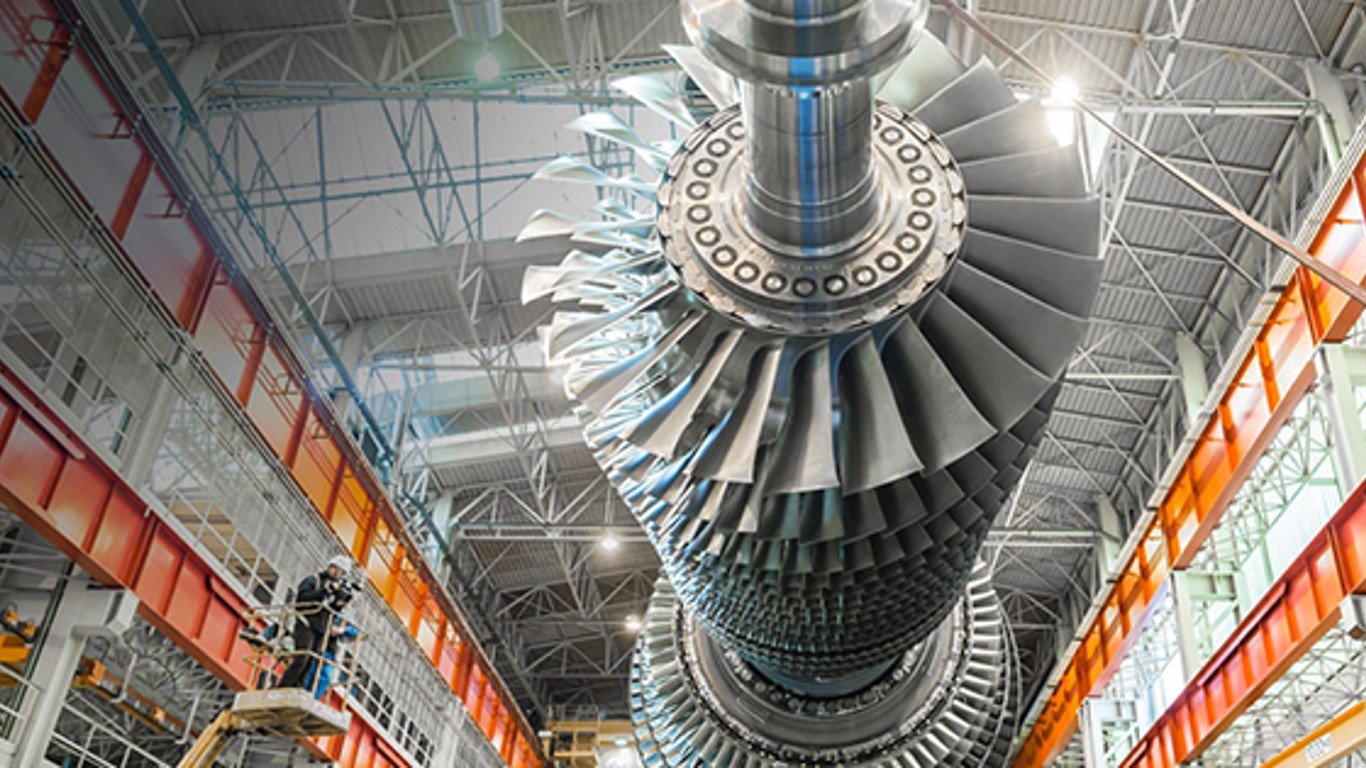
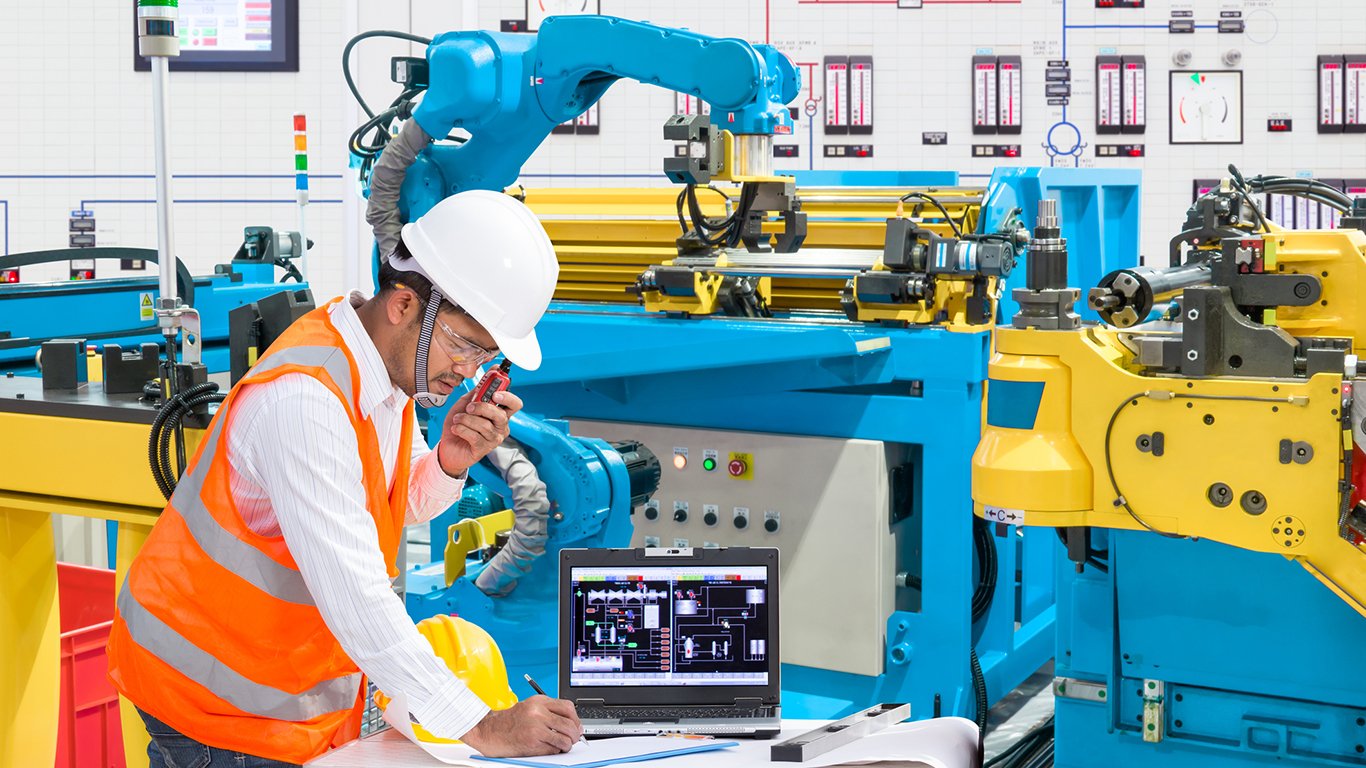
The machine at the center of Mody’s segment is GE Vernova’s most powerful gas turbine. It is roughly 30 feet long, weighs about 280 tons, uses controlled explosions to spin its rotors, and generates enough electricity to power about half a million homes. Hyperscalers are buying them in fleets.
The marquee example: Microsoft recently bought seven of these turbines for its Texas data center project, totaling roughly 2.7 gigawatts of capacity. That aligns with the Microsoft and Chevron Project Kilby announcement, a 2.67 gigawatt facility in West Texas tied to a 20-year power purchase agreement using GE Vernova turbines, with first power expected in 2028.
The demand picture goes well beyond Microsoft. According to Mody’s reporting, executives from every hyperscaler, including OpenAI’s head of power, have walked the floor to vet the plant’s output. The order book is full through 2029, with orders extending to 2031. A GE executive in the segment acknowledged the supply-demand imbalance and pointed to higher manufacturing throughput and lean discipline as the response.
The Numbers Behind the Surge
The pricing power shows up in the financials. In Q1 2026, GE Vernova reported revenue of $9.30 billion, up 15.8% year over year, with orders of $18.30 billion, up 71% organically. The Electrification segment alone booked $2.4 billion in data center equipment orders in the quarter, more than all of 2025. Gas Power combined backlog and slot reservations moved from 83 GW to 100 GW, with management targeting at least 110 GW by year-end 2026.
CEO Scott Strazik framed it directly in the Q1 2026 release: “Demand is accelerating for our Power and Electrification solutions from a diverse set of customers, with our backlog growing by more than $13 billion quarter-over-quarter.” Management raised 2026 guidance to $44.5 to $45.5 billion in revenue, 12% to 14% adjusted EBITDA margin, and $6.5 to $7.5 billion in free cash flow.
Investor Lens: Is GEV Still a Top Stock to Buy?
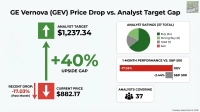
The stock has already priced in much of this. Shares trade at $1,066.01 as of June 24, 2026, with a market cap near $303 billion. GEV is up 58.65% year to date and 107.6% over one year. Valuation sits at 33x trailing earnings and 40x forward (as a note, trailing earnings were inflated by one-time sale benefits, so forward earnings are a better measure for GEV), with analyst sentiment skewed positive: 6 Strong Buy, 23 Buy, 7 Hold, 0 Sell ratings, and a $1,211.72 average target. Bernstein recently initiated with an Outperform rating and a $1,206 price target.
Bull case: a multi-year sold-out backlog, demonstrated pricing power, hyperscaler validation across every major buyer, and 2028 targets of $56 billion in revenue at a 20% EBITDA margin. Natural gas remains the cheapest, most deployable bridge fuel for AI campuses that cannot wait on grid interconnect queues.
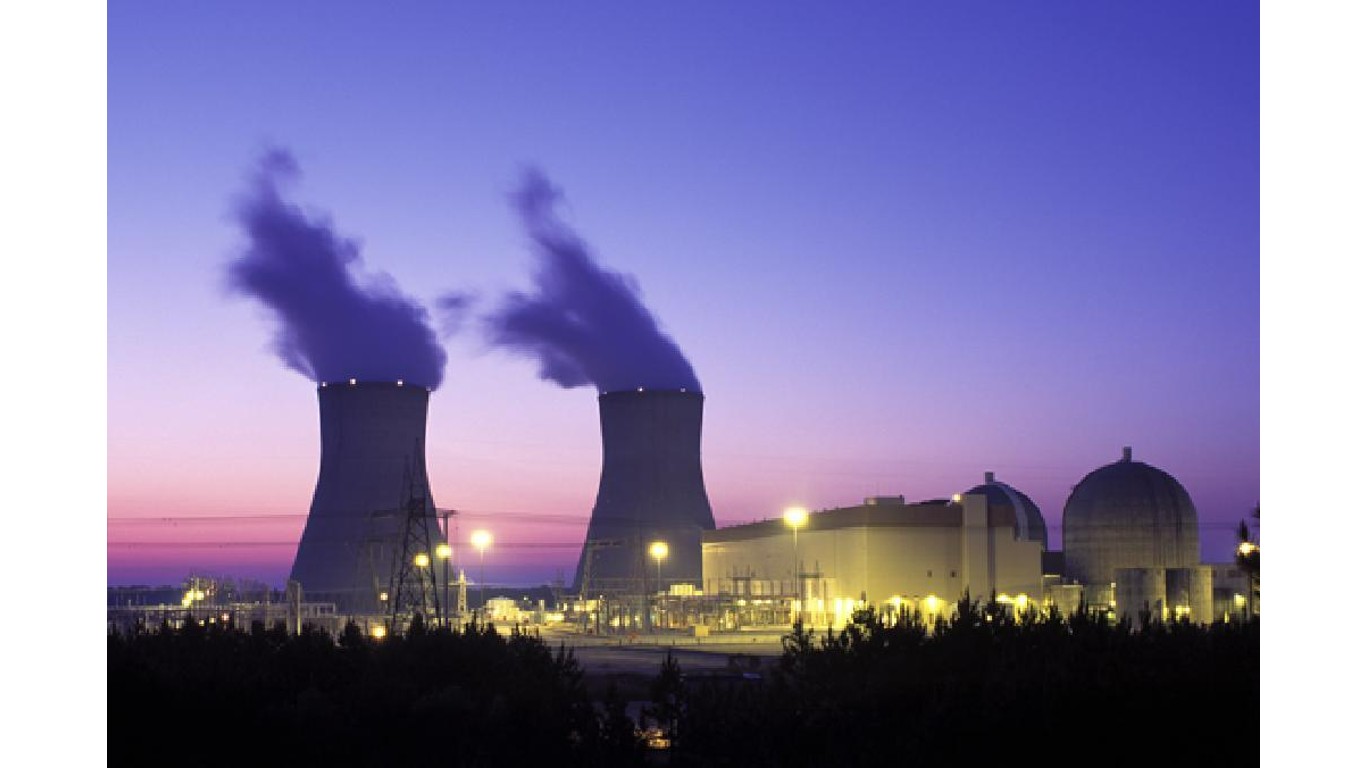
Risk case: the stock’s five-year return of 691.87% leaves little room for execution slips. The Wind segment is still guided to roughly $400 million in EBITDA losses in 2026. Demand visibility past 2031 thins out as small modular reactors and other nuclear options come online. Recent retail sentiment has cooled from bullish on May 26, 2026 to bearish by June 9, 2026, and shares fell 7.32% on June 23 on broader AI-infrastructure risk-off flows.
Power generation has become the choke point of the AI arms race, and GE Vernova sits at the narrowest part of that funnel through the end of the decade. The question for investors is whether a sold-out 2029 justifies paying for the uncertain 2032.
Contact [email protected] for any questions or corrections.
I've spent more than 15 years inside enterprise software, working alongside the finance, sales operations, and HR leaders who run the revenue engines at some of the largest tech companies in the country.
My day job is helping enterprise executives make smarter decisions about retention, compensation, and growth. These are the same operational levers that show up in every earnings report investors actually read. That perspective shapes my writing for 24/7 Wall St.
The headline numbers are easy. The interesting stuff is underneath: how companies make money, what executives are worried about, and what any of it means for the person checking their 401(k) on a Sunday afternoon. I write about personal finance and business as someone who has spent her career inside the rooms where these decisions get made.