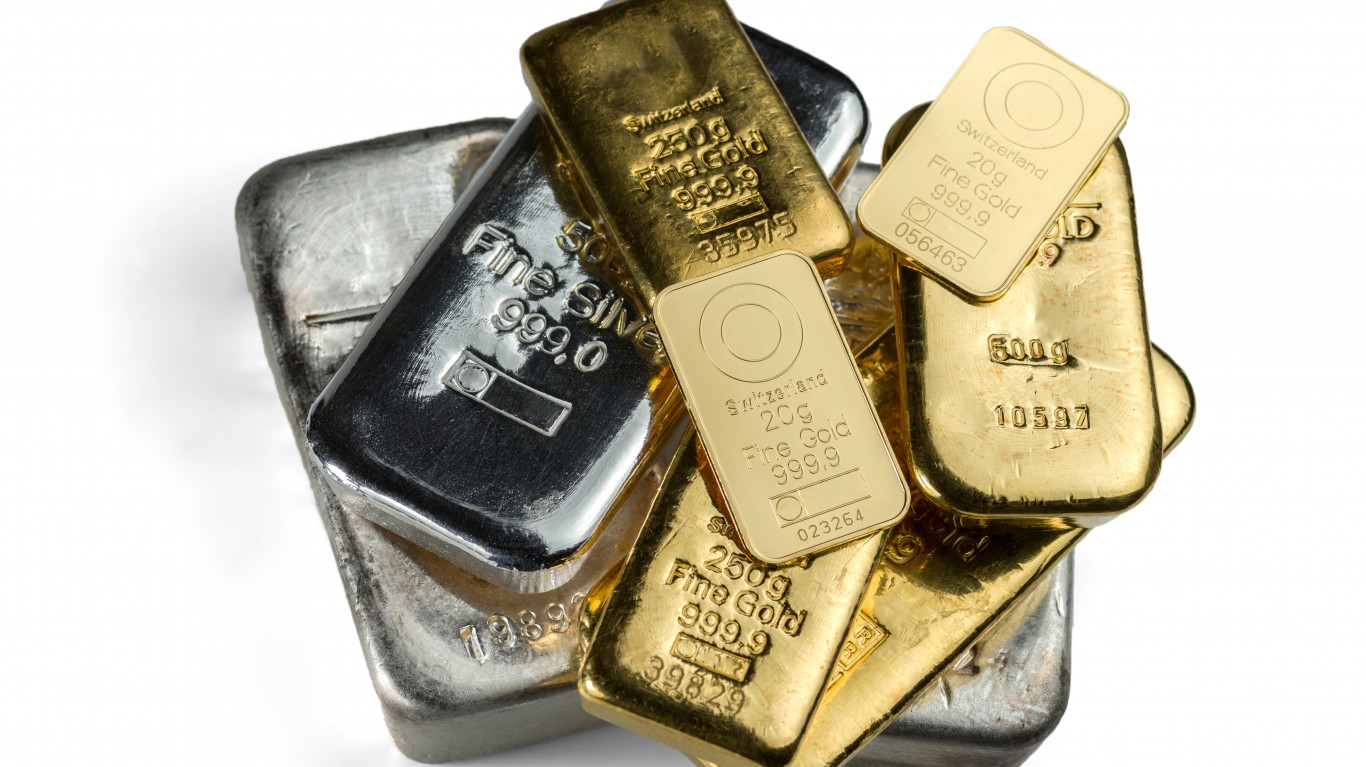
Platinum Is Down 6% While Gold Hit Record Highs and One Quiet ETF Sits at the Bottom of a Setup Most Investors Are Missing
Price ratios often operate akin to rubber bands: if the ratio starts to increase, the rubber band may get stretched, but will snap back to achieve its baseline of minimal tension. The principle of the slingshot takes this concept into…

This post may contain links from our sponsors and affiliates, and Flywheel Publishing may receive compensation for actions taken through them.

Price ratios often operate akin to rubber bands: if the ratio starts to increase, the rubber band may get stretched, but will snap back to achieve its baseline of minimal tension. The principle of the slingshot takes this concept into projectile weapons: the projectile is pulled further back, creating even greater tension, so that the snap back of the rubber bands will be even more dynamic and that force and velocity is what weaponizes the projectile. The gold-to-platinum ratio is reaching a state of disparity comparable to that of slingshot pulled all the way back and waiting to be triggered and released.
The abrdn Platinum ETF Trust (NYSE: PPLT) is in the middle of one of the strangest setups in the precious-metals complex. Gold continues printing record highs. Platinum, on the other hand, has rolled over, and PPLT, the largest physically-backed platinum vehicle on US exchanges, is down almost 18% year to date – even after a 10-for-1 forward split that took effect May 18, 2026. That price divergence is the main justification for PPLT holders right now. The gold-to-platinum ratio is sitting near a multi-decade extreme, and any ratio normalization tends to be violent in PPLT’s favor. Once platinum snaps back, it will rocket out of the gate like a stone out of a slingshot.
PPLT’s Physical Metal Holdings, Trust Structure, and Why It Matters

Headquartered in Edinburgh, Scotland in the UK, Aberdeen Standard Investments (abrdn) is an investment management company trading on the London Stock Exchange. PPLT is an abrdn conrolled grantor trust that holds physical platinum bars in JPMorgan vaults. This means no futures roll, no K-1, and no equity beta from a mining operator – it is a pure play physical platinum investment – rock over paper. Investors get the platinum spot price minus a 0.6% expense ratio. Shares trade around $15.37 today as of the time of this writing, down from a split-adjusted peak above $21 in February. Even after that drawdown, the one-year return is still about 28%, and the five-year return is roughly 58%. This is a fund that ripped, gave back a chunk, and is now being re-rated against a gold price that refuses to quit, as hoarding from central bankers and institutions continue.
Prospective investors need to be aware of tax concerns before they decide to take a position in PPLT. The trust is treated as a collectible. Therefore, gains on sale are taxed at the 28% federal collectibles rate for US investors, not the long-term capital-gains rate. That changes the after-tax math versus a platinum-miner equity fund. This is the single biggest structural footnote most new PPLT buyers miss.
The Gold-Platinum Ratio, and Why It Will Inevitably Snap Back
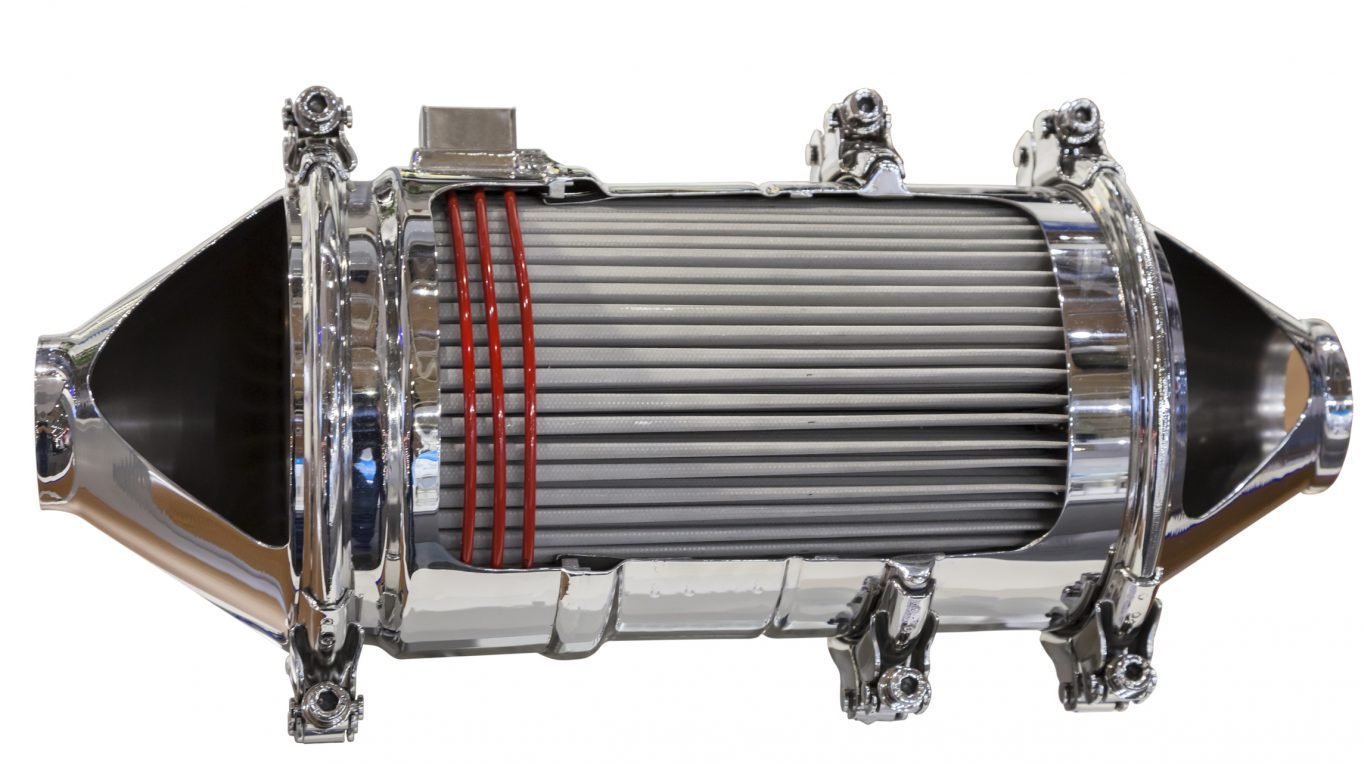
If one wishes to see the historical gold-platinum ratio, the basic rule of thumb is: LBMA gold price divided by the LBMA platinum price,as published daily by the London Bullion Market Association. Gold, at present trades at between 2 to 2.5X platinum, one of the widest spreads in 50 years. This is despite platinum being the rarer metal in the earth’s crust and having industrial demand gold lacks. Not unlike silver and copper, platinum has a number of industrial applications, including the manufacture of hydrogen fuel cells, electrolyzers, and catalytic converters for gas-powered vehicle emissions.
Historically, the ratio has normally compressed back toward 1.0 to 1.5 after stretching this far, and PPLT is the cleanest expression of that mean reversion.
What to watch as a trigger signal: once a sustained move in the ratio below 2.0 is identified, this would be the alert that the trade is in effect. The underlying driver to monitor is the World Platinum Investment Council’s quarterly Platinum Quarterly bulletin, which has now flagged a fourth consecutive annual supply shortfall, with deficits projected through 2029. Between bulletins, the EIA and South African mining reports matter because stagnating South African mine production is the supply story. South Africa supplies as much as 75% of global platinum annually, followed by Russia and Zimbabwe. It is estimated that global platinum supply shortfalls in 2026 alone may run as high as 297,000 oz.
The US Dollar Is The Wild Card In The Deck

Because PPLT owns platinum bullion outright rather than futures, the dominant risk for PPLT is the US dollar. Platinum is priced in dollars globally, so a stronger DXY index price mechanically compresses the NAV of PPLT regardless of supply fundamentals. Bearish analyst notes earlier this spring tied PPLT’s pullback explicitly to high interest rates and a strong US dollar, and the most recent one-month return of down about 12% is in sync with that pressure.
The transmission is direct: every basis point of real-yield decline relative to the dollar tends to flow through to bullion ETFs within days. Watch the CME FedWatch tool for rate-cut probabilities and the Treasury’s weekly real-yield curve. Bank of America Securities has a 2026 target of $2,450 per ounce on platinum, and that forecast assumes the Fed is cutting by the second half of the year.
There are two signals that will alert sharp-eyed investors that the snap back is in motion:
- The gold-platinum ratio breaking below 2.0 on the LBMA fix;
- The next WPIC Platinum Quarterly confirming that the deficit has not narrowed materially.
Other ETFs combine platinum with other precious metals or rare-earth minerals. PPLT remains the purest single-metal play if the spread is the trade one wants to own.
Contact [email protected] for any questions or corrections.
After 15 years on Wall Street with 7 of them as Director of Corporate and Municipal Bond Trading for a NYSE member firm, I started my own project and corporate finance consultancy. Much of the work involves writing business plans, presentations, white papers and marketing materials for companies seeking budgetary allocations for spinoffs and new initiatives or for raising capital for expansion or startup companies and entrepreneurs. On financial topics, I have been published under my own byline at The Motley Fool, 247wallst.com, DealFlow Events’ Healthcare Services Investment Newsletter and The Microcap Newsletter, among others. Additionally, I have done freelance ghostwriting writing and editing for several financial websites, such as Seeking Alpha and Shmoop Financial. I have also written and been published on a variety of other topics from music, audiophile sound and film to musical instrument history, martial arts, and current events. Publications include Copper Magazine, Fidelity (Germany), Blasting News, Inside Kung-Fu, and other periodicals.