$900 Billion Just Vanished as Korean Chip Stocks Crater, but the Squawk Crew Isn’t Sold on an AI Breakdown
Four straight down sessions have erased more than $900 billion in equity value, with the proximate cause tracing to Seoul. The Kospi fell nearly 10% in its worst session in years, and SK Hynix and Samsung both plunging more than…


Four straight down sessions have erased more than $900 billion in equity value, with the proximate cause tracing to Seoul. The Kospi fell nearly 10% in its worst session in years, and SK Hynix and Samsung both plunging more than 12% the day after SK Hynix overtook Samsung as Korea’s most valuable company. Layered on top is record margin debt of roughly $25 billion (38.5 trillion won) by the end of May. Korean retail had leaned into the rally with both hands when the selling hit.
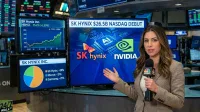
On CNBC’s Squawk on the Street, Carl Quintanilla walked the panel through whether this was an AI demand inflection or a positioning unwind. David Faber read it this way. “It’s not clear that we’re seeing anything that truly is reflective of that, of undermining the overall growth of the AI ecosystem in the sense of spending being cut back.” Sara Eisen agreed the capex picture is intact while acknowledging the tape, noting “the demand is there and the capex is still growing strong, but there’s a little bit more scrutiny… especially around the mag-7, which has lag now several days in a row.”
The memory mix-shift that lit the fuse
Kristina Partsinevelos zeroed in on the trigger. “SK Hynix had just overtaken Samsung as Korea’s most valuable company just yesterday, and part of it also is a report that SK Hynix is slowing its next generation high bandwidth memory for chips to make more commoditized DRAM… where shortages have actually pushed prices up.” That translates plainly. The highest-margin, AI-coded product in the memory complex (HBM) is seeing a producer divert capacity to a cyclical commodity where pricing is ripping. Bulls read that as opportunistic. Bears read it as a tell on AI memory order books.
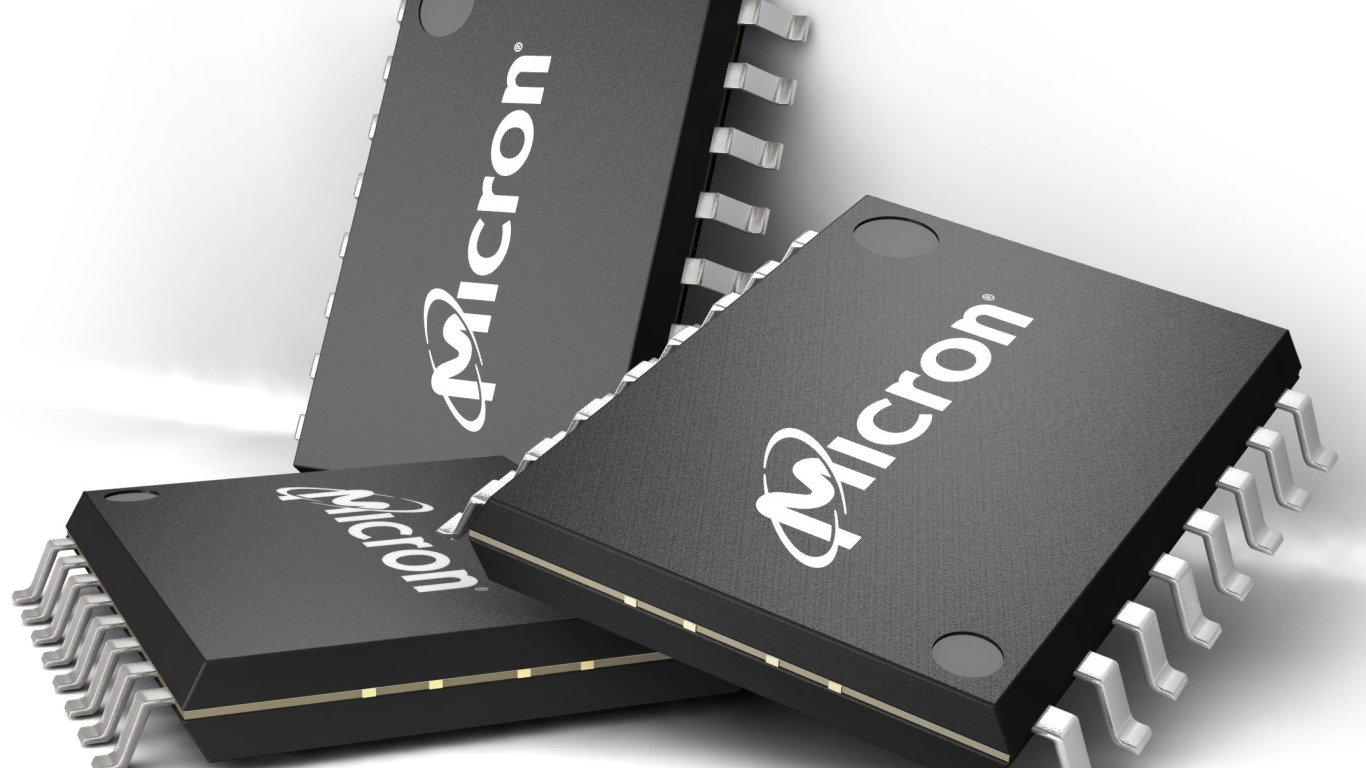
The cleanest read-through sits with Micron Technology (NASDAQ:MU | MU Price Prediction), which reports tonight. Last quarter Micron printed $23.86 billion in revenue, up 196.3% year over year, with GAAP gross margin of 74.4% and EPS of $12.20. Guidance for the May quarter calls for $33.5 billion in revenue and gross margin near 81%. CEO Sanjay Mehrotra framed it as “memory has become a strategic asset for our customers” in the fiscal Q2 press release. Micron is down about 10.51% intraday today, even after running 61.3% in the last month and 882.46% over a year. Reddit’s r/wallstreetbets nailed the setup before the open: “Micron earnings Tuesday and the bar feels insanely high, anyone else nervous?”
What the hyperscaler order book actually says
NVIDIA (NASDAQ:NVDA) last reported $81.6 billion in revenue, with Data Center at $75.2 billion (up 92%), and guided next quarter to $91 billion excluding China. Jensen Huang framed it this way. “the buildout of AI factories, the largest infrastructure expansion in human history, is accelerating at extraordinary speed.” Broadcom (NASDAQ:AVGO) printed $10.8 billion of AI semi revenue, up 143%, and guided AI semis to $16 billion next quarter, more than 200% growth.
Advanced Micro Devices (NASDAQ:AMD) guided $11.2 billion, up 46%, with Meta committing to up to 6GW of Instinct GPUs. Oracle (NYSE:ORCL) carries $638 billion in remaining performance obligations, up 363% year over year, and plans roughly $40 billion in additional debt and equity financing to fund the buildout. Those numbers describe a customer base still spending aggressively.
Alphabet is the exception worth watching
Faber flagged the soft spot inside the mag-7. On Alphabet (NASDAQ:GOOGL), he said, “The losses we’ve seen in alphabet shares over the last couple of days have been noticeable. Obviously, they’ve lost a couple of key executives. They have not come at the same pace with new models as their competitors at anthropic or open AI.” Google’s last quarter looked solid ($109.9 billion in revenue, Google Cloud up 63%, backlog above $460 billion), but the stock is down 9.5% over the past month as the talent and model-cadence narrative compounds.
Partsinevelos closed with the simplest framing. “Semis chips are up more than 100% over the past year. Fundamentals haven’t necessarily changed but are run up that steep invites a pullback.” Tonight’s print from Micron, plus Cerebras, will determine whether the Korean tape is signal or shakeout.
Contact [email protected] for any questions or corrections.
Omor Ibne Ehsan is a writer at 24/7 Wall St. He is a self-taught investor with a focus on growth, cyclical, and dividend equities that have strong fundamentals, value, and long-term potential. He also has an interest in high-risk, high-reward investments such as penny stocks.