DRAM Ran 128% in 40 Trading Days. Three Stocks Did All the Work.
A $10,000 ticket into the Roundhill Memory ETF (CBOE:DRAM) on its first day of trading, April 2, 2026, at the opening NAV of $27.76 would be worth roughly $22,800 on the close Friday, May 29, with the fund at $63.20.…

A $10,000 ticket into the Roundhill Memory ETF (CBOE:DRAM) on its first day of trading, April 2, 2026, at the opening NAV of $27.76 would be worth roughly $22,800 on the close Friday, May 29, with the fund at $63.20. That is a 128% price return in 40 trading days, on an unleveraged, plain-vanilla equity ETF, with no distributions paid yet because the fund is two months old. The headline number is real, and there is no cherry-picked entry to argue with, because day one is day one.
Most of the move happened in the last four weeks. DRAM is up 65% over the past month and 20% in the last week alone. The fund’s total net assets sat at $0.25 million as of the prospectus snapshot, which is tiny enough that this is still a price story rather than a flows story. The flows will come. They always do when a six-week-old thematic fund prints a number like this.
Three Stocks Doing All The Work
DRAM markets itself as the first-ever memory stock ETF, but the honest description is that it is a concentrated bet on three companies plus a tail. Samsung Electronics at 24.99%, SK hynix at 24.22%, and Micron Technology at 23.83% together make up roughly three-quarters of the portfolio. The remaining quarter is split across Kioxia, Sandisk, Western Digital, Seagate, Nanya, and Winbond, none of which is heavy enough to swing the fund on its own.
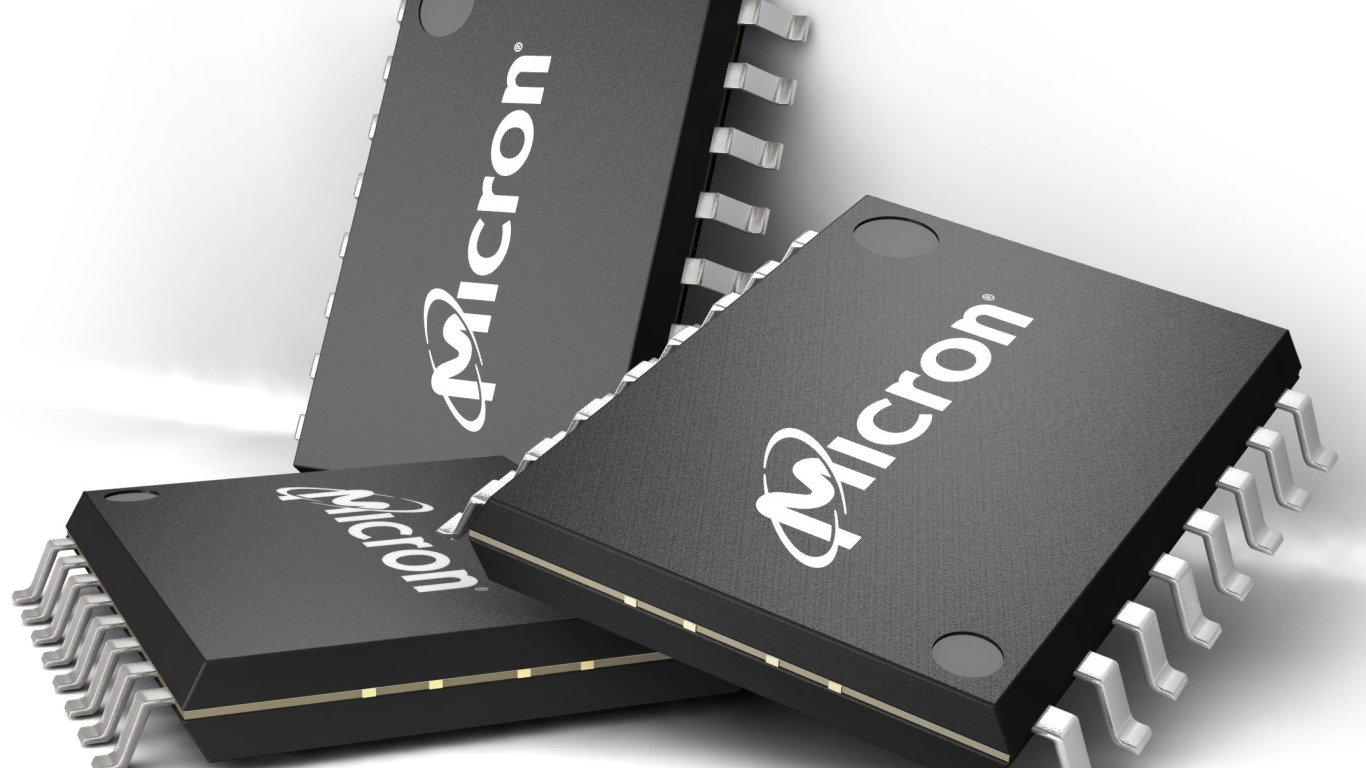
What actually drove the run is Micron (NASDAQ:MU | MU Price Prediction) and, by extension, the high-bandwidth memory trade that has been pulling SK hynix and Samsung along with it. Micron is up 87% in the past month, 240% year-to-date, and 906% over the past year, with shares closing at $971 on May 29. When a stock that is roughly a quarter of your fund prints +87% in a month, and the other two quarter-weights are riding the same HBM tailwind into the same hyperscaler order books, the ETF does what DRAM just did.
The macro frame fits. Taiwan’s IC industry association reported memory and other manufacturing revenue at NT$106.5 billion in Q1 2026, up 152.4% year-on-year, with full-year 2026 memory manufacturing revenue projected to grow 111.9% versus 2025. The global semiconductor market hit $796 billion in 2025, with logic and memory leading the gains. This small fund is catching the single most violent leg of a multi-year memory upcycle, with AI training and inference workloads pulling HBM3E and HBM4 capacity faster than Samsung, SK hynix, and Micron can qualify it.
The Reddit Tell
Sentiment data tells you where in the run you are. As recently as May 16-17, 2026, r/wallstreetbets sentiment on DRAM was reading bearish to very_bearish, with scores between 18 and 24. A single thread titled "Retail Euphoria Turns Six-Week Fund Into Record-Busting AI Trade" pulled 420 upvotes and 83 comments by the night of May 17. By May 26, the conversation had migrated to r/stocks and flipped to a bullish reading of 74, roughly a 50-point swing in nine days. That migration, from the leveraged-options crowd doubting a fund to the buy-and-hold crowd embracing it, is a classic late-rally pattern. The rally need not end today, but the easy skepticism is gone.
What Has To Hold For This To Keep Working
The mechanism here is unusually clean, which makes the forward look unusually testable. DRAM works if three things hold. HBM pricing has to stay tight, which requires hyperscaler capex to keep growing and qualification cycles to keep absorbing supply faster than Samsung and SK hynix can add it. Conventional DRAM pricing has to stay firm, which historically requires the big three to behave on capacity additions. And the Korean won and Taiwan dollar exposure baked into 49.25% South Korea and 6.31% Taiwan weights has to not work against you on a dollar-translated basis.
The things to watch are not mysterious. Micron’s quarterly guidance on HBM bit shipments and ASPs is the cleanest single tell, because Micron is the most transparent of the three and is roughly a quarter of the fund. SK hynix capex commentary on HBM4 ramp timing matters next. Samsung’s HBM3E qualification status with NVIDIA, which has lagged its Korean rival for two years, would change the competitive dynamics inside the fund’s top two holdings if it resolves either way. Beyond that, watch DRAM contract prices reported by TrendForce and DRAMeXchange month over month. When those roll over, the fund rolls over, and there is no diversification inside this wrapper to cushion the fall.
The Honest Read
The setup that produced a 128% run in eight weeks is still intact, but you are buying it at $63.20 instead of $27.76, which is a different trade with a different expected return distribution even if the direction is right. The 0.65% expense ratio is fine. The structural problem sits beyond the wrapper: memory is the most cyclical major category in semis, and three-stock concentration means there is nowhere to hide when the cycle turns. DRAM is the cleanest pure-play expression of an AI memory thesis on the market right now, and that is exactly why it will round-trip harder than a diversified semi fund the next time HBM ASPs roll. Watch Micron’s bit-shipment guide. That is the indicator. Everything else is noise.

Contact [email protected] for any questions or corrections.
I am a long time investor and student of business, and believe finding good companies that can become great investments is the best game on earth. After 20 years of writing and researching the public markets it is clear that individuals have never had more tools and information to take control of their financial lives. From ETFs and $0 commissions to cryptos and prediction markets there has never been a greater democratization of access to investing.
I write to help people understand the investments available to them so they can make the best choice for their portfolio, whether they're starting out or looking for income in retirement.