A Top Strategist Says the AI Trade Is Cooling, but Chipmakers Are Quietly Winning
The setup is almost too neat. South Korea’s Kospi just had what local press called a “Black Tuesday,” dropping nearly 10% as foreign investors dumped semiconductor shares and tripping circuit breakers. American chip names sold off in sympathy. And onto…

The setup is almost too neat. South Korea’s Kospi just had what local press called a “Black Tuesday,” dropping nearly 10% as foreign investors dumped semiconductor shares and tripping circuit breakers. American chip names sold off in sympathy. And onto CNBC walked Jay Woods of Freedom Capital Markets with a thesis that has been building for months, which is that the AI trade you thought you were buying and the AI trade that actually worked were two very different things.
Woods, alongside Matt Powers and Tony Zhang, framed the recent action as overdue. “The momentum was starting to lose itself,” Woods said. “The RSI was making lower highs every time the index was going higher. So now what we’re seeing is more of a reversion to the mean.” Powers carried the math further. “The mag-7 they’re being punished for spending, maybe blindly throwing around 650 billion into AI. And we pray it’s not a trap that they can’t get out of.”
The capex is real, the returns are showing up next door
Look at where the money is actually landing. Microsoft (NASDAQ:MSFT | MSFT Price Prediction) reported Q3 FY2026 capex of $30.88 billion, up 84.4% year over year, an infrastructure binge that helped push its AI business past a $37 billion annual revenue run rate. The stock has been punished anyway. It sits down 21% year to date through June 22. That is the Powers point in one chart.
Now look at the suppliers. Broadcom (NASDAQ:AVGO) posted Q2 FY2026 AI semiconductor revenue of $10.8 billion, up 143% year over year, and Hock Tan guided Q3 AI revenue to roughly $16.0 billion, more than 200% YoY growth. NVIDIA (NASDAQ:NVDA) put up Data Center revenue of $75.25 billion, up 92% YoY, with Data Center Networking up 199%. Jensen Huang called it “the largest infrastructure expansion in human history.”
Taiwan Semiconductor Manufacturing (NYSE:TSM), the foundry running every important chip in this story, has compounded 54.67% year to date and 125.63% over the past year. AVGO is up 10.7% YTD, NVDA up 5.6% YTD. None of those names are MSFT.
Memory was the silent surprise
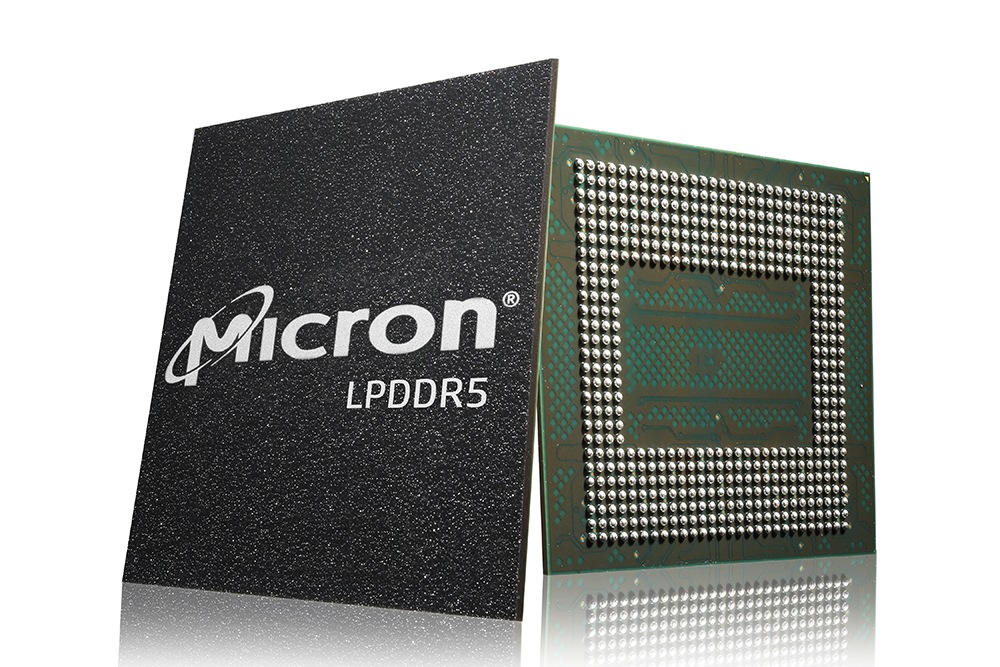
Powers put a number on it. “Semis up 100% versus down two in mag-7 names. Semis now make up a record almost 20% of the S&P 500.” Inside that move, the loudest chart belongs to Micron Technology (NASDAQ:MU). The stock is up 229% year to date through June 22, the consequence of memory repricing from a commodity to something Sanjay Mehrotra described as a “strategic asset” for hyperscale customers.
The fundamentals are not subtle. Last quarter Micron printed revenue of $23.86 billion, up 196.3% YoY, EPS of $12.20 against a $8.73 consensus, and guided Q3 to roughly $33.5 billion in revenue at an 81% gross margin. The board approved a 30% dividend increase alongside the earnings release.
Woods is still cautious into Wednesday’s earnings release. “People are going to get that blowout quarter. But I don’t expect the stock to continue this rise. It’s fallen six of its last eight reports even though it’s destroyed on earnings.” Options markets are pricing it as a coin flip. Polymarket assigns a 96% probability Micron beats, and the same crowd sets earnings-day direction at 50/50. A blowout that the chart has already discounted is the Woods worry.
What to watch
Zhang’s contribution was a reminder that hedging the next leg costs real money now. “We’re trading at close to 100 times revenue in this particular stock,” he said of SpaceX, noting institutions buying 9,000 contracts of the $120 puts and 10,000 contracts of the $135 puts out to December.
If the Woods-Powers reversion thesis is right, the rotation we have already seen, $6.93 billion of net inflows into the VanEck Semiconductor ETF in a single day, was the smart bid moving from spenders to suppliers ahead of the punchline. Micron’s earnings report on Wednesday is the next data point. Watch the guide, not the beat.
Contact [email protected] for any questions or corrections.
Omor Ibne Ehsan is a writer at 24/7 Wall St. He is a self-taught investor with a focus on growth, cyclical, and dividend equities that have strong fundamentals, value, and long-term potential. He also has an interest in high-risk, high-reward investments such as penny stocks.