Dan Ives Says the $3 Trillion Tech Wipeout Is a Buying Opportunity. Here’s His Case
Dan Ives went on CNBC with a message for anyone watching Big Tech bleed out in June. Nearly $3 trillion in market cap has evaporated this month on AI capex skepticism, and Wedbush’s Global Head of Technology Research thinks the…

This post may contain links from our sponsors and affiliates, and Flywheel Publishing may receive compensation for actions taken through them.

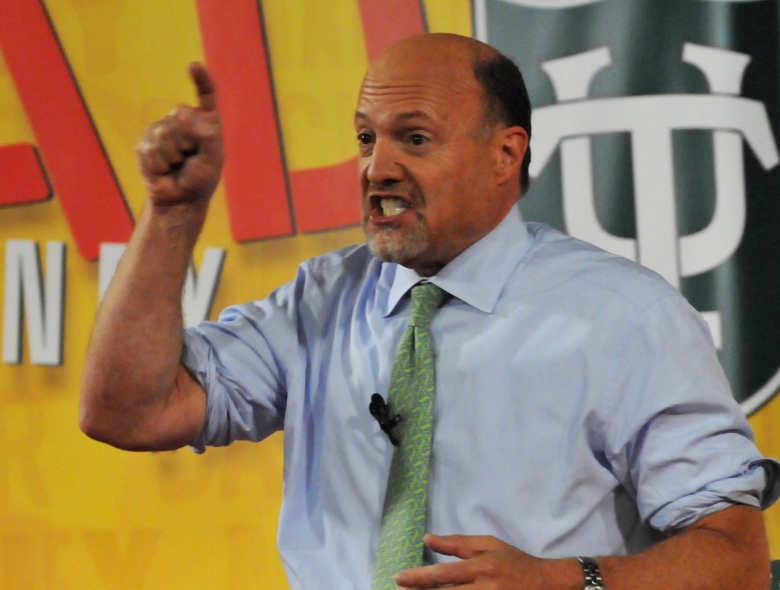
Dan Ives went on CNBC with a message for anyone watching Big Tech bleed out in June. Nearly $3 trillion in market cap has evaporated this month on AI capex skepticism, and Wedbush’s Global Head of Technology Research thinks the market has the story upside down. “These are way oversold names,” he said, naming Microsoft (NASDAQ:MSFT | MSFT Price Prediction), Oracle (NYSE:ORCL), and Alphabet (NASDAQ:GOOG).
MSFT stock is down 18% in the past month and 24% year to date. Meta Platforms (NASDAQ:META) is off 10.66% over the past month. Alphabet (NASDAQ:GOOGL) has shed 6.7% in a month despite still being up on the year. Oracle (NYSE:ORCL) is down 34% in a month. So what does Ives see that the tape doesn’t?
The bifurcated market thesis
His framing is that this is a split tape, with capex-heavy hyperscalers punished while chip and memory names get rewarded. “It’s a bifurcated market. Those that are spending the capex, the Microsofts, the Metas, you know we’ve seen with Alphabet as well. Those are essentially in the penalty box right now. I mean, I see them getting treated almost like bear market stocks,” Ives told CNBC.
The penalty being assessed is for capex itself. Meta raised its 2026 capex guide to $125 to $145 billion. Microsoft spent $30.88 billion on capex in Q3 FY26, up 84.39% year over year. Alphabet’s 2026 capex guidance sits at $175 to $185 billion.
The market treats those numbers as cost without revenue. The numbers say otherwise. Microsoft’s AI business surpassed a $37 billion annual revenue run rate, up 123% year over year. Google Cloud grew 63% to $20.03 billion with backlog nearly doubling quarter on quarter to over $460 billion. Oracle’s cloud infrastructure revenue grew 93% to $5.79 billion with RPO at $638 billion, up 363% year over year.
That is monetization in the filings, while shares trade like the buildout is a money pit.
The memory supercycle and the winners
The chip and memory side has been catching the bid Ives thinks should accrue to hyperscalers eventually. “It’s a memory supercycle. We’re talking about something that’s going to be for the next few years. This is not something that’s all of a sudden a boom and bust cycle,” he said.
Memory costs are up 90 to 95% this year, with equilibrium not expected for 18 to 24 months. That spills into hardware. Ives told CNBC iPhone prices could rise $150 to $200 across tiers as memory costs filter through, which matters because Apple (NASDAQ:AAPL) just posted a $111.18 billion March quarter on iPhone 17 strength.
NVIDIA (NASDAQ:NVDA) sits in the middle of this. Data Center revenue ran at $75.246 billion, up 92% year over year, and the company has booked $119 billion in total supply commitments. NVIDIA is still off 8% in the past month, but up 22% over the past year. The capex the market is punishing in Redmond and Menlo Park is the same capex flowing to Jensen Huang.
July earnings as the catalyst
Ives’s timing argument hinges on the next four weeks. “I think this does start to reverse over the next 6 to 9 months, because as you see monetization, I think July, when we see earnings in terms of tech, that’s actually going to be a pretty big catalyst for the hyperscalers and big tech,” he said.
Microsoft reports July 29, 2026, the same day as Meta. Apple follows July 30. On Meta, Ives called it “a prove-me period for Zuck to show that the monetization is now going to start.”. On Alphabet, his read was that recent talent leakage to Anthropic was being overpriced as a threat. “Alphabet relative to losing a few engineers to Anthropic… I think that’s an overreaction,” he said. He expects the Mag-7 to be a significant outperformer in the second half.
If July earnings reports confirm AI revenue is compounding faster than capex is depreciating, the penalty box opens. If not, the bifurcation persists.
Contact [email protected] for any questions or corrections.
Omor Ibne Ehsan is a writer at 24/7 Wall St. He is a self-taught investor with a focus on growth, cyclical, and dividend equities that have strong fundamentals, value, and long-term potential. He also has an interest in high-risk, high-reward investments such as penny stocks.