Fund Manager: Wall Street Is Using the Wrong ‘E’ to Judge AI Valuations
On a recent episode of the Animal Spirits podcast titled Talk Your Book: AI Is Not a Bubble, Alger portfolio manager Dr. Ankur Crawford made a deceptively simple argument that cuts against most of the current debate over AI valuations:…

This post may contain links from our sponsors and affiliates, and Flywheel Publishing may receive compensation for actions taken through them.

On a recent episode of the Animal Spirits podcast titled Talk Your Book: AI Is Not a Bubble, Alger portfolio manager Dr. Ankur Crawford made a deceptively simple argument that cuts against most of the current debate over AI valuations: investors are arguing about the price-to-earnings ratio without first agreeing on what the earnings actually are.
“The first thing you need to get right when you think about valuation is the E. Only then can you come up with a PE,” Crawford said. She runs a concentrated 30-name portfolio and targets companies she believes can double or triple over a roughly three-year horizon. She contends that sell-side models are linear extrapolations bolted onto an exponential capex cycle, leaving Street estimates “just too low” across the AI supply chain.
The Case Study: GE Vernova
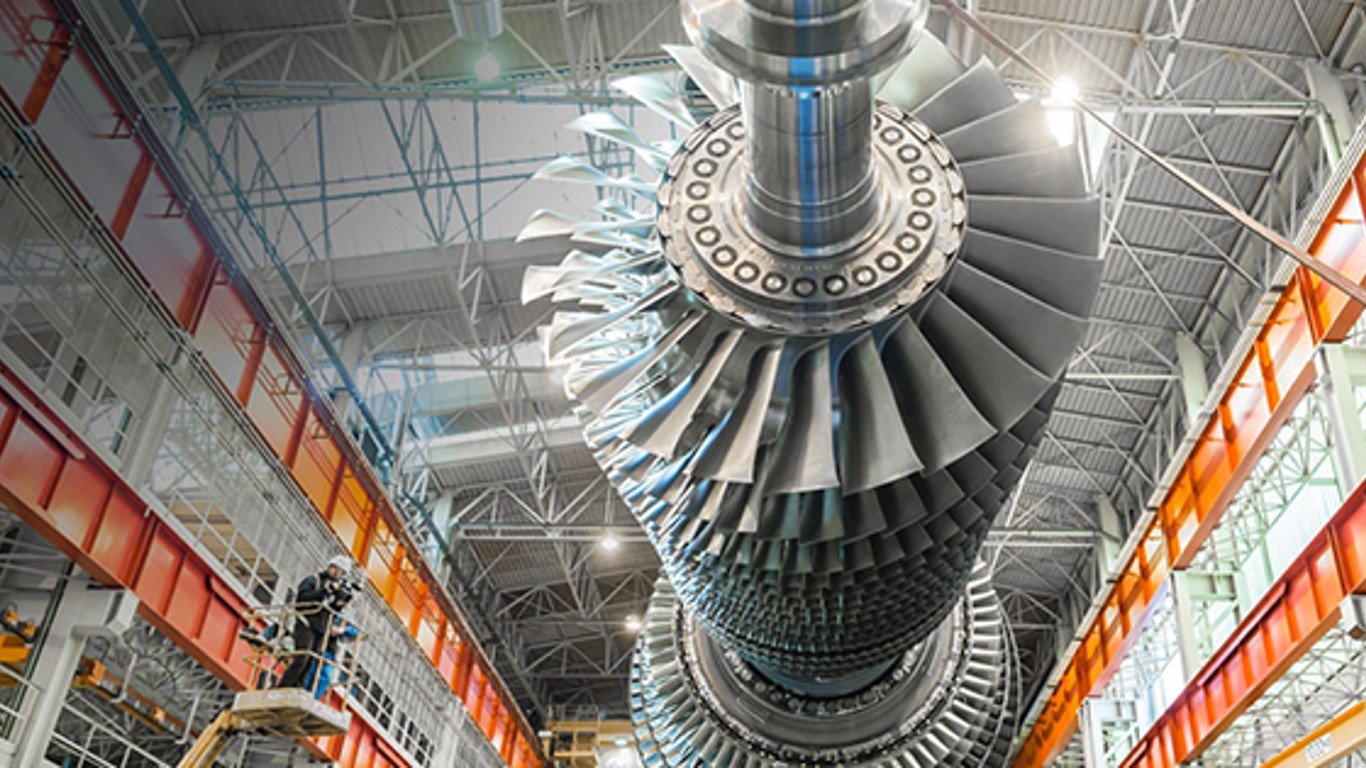
Crawford pointed to GE Vernova (NYSE: GEV | GEV Price Prediction) as the cleanest illustration. Only three companies make combined-cycle gas turbines globally, GE Vernova holds roughly a third of that market, and pricing has doubled from about $1,250 to $2,500 per megawatt in under a year as hyperscalers scramble for firm power.
The financials support the framing. Q1 2026 revenue came in at $9.34 billion, beating the $9.3 billion consensus, while organic orders jumped 71%. The Electrification segment booked $2.4 billion in data center equipment orders in a single quarter, more than all of 2025. Backlog hit a record $150 billion at year-end 2025 and grew $13 billion sequentially in Q1. CEO Scott Strazik told investors the company expects to reach at least 110 GW of combined gas turbine backlog and slot reservations by year-end 2026.
The stock has run hard, up 72.84% year-to-date and 132.18% over the past year, trading at a forward P/E of 40x. Crawford’s point is that this multiple is built on consensus EPS, and consensus has missed Vernova’s revenue every quarter shown in the data, with beats ranging from 0.36% to 9.17%.
The Picks-and-Shovels Backlog
The same pattern shows up across the AI power buildout. Vertiv Holdings (NYSE: VRT) posted Q4 2025 organic orders growth of 252% year over year, lifting backlog to $15.0 billion, and has beaten EPS estimates by between 4.62% and 25.01% across three quarters. Eaton (NYSE: ETN) saw Electrical Americas’ trailing 12-month organic order growth accelerate from 7% in Q3 2025 to 42% in Q1 2026, with electrical backlog up 48%.
On the generation side, Constellation Energy (NASDAQ: CEG) closed the Calpine acquisition in January 2026, expanding total supply to 93,330 GWhs and reaffirming 2026 adjusted operating EPS guidance of $11.00 to $12.00. The company is targeting 20%+ base EPS growth through 2029, anchored by long-term PPAs with Microsoft, Meta, and CyrusOne.
And Where NVIDIA Fits
The compute layer tells the same story. NVIDIA (NASDAQ: NVDA) reported Q1 FY2027 revenue of $81.615 billion, up 85.23% year over year, with Data Center revenue of $75.246 billion and Data Center Networking up 199%. CEO Jensen Huang called the moment “the largest infrastructure expansion in human history.” EPS has beaten consensus for four straight quarters, with the margin widening from 3.96% to 5.42%.
That is Crawford’s “wrong E” in a sentence. Revenue growth is accelerating from 55.6% to 85.23% while consensus models assume moderation, and operating income is compounding faster still, up 147.42% in Q1 FY2027 on margin expansion.
What Investors Should Watch
Co-host Ben Carlson noted on the podcast that most investors are still asking, “Is it too far too fast?” while Crawford is focused on the underlying business fundamentals, not the stock price. The Department of Energy projects data centers could account for up to 12% of U.S. electrical demand by 2028, a structural backdrop that informs why turbine pricing, backlog visibility, and Power Purchase Agreement (PPA) economics matter more than trailing P/E ratios. Reddit sentiment on Vernova has slipped to neutral-to-bearish over the past month as retail investors fixate on the price chart, the exact gap between price action and earnings power that Crawford says creates opportunity.
Contact [email protected] for any questions or corrections.
Ian Cooper is a veteran market analyst and investment strategist with more than 20 years of experience covering stocks, commodities, and macro trends. Since 1999, he has helped investors identify market opportunities using a blend of technical analysis, fundamental research, and market sentiment.
He is the creator of the ADD News Flow Strategy, which focuses on trading market reactions to major news events and investor psychology. Cooper was also among the analysts who warned about the 2008 financial crisis and major financial institution collapses ahead of the broader market.
Before joining 247 Wall St., Cooper wrote extensively for InvestorPlace and other financial publications, covering market trends, trading strategies, and investment opportunities.