Why Robo Global Robotics & Automation ETF (ROBO) Is a Top ETF Buy for Robotics Investors
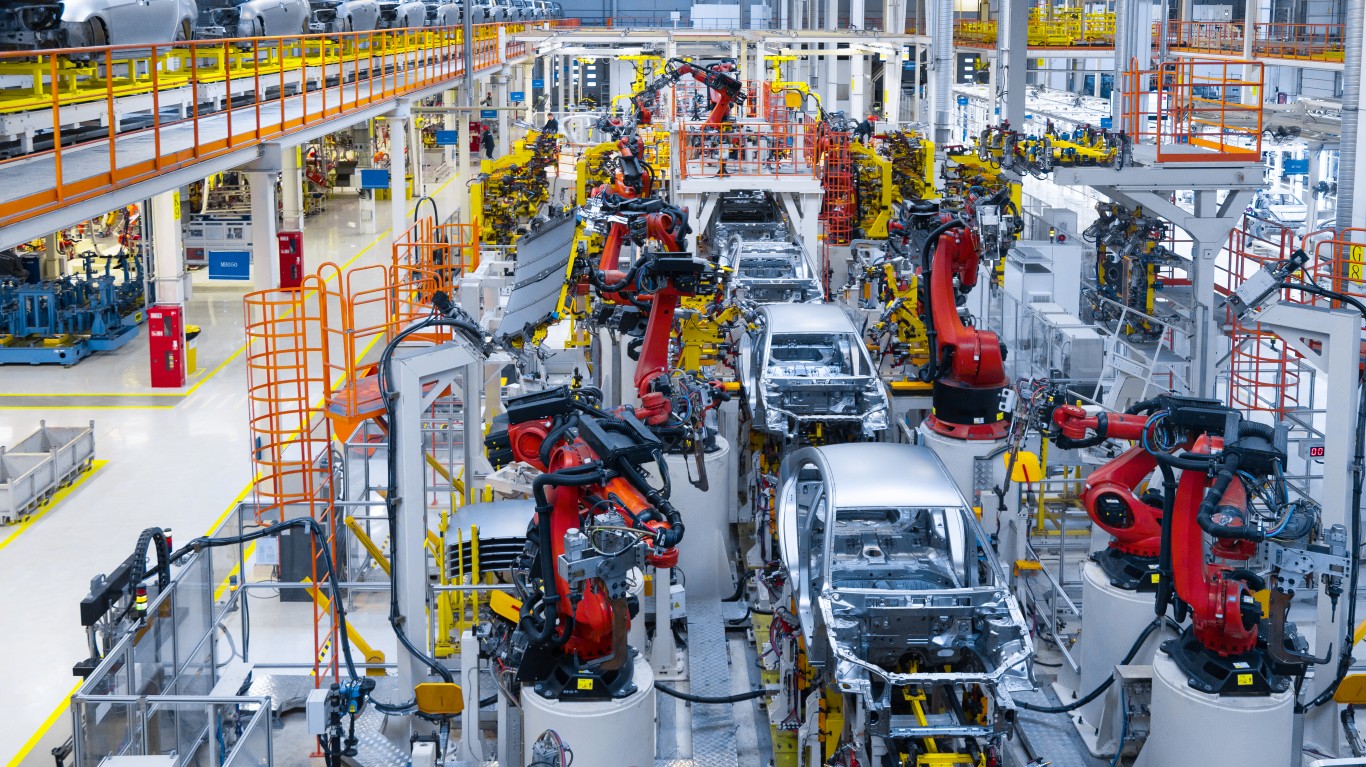
Robotics has lagged some of the loudest AI winners over the past couple of years, weighed down by exposure to cyclical end markets like automotive. Yet, it also stands to be the next massive megatrend in AI and could standout…

This post may contain links from our sponsors and affiliates, and Flywheel Publishing may receive compensation for actions taken through them.
Robotics has lagged some of the loudest AI winners over the past couple of years, weighed down by exposure to cyclical end markets like automotive. Yet, it also stands to be the next massive megatrend in AI and could standout as investors become fatigued chasing AI infrastructure winners.
That setup is exactly why Eric Bleeker names the ROBO Global Robotics and Automation Index ETF (NYSEARCA:ROBO) his preferred way to own the theme for the next five-plus years. The more concentrated alternative, the Global X Robotics & Artificial Intelligence ETF (NASDAQ:BOTZ), is another option, but Bleeker explains why ROBO is his top choice.
The premise behind owning robotics now is structural. Many of these names were held back by automotive and other cyclical end markets, similar to how today’s AI infrastructure leaders were once dragged down by telecom exposure before that business mix flipped. When the AI-driven inflection in factory automation, humanoid systems, and machine vision arrives, the supply chain catches the upside. The question is which fund actually delivers that exposure cleanly.
Watch Eric Bleeker’s Full Breakdown on ROBO and His Top AI ETFs
You can watch Bleeker’s full breakdown on the ROBO Global Robotics and Automation Index ETF here:
Please note, if this video isn’t rendering properly you can watch it at the following URL: https://youtu.be/r43CbeJ43P4?si=U2NkpdHuVa9nx8jq
Why the Robotics Theme Belongs in an ETF Wrapper
Robotics is the rare AI sub-theme where the ETF wrapper genuinely beats stock picking. A large share of the supply chain trades on foreign exchanges in Japan, South Korea, Switzerland, and China, which makes individual ownership costly and operationally messy for US investors. A fund handles the FX, custody, and rebalancing in one ticket.
That matters for the second part of the thesis: humanoid robots and broader factory automation are unlikely to be won by a single US name. The supply chain, motors, sensors, controllers, precision components, and varied semiconductors sit across multiple continents. Owning a basket is the easiest approach for most investors to get exposure to the trend.
ROBO Global Robotics and Automation Index ETF: The Headline Pick
ROBO earns the top slot for one structural reason: diversification across the supply chain rather than a top-heavy bet on a few mega-caps. Most holdings contribute roughly 1% to 2% of assets, which is the kind of position sizing you want when spraying bets across an emerging industrial transition where the eventual winners are still being sorted out.
That balance is the entire point. If humanoid robotics scales, the gains will spread across actuator makers, vision-sensor specialists, semiconductor suppliers, and industrial integrators rather than landing on one or two famous names. A 1% to 2% weighting structure captures that breadth without forcing the investor to call which specific component vendor wins. ROBO also holds many foreign stocks that would be very difficult to own individually, which is where the wrapper does real work.
The tradeoff is cost. ROBO carries a 0.95% expense ratio, meaningfully higher than the broad equity ETFs investors are used to. Bleeker is explicit that this is the price of access to a globally diverse, hard-to-replicate basket, and judges it acceptable given the structural opportunity.
Recent price action supports the patience case. ROBO is up roughly 28% year to date and about 57% over the past year, with shares around $89. That recovery follows a multi-year stretch where the fund underperformed broad tech, exactly the dynamic the thesis is built around. Bleeker notes ROBO has slightly outpaced BOTZ since the start of 2024, a small but directionally useful data point for investors comparing the two.
Retail sentiment is constructive, if thin. A recent Reddit aggregation showed a bullish score of 68 across WallStreetBets mentions, which mostly tells you the ETF is on the radar of theme-aware retail rather than carrying any momentum-trade froth.
BOTZ: The Larger, More Concentrated Alternative
BOTZ is the bigger fund and the default name many investors find first. Net assets sit around $3.5 billion, and the holdings list reads as a who’s who of industrial automation: ABB at roughly 11%, NVIDIA near 10%, FANUC near 10%, Keyence at 6%, and Daifuku at 5%. The supply chain rationale is the same as ROBO, but the execution is different.
The catch is concentration. Top five holdings make up more than 40% of BOTZ’s net assets, which Bleeker flags as too top-heavy for a theme where the winners are still being identified. A single weak quarter from ABB, FANUC, or NVIDIA can swing the whole fund. He also notes that Teradyne, one of the better-performing robotics-adjacent names over the past 18 months, has been largely absent from BOTZ’s recent disclosures, which is the kind of selection gap that erodes confidence in the index methodology.
Performance reflects the structural difference. BOTZ is up about 11% year to date and roughly 29% over the trailing year, well behind ROBO’s pace over the same windows. The broader supply chain ROBO captures has worked harder than the megacap-weighted core BOTZ leans on.
BOTZ still has a place for an investor who wants concentrated exposure to the largest, most established industrial automation names and is comfortable with that bet. It is the simpler instrument. It is just not the one Bleeker reaches for.
Watch Eric Bleeker’s Full AI ETF Breakdown
This article distills Chapter 7 of the broader 24/7 Wall St. YouTube breakdown on AI ETFs, where Eric works through picks across general AI exposure, infrastructure, semiconductors, and robotics. The robotics chapter centers on ROBO with BOTZ as the comparison; other chapters tackle the broader AI basket and the semiconductor angle through separate fund picks.
Which Robotics ETF Fits Which Investor
For investors who buy the structural case, that robotics is mid-cycle in an AI-driven inflection rather than a played-out theme, ROBO is the cleaner expression. The 1% to 2% position sizing, the heavy international supply chain exposure, and the recent outperformance versus BOTZ all point the same direction. The 0.95% expense ratio is the friction to accept in exchange for hard-to-replicate access.
BOTZ is the right choice for an investor who specifically wants concentrated exposure to ABB, NVIDIA, FANUC, and a handful of other automation anchors, and is comfortable with the single-name risk that concentration creates. For everyone else looking to own the robotics supply chain as a five-year hold, ROBO is the one to anchor the position around.
Contact [email protected] for any questions or corrections.
Eric Bleeker has been investing for more than 20 years. He began his career working at Microsoft before joining Motley Fool, one of the largest publishers of financial research. In his 15 years at Motley Fool Eric served as the General Manager for Fool.com and led coverage in the Technology & Telecom sector. In addition, he was a featured columnist and has hosted dozens of investing seminars attended by more than a million total investors. Eric has more than 1,000 financial bylines to his name and has been featured in The Wall Street Journal, CNBC, Fox Business, and many other leading publications. He is currently focused on artificial intelligence investing and is a CFA Charterholoder.