AI’s Next Act Isn’t Chatbots. It’s Robots, and BOTZ Is the Bet
The pitch for the Global X Robotics & Artificial Intelligence ETF (NASDAQ:BOTZ) has quietly changed. For years BOTZ was sold as a niche automation bet, a fund for people who wanted factory-floor exposure without picking Japanese conglomerates one at a…


The pitch for the Global X Robotics & Artificial Intelligence ETF (NASDAQ:BOTZ) has quietly changed. For years BOTZ was sold as a niche automation bet, a fund for people who wanted factory-floor exposure without picking Japanese conglomerates one at a time.
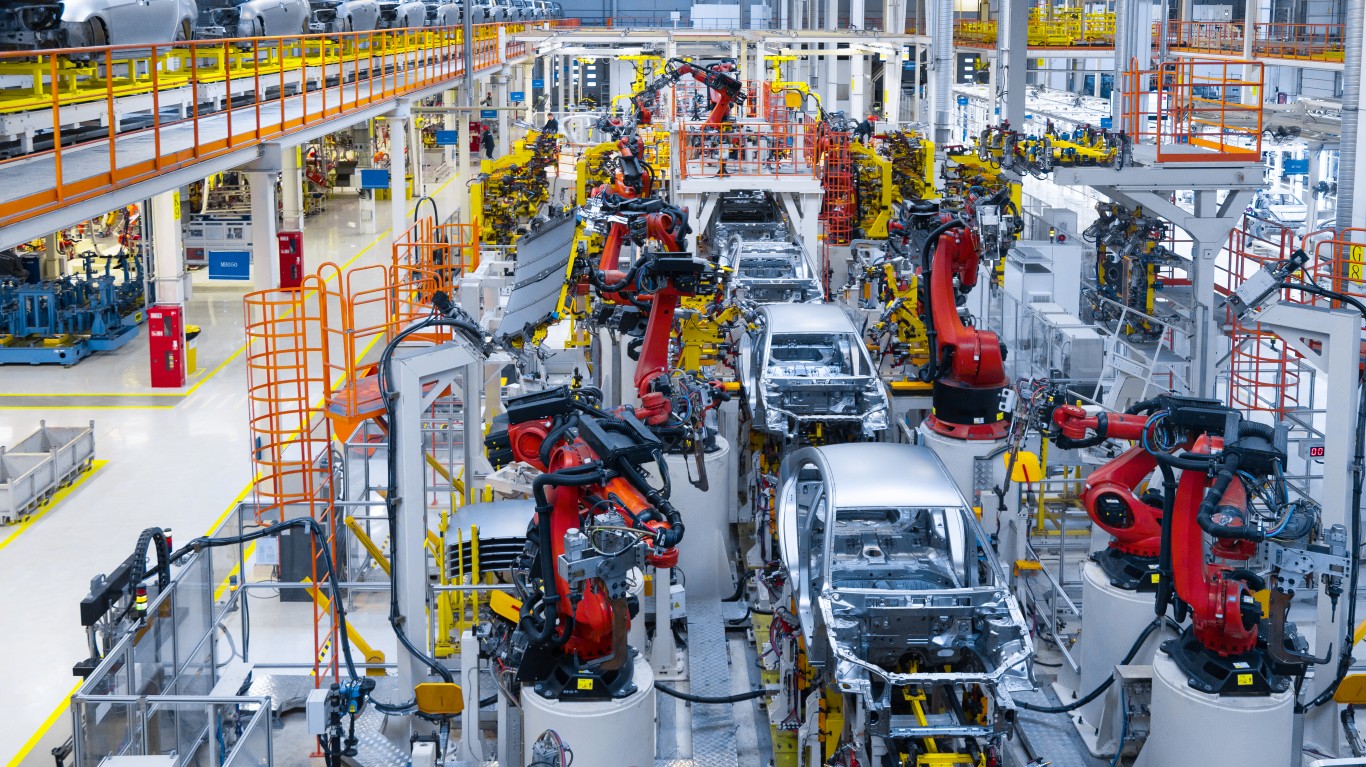
Now, with generative AI running out of party tricks, BOTZ has repositioned itself as the way to own the moment intelligence leaves the browser and starts moving boxes, performing surgery, and driving cars. That is a bigger idea. Whether the fund actually delivers on it is a different question.
What you are actually buying
BOTZ holds 51 positions spread across industrial robotics, machine vision, surgical automation, autonomous vehicles, and the AI hardware layer underneath all of it. The names on top are a mix of foreign and US companies that each play a significant role in their respective sectors. You have about 62% of the fund in ten stocks. This is a concentrated bet dressed up as a diversified thematic ETF.
The geographic mix is where BOTZ actually earns its keep. Seven of the top ten holdings are Japanese or Swiss industrial giants, businesses that have been building actuators, servos, and vision systems since long before anyone used the phrase “embodied AI.” That is the friend-shoring trade wrapped inside the AI trade, and it is difficult to replicate with a US-only tech ETF. Total net assets stand at roughly $3.54 billion, big enough to trade cleanly but small enough to move on flows.
Does it deliver
Over the past year BOTZ returned about 17%. Fine, until you notice that SPY returned about 21% and QQQ returned about 31% over the same stretch. Zoom out and it gets worse: BOTZ is up about 11% over five years while SPY is up about 85% and QQQ is up about 108%. Year-to-date, BOTZ is up about 5.75% against SPY’s about 10.8%.
So the thematic case has been correct and the total-return outcome has been mediocre. Industrial automation is cyclical, Japanese equities carry a currency drag for dollar investors, and the small-cap robotics names on the fringe of the portfolio (Serve Robotics, Ubtech, Doosan) have not scaled into the kind of earnings power NVIDIA (NASDAQ:NVDA | NVDA Price Prediction) and Broadcom (NASDAQ:AVGO) throw off. You got the trend right and still trailed the index.
The tradeoffs
- Concentration risk cuts both ways. NVIDIA and ABB together are roughly a fifth of the fund. If AI capex spending cools, BOTZ will feel it before the fact sheet updates.
- Cyclicality is real. FANUC, YASKAWA, and SMC sell into automotive and semiconductor capex cycles. Robotics orders whipsaw. The fund fell about 8% in the past month alone.
- Distributions are trivial. The semi-annual distribution of $0.0180 per share payable July 7, 2026 is essentially a rounding error on a $38 fund. This is a growth vehicle, full stop.
Who this fits
BOTZ makes sense as a 3% to 5% thematic sleeve for an investor who already owns broad US equities and wants direct exposure to the physical layer of AI, particularly the Japanese and Swiss automation names that a US-tilted portfolio structurally misses. It is a poor substitute for a core AI or semiconductor allocation, because you get diluted NVIDIA exposure alongside a lot of cyclical industrial equity.
If your thesis is that humanoid robots and factory automation are the next leg of the AI trade, BOTZ is the cleanest single-ticker way to express it. If your thesis is “AI wins,” QQQ has done the job better and cheaper. The key risk to name plainly: you can be right about robotics and still underperform, because the fund pays for its diversification in growth you leave on the table.
Contact [email protected] for any questions or corrections.
Omor Ibne Ehsan is a writer at 24/7 Wall St. He is a self-taught investor with a focus on growth, cyclical, and dividend equities that have strong fundamentals, value, and long-term potential. He also has an interest in high-risk, high-reward investments such as penny stocks.