It’s Pretty Insane How Much TPAY’s 10% Yield Beats Most Covered Call ETFs
As a general rule, I expect covered call ETFs to lag the broader market over time. The math is not particularly favorable. You cap your upside, retain most of the downside, pay higher management fees, and often generate taxable distributions…


As a general rule, I expect covered call ETFs to lag the broader market over time. The math is not particularly favorable. You cap your upside, retain most of the downside, pay higher management fees, and often generate taxable distributions along the way. Even after reinvesting those distributions, many covered call ETFs struggle to keep pace with a simple S&P 500 index fund.
That’s why the Roundhill S&P 500 Target 10 Managed Distribution ETF (TPAY) caught my attention. Over the brief 0.33-year period from Feb. 18, 2026 through June 17, 2026, TPAY delivered an 8.13% cumulative total return. During the same period, the SPDR S&P 500 ETF Trust (SPY) returned 8.27%.
The reason is that TPAY is not actually a covered call ETF at all. After speaking with Thomas DiFazio, ETF Strategist at Roundhill Investments, I came away thinking the structure is considerably more elegant than most income products currently on the market, and could be suitable as part of a withdrawal strategy.
How TPAY Actually Works
According to DeFazio, TPAY does not generate its distribution by selling covered calls. Instead, the fund uses SPY FLEX options to obtain its desired S&P 500 exposure while leaving a substantial portion of assets in cash and cash equivalents. The options provide equity participation, while the cash serves as collateral and supports the managed distribution program.
The use of SPY FLEX options also benefits from the ETF creation and redemption process. Rather than using traditional covered call premiums as its primary source of distributions, TPAY leverages the in-kind mechanism available to ETFs. This allows authorized participants to exchange securities directly with the fund, helping reduce the realization of taxable capital gains inside the portfolio.
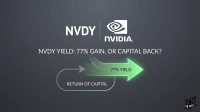
The result is a strategy that can maintain broad S&P 500 exposure while supporting a managed payout that is largely characterized as return of capital. In practical terms, investors are not giving up nearly as much upside as they would in a covered call strategy, which helps explain why TPAY’s total return has remained surprisingly competitive despite a higher 0.49% expense ratio.
The Yield, Tax Treatment, and One Big Risk
As of June 17, 2026, TPAY carried a 9.51% annualized distribution rate. The yield currently sits below its 10% target largely because the fund’s share price has appreciated since launch. The monthly payout remains designed around that 10% annual target distribution framework.
According to the fund’s most recent Form 19a-1 notice, 100% of the distribution was estimated to be return of capital. Investors should remember that this remains only an estimate. The final tax treatment will not be known until year-end reporting on Form 1099-DIV.
Return of capital has both advantages and drawbacks. On the positive side, it is generally not immediately taxable. Instead, the distribution reduces your adjusted cost basis in the ETF, allowing taxes to be deferred until shares are eventually sold. For retirees in the decumulation phase, that can be an attractive feature because it improves after-tax cash flow.
The downside is that taxes are being deferred, not eliminated. As your adjusted cost basis falls, future capital gains can become larger. If your cost basis eventually reaches zero, subsequent return-of-capital distributions may become taxable.
Roundhill also offers a more aggressive sibling fund targeting a 20% annual distribution. Personally, I think TPAY strikes a more sensible balance. A 10% target payout is still substantial, while leaving more room for capital appreciation and long-term sustainability.
My bigger concern would be assets under management. At roughly $1.6 million in assets, TPAY remains very small. Funds with limited assets can face an elevated risk of closure if they fail to attract investor interest. That does not necessarily make TPAY a bad product, but it is something prospective investors should keep in mind.
Contact [email protected] for any questions or corrections.
Tony Dong is the founder of ETF Portfolio Blueprint. He also serves as Lead ETF Analyst for ETF Central, a partnership between Trackinsight and the NYSE.
Tony’s work focuses on ETF strategy, portfolio construction, and risk management, with an emphasis on making complex investment concepts accessible to everyday investors. His insights and analysis have also appeared in U.S. News & World Report, Kiplinger, MoneySense, and The Motley Fool.
Tony holds a Master of Science degree in enterprise risk management from Columbia University and the Certified ETF Advisor (CETF) designation from The ETF Institute.