Apple Should Raise Prices On iPhones
Apple (NASDAQ: AAPL | AAPL Price Prediction) is raising prices on its Macs and iPads (as well as the Vision Pro) by between $100 and $500. Demand for these is already mediocre. This decision will make the demand weaker. Two…

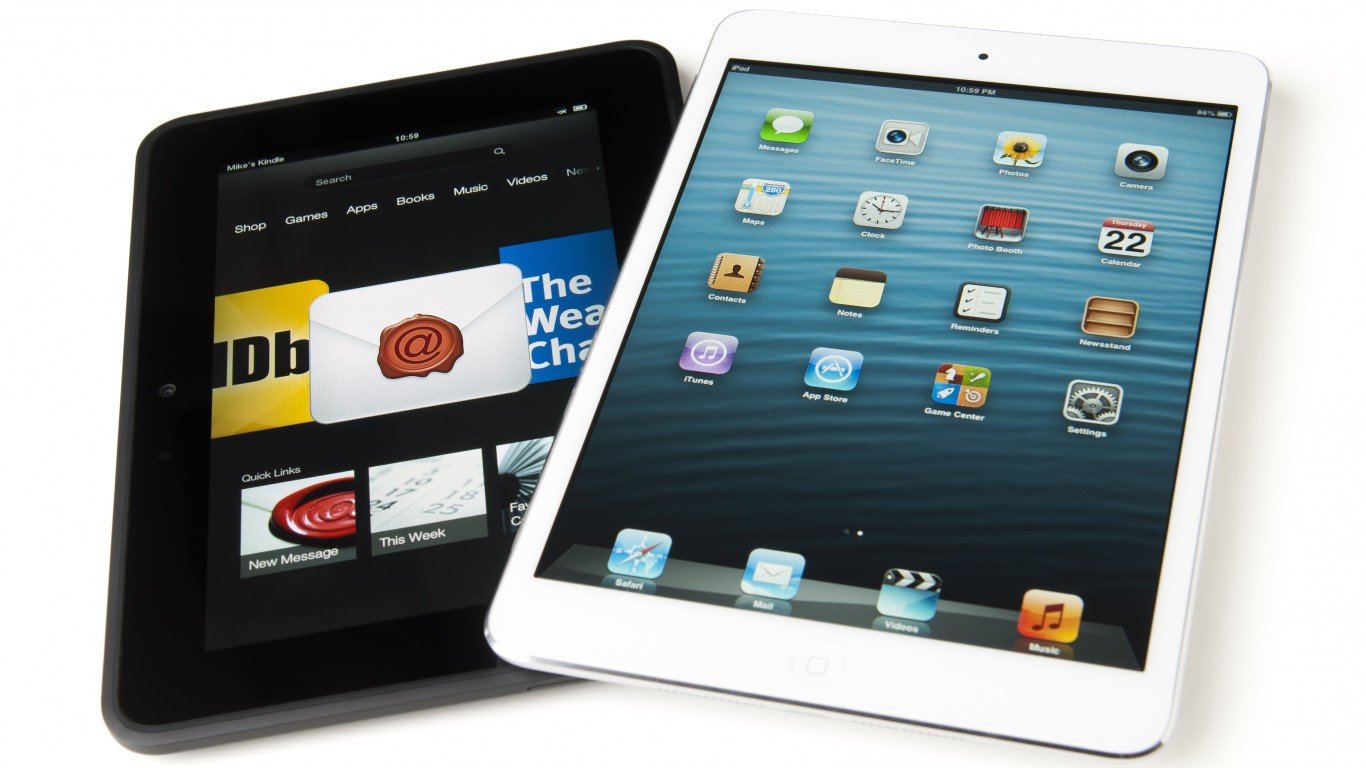
Apple (NASDAQ: AAPL | AAPL Price Prediction) is raising prices on its Macs and iPads (as well as the Vision Pro) by between $100 and $500. Demand for these is already mediocre. This decision will make the demand weaker.
Two examples of the increase in the price of the 13-inch MacBook Air from $1,299 from $1,099. The price of the 14-inch MacBook Pro is moving to $1,999 from $1,699. Americans have several popular alternatives. The iPad, for instance, is up against the Microsoft (NASDAQ: MSFT) Surface Pro and the Samsung Galaxy Tab S series.
Apple has raised prices due to a shortage of memory chips and storage. This, in turn, has driven up the price of iPac and Mac.
How weak (or not) are iPad and Mac sales? Start with Mac sales in the US. They account for about 16% of the “PC” market, which means the relative risk to Apple is acceptable. The iPad is entirely different. It has 57% of the tablet market. The threat to Apple’s iPad revenue is therefore substantial if sales fall.
While companies like Samsung and Microsoft face the same chip problems, they have the balance sheets to take a hit to margins as they gamble to pick up market share. If they raise prices as Apple did, the threat to Apple becomes less substantial.
The thing that the stock market has ignored, when Apple’s shares sold off, is that iPhone market share is rising worldwide. Based on shipments tracked by Counterpoint, iPhone global share has risen from 17% in Q1 2024 to 19% in Q1 2025 to 21% in Q1 2026. If that share increase continues to rise with the new AI-powered iPhone, Apple’s bottom line may not be affected at all. And, it may be able to raise the price of its most popular product to offset chip costs.
Will the price increases hurt Apple Mac and iPad sales? Will it matter financially? Probably not. Apple can raise the price of the iPhone without affecting sales
Contact [email protected] for any questions or corrections.
Douglas A. McIntyre is the co-founder, chief executive officer and editor in chief of 24/7 Wall St. and 24/7 Tempo. He has held these jobs since 2006.
McIntyre has written thousands of articles for 24/7 Wall St. He is an expert on corporate finance, the automotive industry, media companies and international finance. He has edited articles on national demographics, sports, personal income and travel.
His work has been quoted or mentioned in The New York Times, The Wall Street Journal, Los Angeles Times, The Washington Post, NBC News, Time, The New Yorker, HuffPost USA Today, Business Insider, Yahoo, AOL, MarketWatch, The Atlantic, Bloomberg, New York Post, Chicago Tribune, Forbes, The Guardian and many other major publications. McIntyre has been a guest on CNBC, the BBC and television and radio stations across the country.
A magna cum laude graduate of Harvard College, McIntyre also was president of The Harvard Advocate. Founded in 1866, the Advocate is the oldest college publication in the United States.
TheStreet.com, Comps.com and Edgar Online are some of the public companies for which McIntyre served on the board of directors. He was a Vicinity Corporation board member when the company was sold to Microsoft in 2002. He served on the audit committees of some of these companies.
McIntyre has been the CEO of FutureSource, a provider of trading terminals and news to commodities and futures traders. He was president of Switchboard, the online phone directory company. He served as chairman and CEO of On2 Technologies, the video compression company that provided video compression software for Adobe’s Flash. Google bought On2 in 2009.