A Top Investor Calls SpaceX’s 83x Valuation ‘Bubblicious,’ Even If Starlink Pulls It Off
David Bahnsen, Chief Investment Officer at The Bahnsen Group, went on CNBC this morning and did something most guests on financial television will not do when the subject is Elon Musk. He used the word “bubblicious” about a stock he…

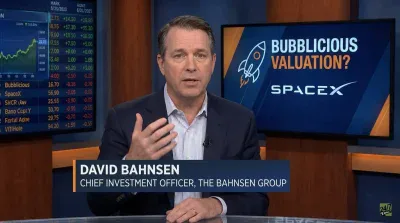
David Bahnsen, Chief Investment Officer at The Bahnsen Group, went on CNBC this morning and did something most guests on financial television will not do when the subject is Elon Musk. He used the word “bubblicious” about a stock he owns.
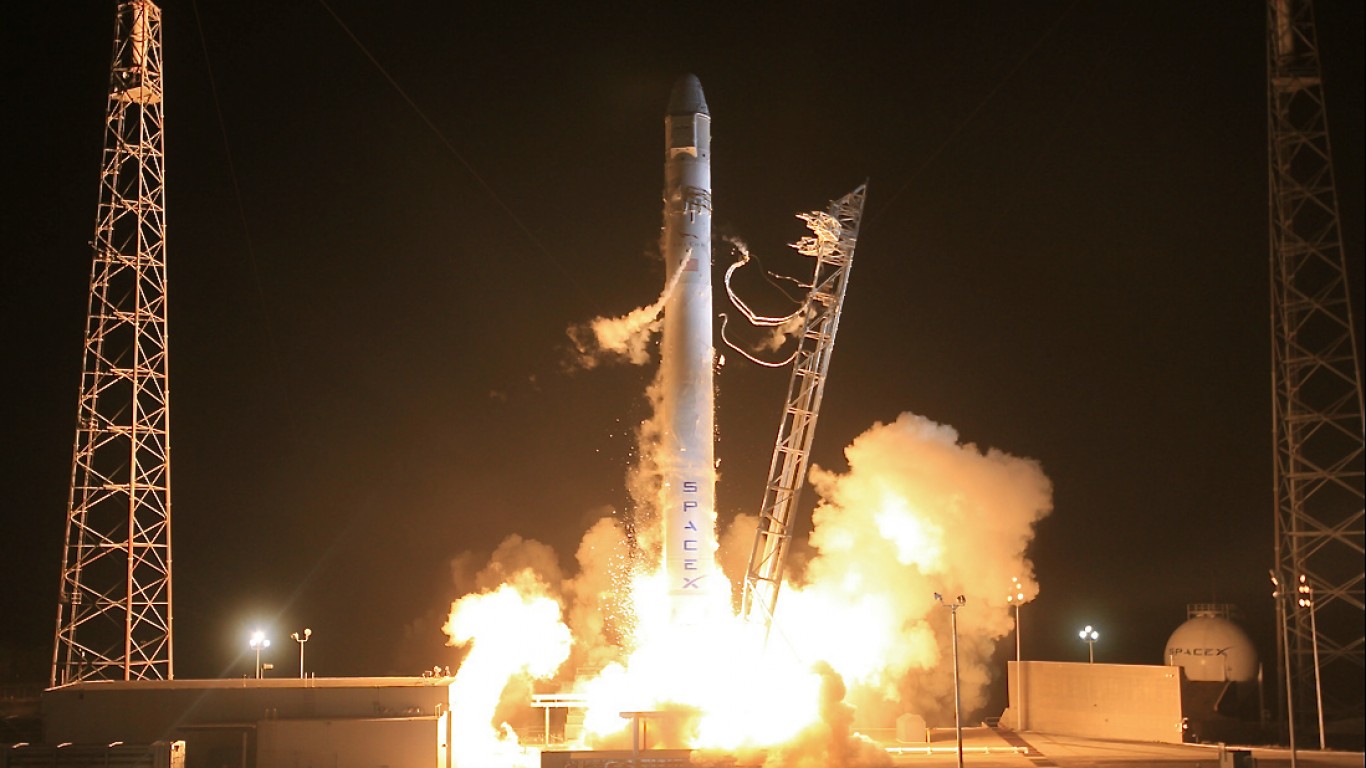
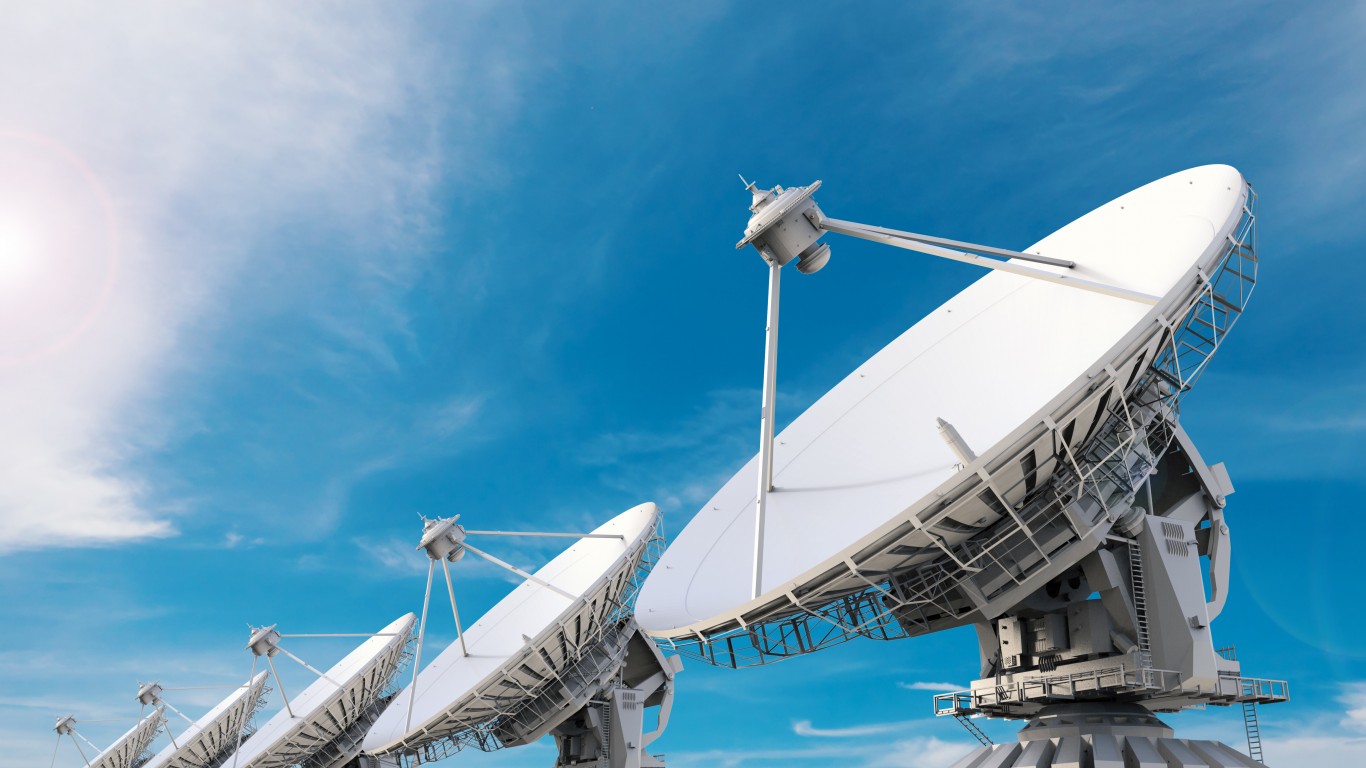
The stock is SpaceX (NASDAQ:SPCX | SPCX Price Prediction), which IPO’d on June 12, 2026 and currently carries a market cap of roughly $2.12 trillion. The engine inside it was Starlink, the satellite-broadband division running roughly 9,600 low-earth-orbit satellites, and Musk’s stated ambition is to turn Starlink into a global mobile network competing with terrestrial carriers. Now, though, the real engine is xAI.
Starlink is the part Bahnsen is willing to entertain. The price tag is not. SpaceX trades at roughly 83 times revenue, and Bahnsen’s argument is that even a wildly successful Starlink does not get you there.
The bull case and the Elon factor
Bahnsen entertains the dream. On CNBC, he framed the upside as a mix of operational reality and narrative gravity. “Now when you add a space element to it and just the Elon factor, there’s an aspirational component. 120 times revenue. I don’t know. I mean, that sounds to me like a pretty bubblicious story.” The aspirational component is doing a lot of work in that sentence. Investors are paying up for an outcome where Starlink takes meaningful share from terrestrial carriers using satellites that can talk directly to phones, anywhere on the planet, without towers.
After pricing the IPO at $135 and briefly touching above $225, SPCX now trades at $160. The average post-IPO buyer is probably at or below breakeven since most retail investors did not get the chance to hit buy at $135.
The math problem with 83x revenue
Even granting the Musk-as-telecom-disruptor thesis, Bahnsen argues that comparable businesses on Earth trade at a fraction of where SpaceX trades. “What would the multiple be on that if it did exist? It would be a teens multiple, not a hundreds multiple. Like we’re just not talking about a business that’s that.”
Verizon (NYSE:VZ), the telecom analog, trades at a trailing PE of 11x, an EV/EBITDA of about 8x, and a price-to-sales of 1.4x. Its Q1 2026 results, filed with the SEC here, showed adjusted EPS of $1.28 and revenue of $34.44 billion, with fiber broadband connections up 41.9% year over year following the Frontier Communications close.
T-Mobile US (NASDAQ:TMUS), the growthier of the two, trades at a PE of 19x and a price-to-sales of 2.2, despite delivering 962,000 postpaid phone net adds in Q4 and 9.4 million broadband customers.
Bahnsen’s framing is that these are the right comps because they have to be. “Verizon is basically a very heavy capex business that will always have a low multiple, but it’s a high dividend and reasonably stable company. SpaceX expanding the Starlink thing, we just accept it’s a very heavy capex business.” Satellites and rockets are arguably more capex-intensive than cell towers and fiber, not less.
You should keep in mind that SpaceX obviously deserves a richer premium than Verizon, no matter what the experts say. Valuing SpaceX by using mature telecom companies as the yardstick leaves out AI, which is where most of its valuation comes from.
Bahnsen’s own position and the lockup clock
The wrinkle is that Bahnsen owns SpaceX. His exposure is via a Barons SPV that remains locked up for another year, which means he is making the bear case on valuation while sitting on shares he cannot sell.
He has indicated he will likely sell at lockup expiration unless Starlink starts producing revenue growth that would close the gap between a teens-multiple business and a triple-digit-multiple stock.
Prediction markets seem to share the ambivalence. End-of-July contracts on Polymarket show near-50/50 odds across a $90 to $210 range, which is the prediction-market equivalent of a shrug. The composite sentiment score sits at 59.08, neutral with medium confidence.
If Starlink starts publishing subscriber and ARPU numbers that look like a credible challenger to Verizon and T-Mobile, the 120x revenue print gets easier to defend.
If it does not, Bahnsen’s teens-multiple math becomes the dominant frame, and the lockup expirations across the SpaceX SPV ecosystem start to matter.
Contact [email protected] for any questions or corrections.
Omor Ibne Ehsan is a writer at 24/7 Wall St. He is a self-taught investor with a focus on growth, cyclical, and dividend equities that have strong fundamentals, value, and long-term potential. He also has an interest in high-risk, high-reward investments such as penny stocks.