Bears Scream That a Falling $47.66 Average Prime Day Order Proves the Consumer Is Dead: This Is Why I Keep Buying The Stock
I keep buying Amazon every time the bears hand me a headline like the falling $47.66 average Prime Day order, and I am not stopping now. The narrative writes itself: smaller baskets, dead consumer, end of e-commerce dominance. Then I…

This post may contain links from our sponsors and affiliates, and Flywheel Publishing may receive compensation for actions taken through them.
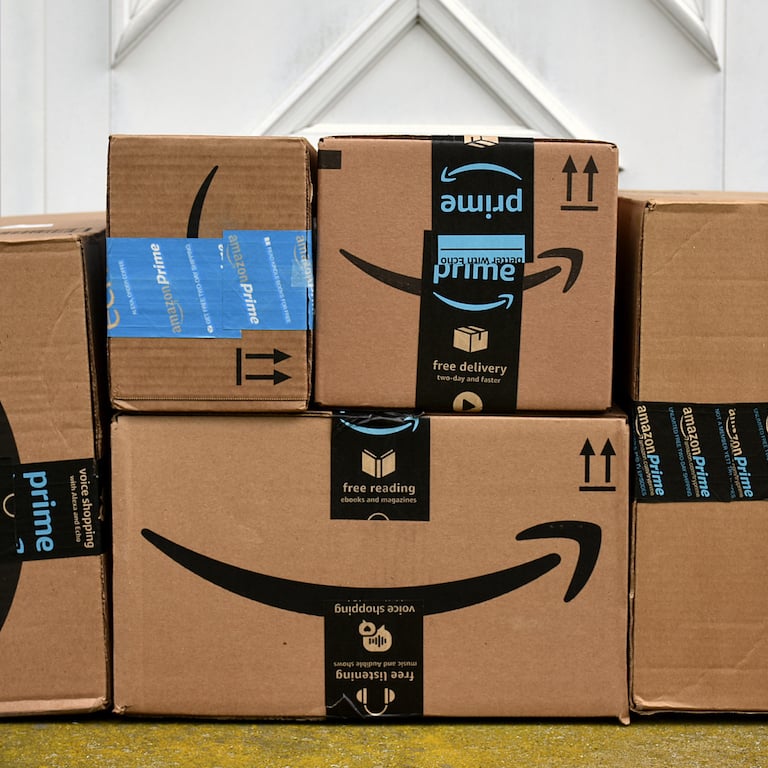
I keep buying Amazon every time the bears hand me a headline like the falling $47.66 average Prime Day order, and I am not stopping now. The narrative writes itself: smaller baskets, dead consumer, end of e-commerce dominance. Then I look at the actual receipt. Total digital spending across the four-day event rose 9.3% to a record $26.4 billion because a flood of shoppers placed multiple separate orders. That is Amazon quietly becoming the country’s non-discretionary online utility, and I will keep clicking buy while the crowd argues about basket size.
Amazon (NASDAQ:AMZN | AMZN Price Prediction) is on sale at $232.69, down 14.41% in the past month and down 10.94% in June alone. That is my entry point.
Why the basket math misses the point
The bear case treats a small order as a loss. I see it as the second, third, and fourth purchase a household used to make at a strip mall. With the University of Michigan Consumer Sentiment Index at 44.8, deep in recessionary territory, frightened consumers reroute their spending. BEA food spending hit a fresh high of $1,566.8 billion in May 2026, and total PCE climbed to $22,059.8 billion. The dollars exist. Amazon is intercepting them.
The three numbers behind my conviction
First, AWS is reaccelerating. The cloud arm posted $37.587 billion in Q1 2026 revenue, up 28% year over year, the fastest growth in 15 quarters, at a 37.7% operating margin. OpenAI committed to roughly 2 GW of Trainium capacity through AWS starting 2027, and Anthropic locked in up to 5 GW. The custom chips business cleared a $20 billion annual run rate, growing triple digits.
Second, advertising is the quiet compounder. $17.243 billion in Q1, up 24%, with TTM revenue above $70 billion. Every extra Prime Day order, even a tiny one, is another high-margin ad impression. That is exactly the engine my thesis depends on: low-margin retail visits converted into high-margin recurring cash flow.
Third, profitability is bending up at scale. Q1 EPS landed at $2.78 against a $1.653 estimate, the fifth consecutive beat. Operating income grew 29.6% to $23.85 billion, North America operating margin expanded to 7.9% from 6.3%, and unit growth hit 15%, the highest reading since the tail end of lockdowns. Operating cash flow rose 52.99% to $26.03 billion.
The risk I will not paper over
Capital intensity is the real argument against the stock. Capex hit $44.203 billion in Q1 alone, up 76.68%, with management guiding toward roughly $200 billion of 2026 capex for AI infrastructure, chips, robotics, and satellites. Trailing free cash flow collapsed 95% to $1.2 billion, and long-term debt climbed to $119.1 billion from $65.6 billion. If AI demand cools, those data centers depreciate while interest expense compounds.
I sit with that risk and keep buying. The offtake is already signed. Project Rainier runs 500,000-plus Trainium2 chips for Anthropic, Trainium2 is fully subscribed, and Bedrock is used by more than 100,000 companies. This capex is building inventory that already has buyers under contract.
Why my buy button stays active
I am accumulating a $2.50 trillion business that runs the internet’s compute layer, prints over $70 billion in trailing advertising revenue, and just delivered more than 1 billion items same-day or overnight in 2026 and counting. The bears can keep counting basket sizes. I will keep counting shares.
Contact [email protected] for any questions or corrections.
Alex Sirois is a financial writer with experience spanning both retail and institutional investing. He has written for InvestorPlace and held roles at BNY Mellon and Bernstein, giving him a perspective that bridges Main Street portfolios and Wall Street analysis.
Alex holds an MBA from George Washington University and has built his career across multiple industries, including e-commerce, education, and translation — a breadth of experience that informs how he breaks down complex financial topics for everyday investors. His writing is conversational, actionable, and grounded in long-term, buy-and-hold investing principles.
At 247 Wall St., Alex focuses on delivering analysis that is both accessible and useful, with a clear emphasis on helping readers make more informed decisions with their money.