Forget the Utility Sector Sell-Off: 1 Legally Protected Water Monopoly Is an Absolute Sanctuary for Retirees Seeking Bulletproof Yield
The utility sector sell-off narrative pivots on a “cost of capital lag,” with critics warning that rising expenses will outpace rate adjustments and squeeze payouts. American States Water (NYSE:AWR), a CPUC-regulated California water monopoly that also runs 50-year contract service…

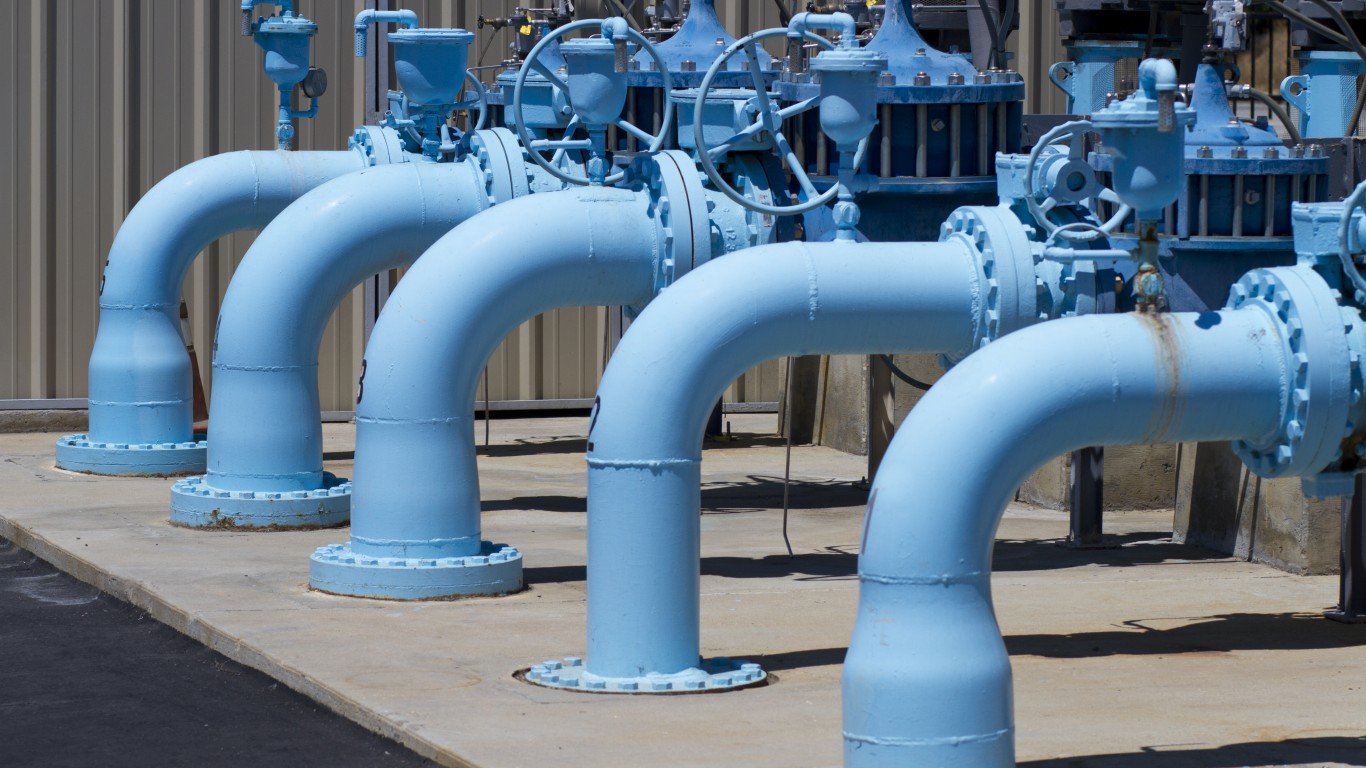
The utility sector sell-off narrative pivots on a “cost of capital lag,” with critics warning that rising expenses will outpace rate adjustments and squeeze payouts. American States Water (NYSE:AWR), a CPUC-regulated California water monopoly that also runs 50-year contract service agreements on military bases, has quietly defied that thesis. Shares are up 15.46% YTD versus 9.66% for the XLU. The headline question for income investors: is the dividend actually bulletproof?
Dividend Snapshot
| Metric | Value |
|---|---|
| Annual Dividend | $2.016 per share |
| Dividend Yield | 2.57% |
| Consecutive Years of Increases | 71 years |
| Most Recent Increase | 8.3% (July 2025) |
| Dividend King Status | Yes |
Payout Ratios Leave Real Room to Breathe
Against FY 2025 diluted EPS of $3.37, the $2.016 annualized payout consumes roughly 59.8% of profits. That sits comfortably inside the healthy zone for a regulated utility.
| Metric | TTM Value | Assessment |
|---|---|---|
| Earnings Payout Ratio | 59.8% | Healthy |
| Operating Cash Flow (Q1 26) | $71.6M | Strong, up from $45.1M |
| FCF Payout Ratio | Not disclosed | Capex heavy |
Free cash flow is typically negative here given $185M to $225M of 2026 capex, which is normal for rate-base utilities. The dividend is funded from operating cash flow and rate-recovered capital.
A Balance Sheet Built for Rate Cycles
| Metric | Value | Assessment |
|---|---|---|
| Debt-to-Equity | 0.87 | Moderate |
| EBITDA (TTM) | $263M | Stable |
| Rate Base | $1.67B (11.3% 5-yr CAGR) | Compounding |
Critically, AWR completed a $200 million ATM equity offering by June 2026 with no further issuance planned through 2029, removing the dilution overhang that had pressured the stock.
71 Years of Increases, Still Accelerating
| Year | Annual Dividend |
|---|---|
| 2026 | $2.016 |
| 2025 | $1.862 |
| 2024 | $1.720 |
| 2023 | $1.590 |
| 2022 | $1.460 |
The 5-year dividend CAGR of 8.5% blows past the stated 7%+ long-term target.
Management’s Tone Is Confident
On the Q1 2026 call, CEO Robert Sprowls said AWR “remains a leader with our strong earned return on equity and dividend histories, and we continue to deliver value and returns to our shareholders.” Nine directors backed that up by buying shares at $75.92 on May 19, 2026 in a coordinated purchase event.
Verdict: This Dividend Is Rock Solid
Dividend Safety Rating: Very Safe. A sub-60% earnings payout, a compounding rate base, a 71-year streak, and a closed dilution chapter form a fortress for income. For investors who value predictability over yield, AWR screens well as a retirement-income holding. The main risks to monitor are a hostile CPUC posture on the 2028 to 2030 rate cycle or a spike in wildfire liabilities at Bear Valley Electric. For now, this is the sanctuary the headline promised.
Contact [email protected] for any questions or corrections.
Alex Sirois is a financial writer with experience spanning both retail and institutional investing. He has written for InvestorPlace and held roles at BNY Mellon and Bernstein, giving him a perspective that bridges Main Street portfolios and Wall Street analysis.
Alex holds an MBA from George Washington University and has built his career across multiple industries, including e-commerce, education, and translation — a breadth of experience that informs how he breaks down complex financial topics for everyday investors. His writing is conversational, actionable, and grounded in long-term, buy-and-hold investing principles.
At 247 Wall St., Alex focuses on delivering analysis that is both accessible and useful, with a clear emphasis on helping readers make more informed decisions with their money.