The Bill Miller Playbook: How Lincoln Financial, Strategy, and Nabors Stack Up for Retirement Investors
Bill Miller made his name buying assets everyone else was afraid to touch, but three stocks inspired by that contrarian playbook land in very different places when a retirement portfolio has to pay actual bills.


Bill Miller built his reputation at Legg Mason by beating the S&P 500 for 15 consecutive years using a concentrated, contrarian, value approach. He was famous for backing misunderstood names, most notably Amazon in the early dot-com years and later Bitcoin, arguing that mispriced assets reward patient capital. That philosophy has produced huge winners and severe drawdowns.
For a retirement-focused investor, the useful question is whether a business can be counted on for durable earnings, reliable income, and manageable volatility. Below, we rank three Miller-style candidates from least to most appropriate for a retirement portfolio, ending with the top pick.
3. Strategy
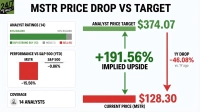
Strategy (NASDAQ: MSTR | MSTR Price Prediction), formerly MicroStrategy, is effectively a leveraged Bitcoin proxy wrapped around a legacy analytics software business. It held 762,099 BTC at the end of Q1 2026 and, per CEO Phong Le, 818,334 BTC as of May 5, 2026.
Shares are down 78.5% over the past year, closing at $86.93 on June 30, 2026, with a beta of 3.47. Q1 2026 delivered a $12.54 billion net loss driven by a $14.46 billion unrealized loss on Bitcoin holdings, and diluted EPS came in at a loss of $38.25 per share. The company pays no common dividend and carries $8.17 billion of long-term debt plus $229.53 million in preferred dividend obligations in Q1 alone.

Miller may love the Bitcoin thesis, but leverage, dilution, and swings of this magnitude are wrong for a retiree.


2. Nabors Industries
Nabors Industries (NYSE: NBR) is a classic contrarian energy services name in the middle of a genuine deleveraging story. Net debt has fallen to $1.55 billion with net leverage of 1.7x, the lowest since 2008, and annual interest expense should decline by roughly $45 million.
Full-year 2025 diluted EPS came in at $17.39, on $3.2 billion in revenue. Shares closed at $84.01 on June 30, which was 199.8% higher than a year ago. CEO Anthony Petrello said, “2025 proved to be a transformational year for our capital structure.”
The problems for retirees are structural. Nabors last paid a meaningful dividend in 2018 at a pre-split $0.06 quarterly, then cut to $0.01 by 2019 and stopped in 2020. WTI crude swung between $56.01 and $114.58 per barrel in 2026 year to date, and 2026 capex guidance range is $730 million to $760 million. Cyclical, commodity-exposed, no income. Interesting for a value hunter, a poor fit for a retirement sleeve.
1. Lincoln National
Lincoln National (NYSE: LNC), which markets under the Lincoln Financial brand, is the cleanest Miller-style retirement fit. It trades at a trailing P/E of 4x and price-to-book ratio of 0.761, with a dividend yield of 5.1% at the $35.35 closing price on June 30.
The quarterly dividend has held at $0.45 for 16 consecutive quarters, with the next payment scheduled for August 3, 2026. Full-year 2025 adjusted operating EPS reached $8.23, covering the $1.80 annual dividend 4.6 times. Q1 2026 adjusted operating EPS was $1.66 on $5.31 billion in revenue, with Retirement Plan Services operating income up 26% year over year and the leverage ratio improving to 25.0% from 27.5%.
CEO Ellen Cooper told investors: “The cumulative impact of the actions we’ve taken, strengthening our capital foundation, optimizing our operating model, and diversifying our business mix, are translating into a more resilient, higher-quality earnings profile.”
Risks include noisy GAAP results from non-economic annuity market risk benefit swings (a $211 million GAAP net loss in Q1 2026 despite adjusted profitability), portfolio sensitivity to credit and rates, and shares down 20.6% year to date. But the analyst target of $42.58 and a portfolio yield of 4.67% against a new money yield of 5.5% point to expanding spread income.


What the Playbook Teaches Retirees
Miller’s edge was buying misunderstood businesses at cheap prices and then waiting. A retiree can borrow that mindset without inheriting the volatility. Strategy fits Miller’s Bitcoin conviction but violates every rule of retirement income. Nabors offers a genuine turnaround, yet no dividend and commodity risk keep it in the trading bucket. Lincoln Financial delivers what retirees need: a covered dividend, a an improving balance sheet, and a valuation that still assumes the worst. That is the Miller playbook adapted for a portfolio that has to pay bills, not just chase alpha.
Contact [email protected] for any questions or corrections.
Trey has been an editor and author at 24/7 Wall St. for more than a decade, where he has published thousands of articles analyzing corporate earnings, dividend stocks, short interest, insider buying, private equity, and market trends. His comprehensive coverage spans the full spectrum of financial markets, from blue-chip stalwarts to emerging growth companies.
Beyond 24/7 Wall St., Trey has created and edited financial content for Benzinga and AOL's BloggingStocks, contributing additional hundreds of articles to the investment community.
Trey's editorial expertise extends across multiple publishing environments. He served as production editor at Dearborn Financial Publishing and development editor at Kaplan, where he helped shape financial education materials. Earlier in his career, he worked as a writer-producer at SVE. His freelance editing portfolio includes work for prestigious clients such as Sage Publications, Rand McNally, the Institute for Supply Management, the American Library Association, Eggplant Literary Productions, and Spiegel.
Outside of financial journalism, Trey writes fiction and has been an active member of the writing community for years, moderating workshop sessions at regional conventions.