Everyone Talks About Moving to The Villages, Nobody Talks About the Cost of Leaving
Everyone runs the numbers on buying into The Villages, but almost no one runs the numbers on getting out, and that missing calculation is where retirement plans quietly fall apart.

This post may contain links from our sponsors and affiliates, and Flywheel Publishing may receive compensation for actions taken through them.

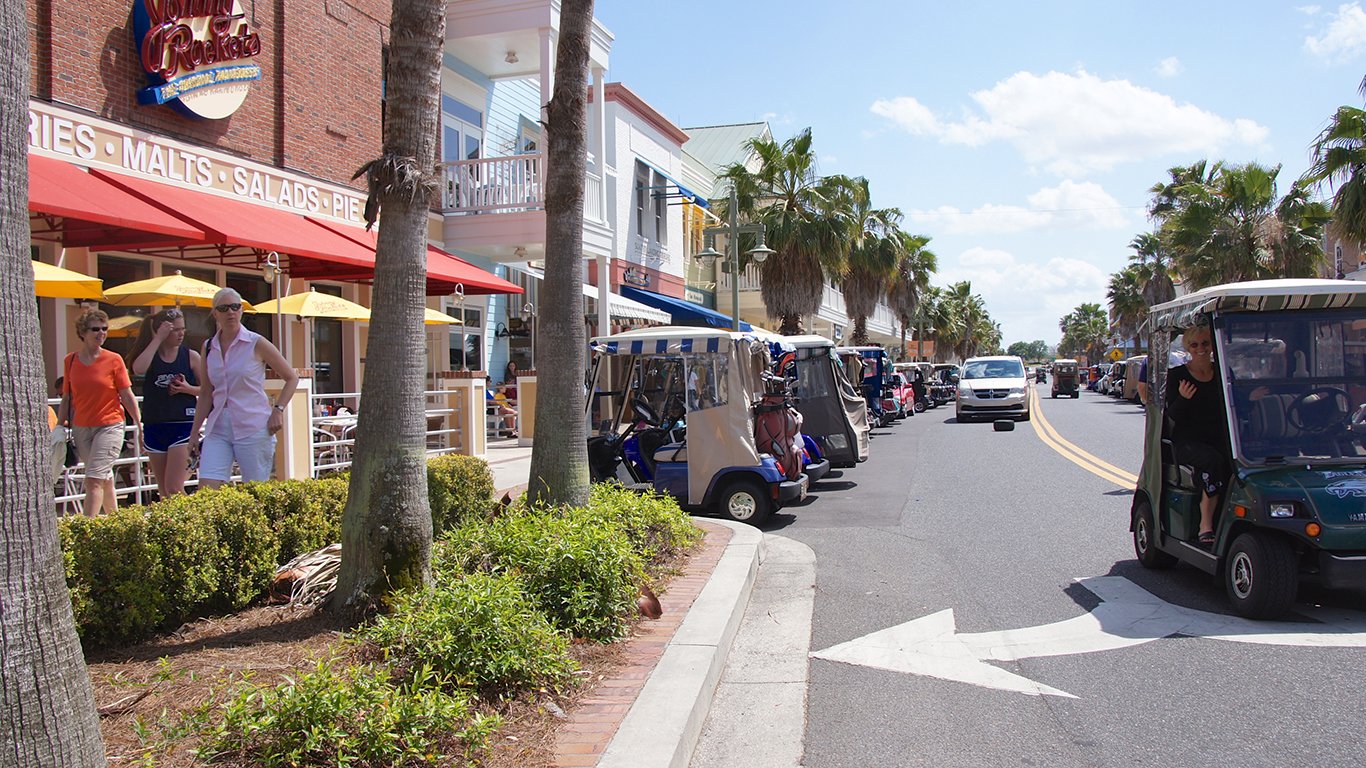
The pitch is familiar: sell the house up north, buy a home in central Florida, get a golf cart, and spend twenty years playing pickleball with others who are done shoveling snow. The Villages sells that vision well. What almost no one prices in is the cost of the eventual exit: not the move in, but the move out.
People ask what portfolio it takes to retire there comfortably. The realistic answer has two parts: the number that funds the good decade, and the reserve that funds the harder one that follows.
What a Comfortable Villages Year Actually Costs
Assume a couple retiring at 65 into a mid-tier designer home. The housing market backdrop has turned complicated. Existing home sales fell to a seasonally adjusted annual rate of 4.05 million units in July 2026, with the South posting the steepest monthly drop at 3.1%. The Case-Shiller national home price index hit 335.1 in May 2026, but that nominal reading obscures a harsher reality: the index gained only 1.1% year over year while inflation peaked at 4.2% that month, meaning home values fell in real terms for the 12th consecutive month. S&P Dow Jones Indices specifically flagged Sunbelt markets as among the weakest nationally.
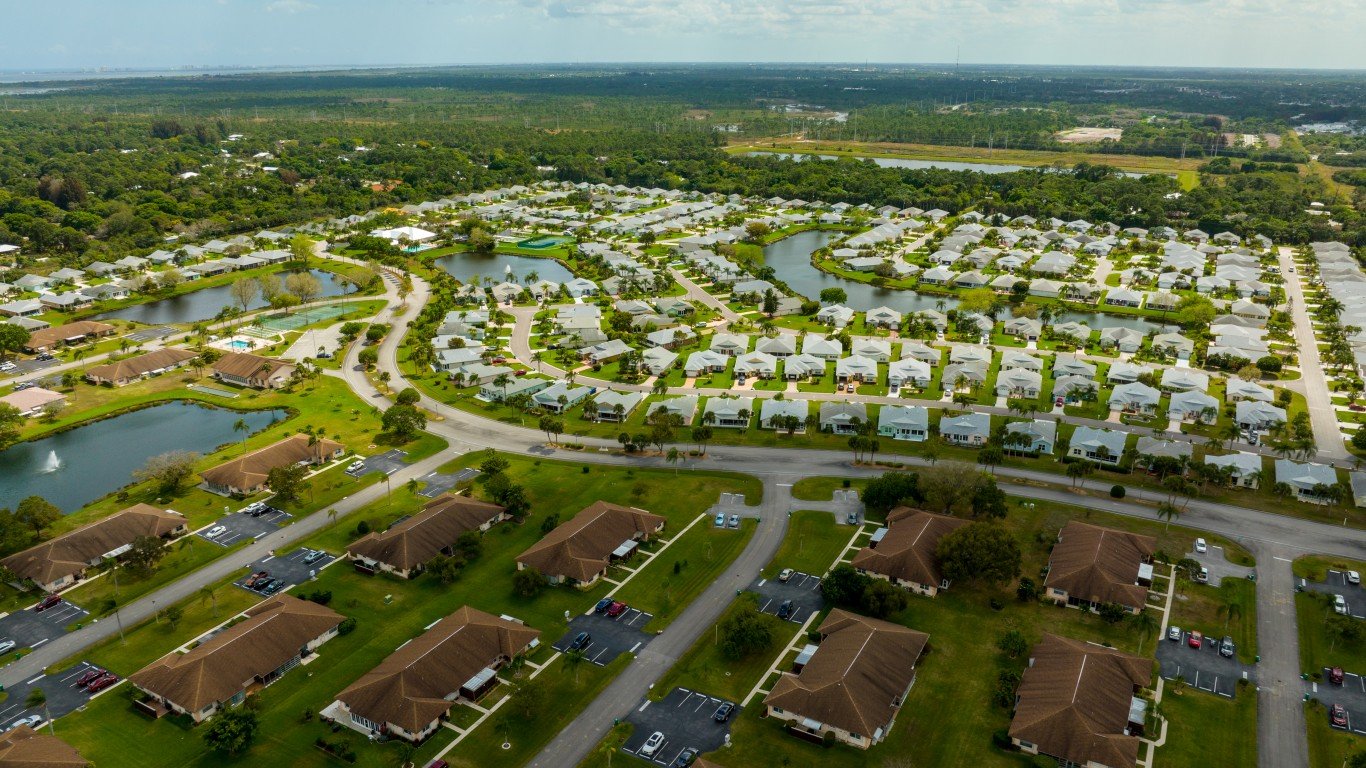
The Villages itself reflects that pattern. The median listing price there stood at $377,784 in August 2026, down from a peak of $436,850 in 2022, and homes are now sitting on the market for roughly 60 days on average, double the 30-day norm at the 2022 peak. Buyers have more leverage than at any point in the past five years. That is good news when you are buying in, but the same conditions are likely to greet the seller who eventually needs to exit in a hurry.
A realistic budget in current dollars for a two-person household in a designer home:
- Property tax, homeowners insurance, CDD assessments, amenity fee (approximately $204 a month for new buyers), and maintenance reserves: about $14,000
- Medicare Part B and D, a Medigap plan, dental, and out of pocket: about $11,000
- Groceries and dining: about $12,000
- Two vehicles plus a golf cart, insured and maintained: about $8,000
- Golf, clubs, travel, gifts, hobbies: about $10,000
- Home repair, vehicle sinking fund, emergency reserve, and federal tax on withdrawals: about $10,000
That lands near $65,000 to $70,000 a year of core spending. The national average household spent $78,535 in 2024, so this is a disciplined but not austere budget for a couple who paid cash for the house.
The Math on the Portfolio
Florida does the heavy lifting on the tax side. Florida ranks 4th on the 2025 State Tax Competitiveness Index with no individual income tax, and its adjusted state and local tax burden of $5,110 per capita is among the five lowest in the country. Social Security, pensions, and IRA withdrawals all escape state-level tax entirely. That matters enormously when you are drawing down a traditional 401(k) over two decades.
Assume combined Social Security of about $48,000 a year for a couple claiming near full retirement age, boosted by the 2.8% 2026 COLA confirmed by the Social Security Administration. Against a $68,000 budget, the portfolio needs to cover roughly $20,000 of the gap. At a 4% withdrawal rate, that is a $500,000 portfolio. Add the federal tax drag on tax-deferred withdrawals and the picture shifts upward. The 2026 standard deduction for married filing jointly is $32,200 per IRS guidance, and seniors 65 or older can now stack an additional $6,000 per person deduction under the One Big Beautiful Bill Act for tax years 2025 through 2028, on top of the regular age-65 supplement. Those combined shelters meaningfully reduce the tax bite, but the working portfolio number is still closer to $600,000 in invested assets, plus the paid-off house.
That is the good-decade number, and it covers only part of the full picture.
The Exit Nobody Prices In
A generic 4% calculator will never surface this part. The Villages is engineered around two healthy, mobile adults. When one spouse develops dementia, loses a hip, or dies, the machine stops working. Memory care in central Florida currently runs roughly $5,500 to $7,500 a month depending on the community and its amenities. The statewide median across Florida sits at approximately $5,833 a month in 2025 and 2026 industry survey data, and premium or newer facilities push the upper end considerably higher. Assisted living for one person runs about $5,300 to $5,600 a month at the Florida median per the CareScout 2025 Cost of Care Survey. Neither is covered by Medicare beyond short rehab stays, and the surviving spouse usually wants to be near adult children, which almost never means staying in Sumter County.
So you sell. Into what market? Resales in The Villages can move briskly in strong years and stall in soft ones, and the current environment leans soft. The infrastructure bond attached to the home adds a layer most buyers overlook. Depending on the section, that bond can range from around $14,000 on older homes north of County Road 466 to $20,000-$40,000 on the newest construction in areas like Fenney and Eastport. It either has to be paid off at closing or negotiated into the sale price. The amenity fee runs until closing. Moving a surviving spouse back to Massachusetts or New Jersey to be near family means re-entering housing markets where the cost of living index runs 105.8 and 108.8 respectively, against Florida’s 103.4, and doing it as a single filer with a shrunken Social Security check because one benefit disappeared.
The realistic exit reserve for this scenario is $250,000 to $350,000 in liquid, non-housing assets sitting outside the withdrawal math. That is two to three years of memory care, or a full relocation and re-purchase near family, or a long stretch of home health aides while the house sits on a softening market. The backdrop for that eventual exit has grown more challenging. The University of Michigan consumer sentiment index, which stood at 49.5 in June 2026, fell a further 8% in August as the Iran conflict pushed fuel, energy, and food prices higher. The national savings rate stood at just 2.8% in the second quarter of 2026 per the Bureau of Economic Analysis. Neither reading suggests buyers will be plentiful or flush if the exit arrives during a downturn.
The Number That Actually Works
Put it together: a paid-off designer home, roughly $900,000 in invested assets, and a claiming strategy that gets Social Security to full retirement age or later. Withdraw at 4% for the first decade against a $68,000 budget, letting the Florida tax advantage and senior deductions reduce federal drag. Keep the exit reserve, another $250,000 to $300,000, in a shorter-duration mix of Treasuries and a conservative balanced allocation so it remains accessible when needed rather than down 30% in the year you actually need it.
That is what The Villages actually costs, well beyond the sticker on the house. The full arc covers the good years and the harder ones that follow, when the cost of leaving decides whether the surviving spouse gets to choose where the last chapter happens.
Editor’s note: This article adds current Villages-specific pricing data showing the median listing price at $377,784 as of August 2026 (down from a 2022 peak of $436,850) with homes averaging 60 days on the market, revises the CDD infrastructure bond range to $14,000-$40,000 to reflect the full span from older homes to the newest construction sections, updates Florida assisted living and memory care cost benchmarks to the CareScout 2025 survey figures, and adds context on the new OBBBA senior deduction of $6,000 per qualifying person age 65 or older available through 2028.
Contact [email protected] for any questions or corrections.
I am a long time investor and student of business, and believe finding good companies that can become great investments is the best game on earth. After 20 years of writing and researching the public markets it is clear that individuals have never had more tools and information to take control of their financial lives. From ETFs and $0 commissions to cryptos and prediction markets there has never been a greater democratization of access to investing.
I write to help people understand the investments available to them so they can make the best choice for their portfolio, whether they're starting out or looking for income in retirement.