XLP’s 2.6% Yield Holds Firm as Retail Sales Hit 12-Month High
The Consumer Staples Select Sector SPDR Fund (NYSEARCA:XLP) is the default ticker investors reach for when they want a slice of the cereal aisle, the laundry detergent shelf, and the checkout counter inside one wrapper. XLP holds the S&P 500’s…

The Consumer Staples Select Sector SPDR Fund (NYSEARCA:XLP) is the default ticker investors reach for when they want a slice of the cereal aisle, the laundry detergent shelf, and the checkout counter inside one wrapper. XLP holds the S&P 500’s consumer staples names and pays a quarterly dividend funded by the cash those companies send to shareholders. With consumer sentiment at 49.8, deep in recessionary territory, the question for XLP holders is whether the fund’s roughly 2.6% trailing yield is still the bedrock income most people assume it is.
How the Distribution Actually Gets Funded
XLP is a pass-through. It collects dividends from its underlying companies and sends them out quarterly, minus an expense ratio of just 8 basis points. The fund paid $0.4549 in March 2026 and $0.6270 in December 2025, with the Q4 payment historically being the largest of the year. That seasonality reflects when underlying companies declare and pay, not any change in fund policy. The June 24, 2026 dividend paid $0.5742.
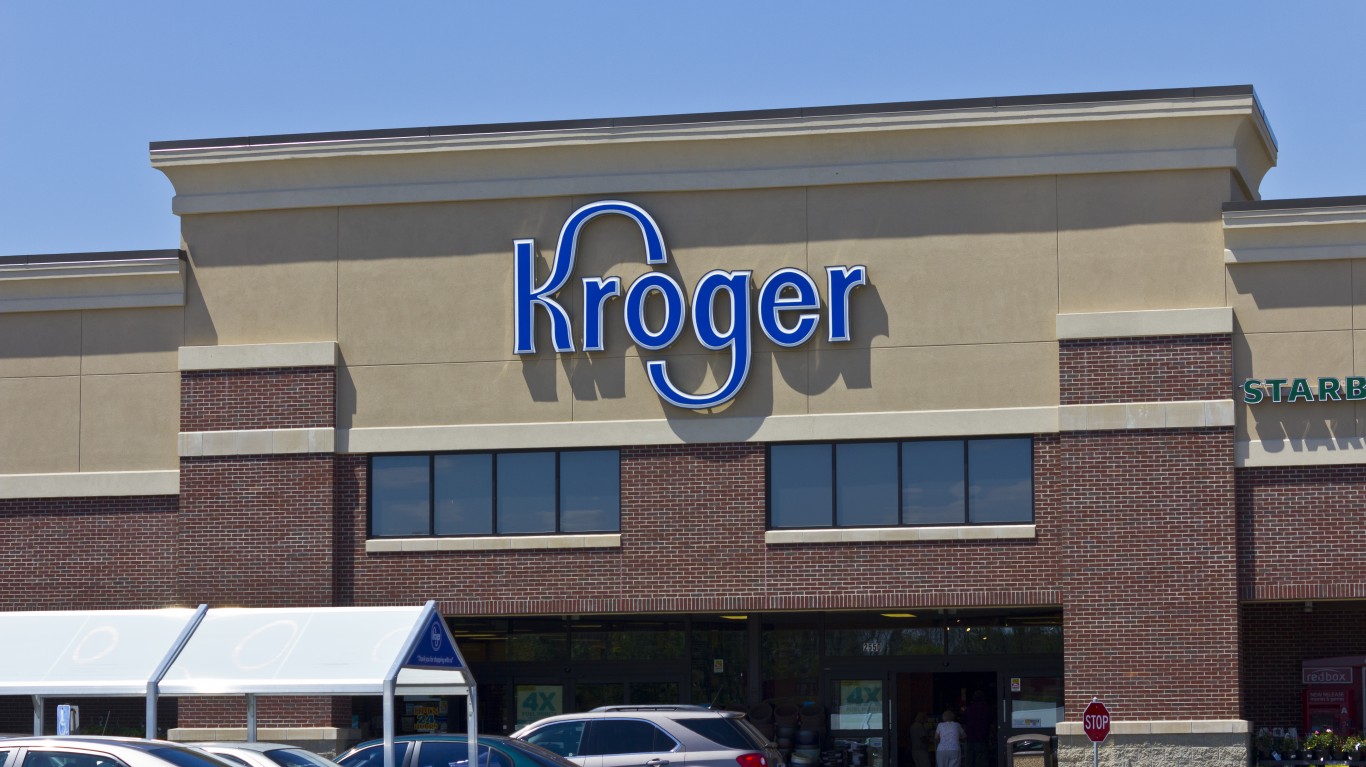
The top of the basket is concentrated. Walmart at 10.8%, Costco at 9%, Procter & Gamble at 7%, Coca-Cola at 6.5%, and Philip Morris International at 5.9% together drive roughly 40% of XLP’s net assets. The safety of the distribution is really the safety of those five payers.
The Top Five Under the Microscope
Procter & Gamble is the cleanest dividend story in the fund. The company raised its quarterly payout from $1.0065 in 2024 to $1.0568 in 2025 and again to $1.0885 in April 2026, extending a record that stretches across more than two decades of consecutive increases in this dataset alone. That kind of cash-flow discipline is the reason PG anchors the fund.
Coca-Cola and Philip Morris bring decades of pricing power and high payout ratios, which means the dividends are well-telegraphed but offer less cushion if volumes slip. Walmart and Costco are the wild cards. Both pay modest yields, but their dividends are backed by enormous and still-growing revenue. Retail sales hit a 12-month high of $757.1 billion in April 2026, up 0.5% month over month, a direct tailwind for the two largest holdings.
That retail-sales strength is the most important data point for XLP holders right now. Consumer sentiment has dropped 11.9 points from the July 2025 peak, yet actual spending keeps rising. Households are nervous, but they are still buying the products XLP companies sell, which is exactly the dynamic the fund is built to harvest.
What the Price Chart Is Telling You
Yield only matters if the principal holds up. Here is how XLP’s price performance breaks down:
- Current price: $83-83.50
- One-year total price gain: 5.45%
- Year-to-date move: 8.3%
- Five-year return: 37%
- Ten-year return: 103%
Add the dividends back and total returns are meaningfully higher. There is no hidden NAV erosion eating the distribution.
The headwind worth naming is the 10-year Treasury near 4.5%. With cash yielding nearly double XLP’s payout, the fund has to earn its place through total return and defensive ballast, not on yield alone. The VIX at almost 20, up 26% on the week, suggests the defensive ballast argument is about to be tested.
The Verdict on the Income Stream
XLP’s distribution is safe in any normal definition of the word. The top holdings are cash-generative, the fund has paid quarterly for 27 years through the 2008 crisis and the 2020 pandemic, and retail data shows the revenue engine is still running. The realistic risk is a quarter or two of flat payouts if sentiment finally drags volumes lower. Investors who want a higher payout in the same neighborhood can look at Vanguard Dividend Appreciation ETF (NYSEARCA:VIG) for a broader dividend-growth tilt, but for pure staples exposure, XLP’s income remains one of the more reliable streams on the market.
Contact [email protected] for any questions or corrections.
After 15 years on Wall Street with 7 of them as Director of Corporate and Municipal Bond Trading for a NYSE member firm, I started my own project and corporate finance consultancy. Much of the work involves writing business plans, presentations, white papers and marketing materials for companies seeking budgetary allocations for spinoffs and new initiatives or for raising capital for expansion or startup companies and entrepreneurs. On financial topics, I have been published under my own byline at The Motley Fool, 247wallst.com, DealFlow Events’ Healthcare Services Investment Newsletter and The Microcap Newsletter, among others. Additionally, I have done freelance ghostwriting writing and editing for several financial websites, such as Seeking Alpha and Shmoop Financial. I have also written and been published on a variety of other topics from music, audiophile sound and film to musical instrument history, martial arts, and current events. Publications include Copper Magazine, Fidelity (Germany), Blasting News, Inside Kung-Fu, and other periodicals.