Fed Chair Warsh Just Said the One Thing About Inflation Every Investor Wanted to Hear
Kevin Warsh went to Sintra and said what bond traders have been waiting to hear all summer. Inflation looks like it has peaked. Oil is cooperating. The tail risk of a July or August rate shock, the one quietly haunting…

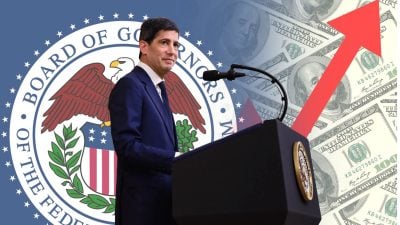
Kevin Warsh went to Sintra and said what bond traders have been waiting to hear all summer. Inflation looks like it has peaked. Oil is cooperating. The tail risk of a July or August rate shock, the one quietly haunting every duration-heavy portfolio in America, just got a lot less scary.
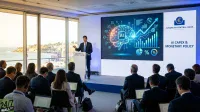
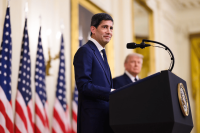
That was the read from David Zervos, Chief Market Strategist at Jefferies, on CNBC’s Morning Call Sheet Thursday. He was recapping Warsh’s remarks at the ECB conference in Sintra, where the Fed Chair delivered what amounts to a green light for the second-half rally thesis. Markets do not care what you meant.
What Warsh actually said about inflation
Zervos summarized it this way. “He said inflation itself looks like it’s peaked. Coming down with the oil price. Oil prices are back to almost exactly where they were in the first week of March. So I think he was quite optimistic on the outlook for inflation.”
The oil piece matters. Gas at the pump has fallen for eight straight weeks, from $4.50 in mid-May to $3.83 as of June 29. That is a 14.4% monthly drop, and it feeds directly into the psychology of inflation before it ever shows up in a Core PCE print. The Fed’s preferred gauge still sits in the 90th percentile of its 12-month range, so Warsh is arguing about the direction of travel rather than the current level.
Steve Sosnick, Chief Strategist at Interactive Brokers, made the sentiment linkage explicit. “If you correlate the university of michigan’s one year inflation expectations with the price of gasoline at the pump, it correlates extraordinarily well. A little bit of a lower price at the pump gets people feeling better about inflation going forward.” Cheaper gas today reprices what households think next year’s grocery bill will look like, and the Fed has to weight those expectations in its models. ECB President Lagarde said something similar at the same event, noting that upside inflation risks have eased.
Warsh’s comments came against a backdrop of a Fed Funds upper bound of 3.75%, unchanged since December. The 10-year Treasury at 4.44% tells you bond markets are not fully sold on the disinflation story yet, which is exactly why a dovish tilt from the Chair moves the needle. You can read the FRED series on the target rate here.
The labor market warning signal
Zervos also flagged what the Fed might be missing. “The unemployment rate has been a better long term indicator… In the beginning of 2023 we were at three and a half. Today we’re at 4.3.” The most recent print is actually 4.2% for June, ticking down from 4.3% in May, but Zervos’s broader point stands. Slow, grinding drift higher over years gets ignored in monthly noise and then suddenly becomes the only thing anyone talks about.
Consumer sentiment agrees. The University of Michigan index printed 44.8 in May, down 10% in a single month and approaching recessionary levels. The disinflation optimism is real, and the ground under the consumer is getting softer at the same time.
The market trifecta driving the second half
Alan McKnight, Chief Investment Officer at Regions Wealth Management, framed the bull case as a three-legged stool. “We think of it as a market trifecta: earnings growth which looks to be strong, inflation expectations coming down slowly, and efficiency from AI and productivity to support gains and keep margins up.”
The market action backs him up. The Russell 2000 is up 19% year-to-date, more than doubling the S&P 500’s 9.36% YTD gain. Small caps outperforming large caps by that margin is the classic rate-relief trade. Cheaper money helps leveraged balance sheets first.
On the tech rotation, Sosnick zeroed in on where the real beneficiaries have been: semiconductor stocks and other data-center plays he calls “the makers,” with momentum firmly behind the semis. That is consistent with the global picture. The worldwide semiconductor market hit US$796 billion in 2025, a 26% year-over-year jump driven by data-center and AI demand, and Taiwan’s IC industry alone is projected to reach $270.7 billion in 2026, a 29.5% increase.
The catch on McKnight’s third leg is that operating margins are already at multi-decade highs. AI productivity is real, but expecting margins to keep expanding from an already-peak level is a speculative bet.
The Fed’s most influential voice just told the market that summer inflation panic is off the table, oil is helping, and the earnings backdrop is holding up. The two things worth watching are whether the labor market keeps grinding softer and whether the semi-led rally is running on real fundamentals or just on the certainty that rates will keep coming down. Both can be true at once.
Contact [email protected] for any questions or corrections.
Omor Ibne Ehsan is a writer at 24/7 Wall St. He is a self-taught investor with a focus on growth, cyclical, and dividend equities that have strong fundamentals, value, and long-term potential. He also has an interest in high-risk, high-reward investments such as penny stocks.