Trump Knows Kevin Warsh Has to Hike Rates and There’s Nothing He Can Do About It
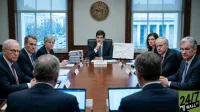
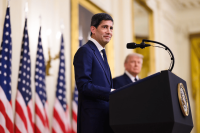
On Sunday, Donald Trump told NBC’s Meet the Press that raising interest rates would be wrong, calling it unfair to penalize a strong economy. Kevin Warsh chairs his first Federal Open Market Committee meeting on June 16-17, and the President…

This post may contain links from our sponsors and affiliates, and Flywheel Publishing may receive compensation for actions taken through them.
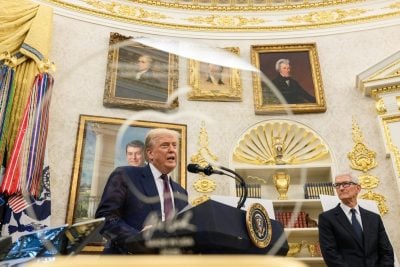
On Sunday, Donald Trump told NBC’s Meet the Press that raising interest rates would be wrong, calling it unfair to penalize a strong economy. Kevin Warsh chairs his first Federal Open Market Committee meeting on June 16-17, and the President wants the message received in advance. The problem for Trump is that the data Warsh is looking out hints the opposite.
Congress gave the central bank two jobs: maximum employment and stable prices, defined as 2% annual inflation on the core Personal Consumption Expenditures index. Both readings have moved against the doves. Total nonfarm payrolls climbed to 159.0 million in May, a preliminary figure from the Bureau of Labor Statistics that extends a string of monthly gains running back through January. The unemployment rate held at 4%, sitting in the 9th percentile of its historical range. This is a labor market still running hot enough to keep the Fed cautious.
The Inflation Problem Warsh Inherited
The price side is worse. Core PCE has climbed every month for the past year, rising from an index value of 126.1 in June 2025 to 129.6 in April 2026. Headline Consumer Price Index data shows the same trajectory: 325.3 in January 2026 rising to 333.0 by April. Three straight months of acceleration into a meeting is the setup for a hold or a hike.
Wages are reinforcing the story. Average hourly earnings for private workers reached $37.53 in May, up from $36.28 a year earlier. That pay growth, layered onto a tight labor market, is exactly the services-inflation engine the Fed has spent two years trying to slow.
The bond market is already repricing. The 2-year Treasury yield jumped roughly 12 basis points on June 5 alone, ending the week at 4.17%, while the 10-year settled at 4.55% and the 30-year at 5.01%. Long-dated yields above 5% tell you investors are not buying the disinflation story.
What Warsh Walks Into
The federal funds target sits at 3.75%, where it has been parked since December 10, 2025, after a series of cuts that took it down from 4.5% last summer. That is already accommodative relative to where core inflation is running. Several FOMC governors signaled openness to hiking at the April meeting, before the latest hot CPI and jobs numbers landed. The hawks now have a stronger case.
CME FedWatch, as of early June, was leaning toward at least one rate hike before year end, with implied odds in the neighborhood of 60%. That figure moves daily and should be read as approximate, but the direction is the point.
The political theater is loud. The constraint is quiet. Warsh can let Trump complain on Sunday shows for the rest of the year, and it will not change what Core PCE prints in July or what payrolls do in August. Real GDP expanded at a 2% annual rate in the first quarter, with gross private investment running at 7% and exports up 13%. The economy is too firm to give doves cover for cuts.
The Signal to Watch
The June 17 statement and Warsh’s first press conference are the events. The specific tells: whether the dot plot adds a hike for 2026, whether the statement language on inflation hardens, and whether Warsh uses the press conference to plant a flag on independence. Consumer sentiment has already collapsed to 49.8, deep in recessionary territory, which gives the doves something to wave. It will not be enough. The data has boxed Warsh in, and Trump cannot unbox.
Contact [email protected] for any questions or corrections.
Joel South covers large-cap stocks, dividend investing, and major market trends, with a focus on earnings analysis, valuation, and turning complex data into actionable insights for investors.
He brings more than 15 years of experience as an investor and financial journalist, including 12 years at The Motley Fool, where he served as an investment analyst, Bureau Chief, and later led the Fool.com investing news desk. He has also co-hosted an investing podcast and appeared across TV and radio discussing market trends.