Cramer Says the New Fed Chair Won’t ‘Shock’ Anyone at His Big Debut. Here’s Why That’s the Point
Kevin Warsh walks onto the ECB’s central banking stage in Sintra, Portugal today for his first big public outing as Fed Chair, sharing a roundtable with ECB President Christine Lagarde and the heads of the Bank of England and Bank…

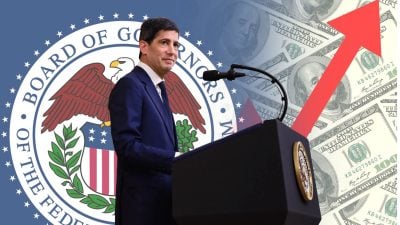
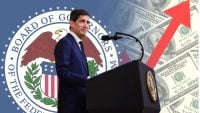
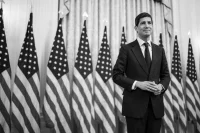
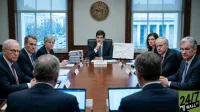
Kevin Warsh walks onto the ECB’s central banking stage in Sintra, Portugal today for his first big public outing as Fed Chair, sharing a roundtable with ECB President Christine Lagarde and the heads of the Bank of England and Bank of Canada. Jim Cramer, who has been telegraphing his read on Warsh for months on Mad Money, is telling viewers to dial back expectations. If you were hoping for a policy grenade, you are watching the wrong panel.
Cramer thinks the debut will be deliberately dull.
Continuity is the whole point of the appearance, in Cramer’s telling. “This isn’t the forum where he’s going to put the wood to stocks or bonds,” Cramer said. “Is he going to shock us? It’s unlikely.” That framing matters because Warsh inherits a Fed that has already done real work. The upper bound of the fed funds target sits at 3.75%, unchanged since December 10, 2025, following three cuts in roughly six weeks last fall.
A rate that has held steady for about six and a half months is the setup for a philosophy speech, not a surprise pivot at a foreign conference. Cramer’s version of what that sounds like goes something like this. “I think he’s going to say, listen, I am going to do what’s right. I don’t think he’s going to say, I’m going to raise rates.”
The Bob Rubin playbook, and the independence subtext
Cramer keeps invoking the old Bob Rubin approach of answering every question without making news. Warsh, in Cramer’s reading, will follow the same script and add a second layer on top, which is signaling institutional distance from a White House that, in Cramer’s words, is “disliked intensely.” “He wants to demonstrate that he’s independent of that government,” Cramer said. There is also a communications reform angle. Warsh has been telegraphing a tighter Fed message, with fewer regional presidents freelancing on television between meetings.
Cramer’s affection for Warsh is not new. On the April 27 Mad Money, he told viewers “the incoming chair, Kevin Wash is a lover of lower interest rates, so it’s not something we need to worry about” when discussing what could kill the bull market. His hope, stated on the April 17 show, was that “the new Kevin Marsh led Federal Reserve cuts rates and housing explodes.” Sintra is not where that pivot gets announced.
The market backdrop Warsh is walking into
The tape is unusually calm for a Fed transition. The 10-year Treasury yield sits at 4.47%. It has drifted lower from a mid-June peak of 4.51% on June 22. Cramer’s rough “ten-year near 4.5%, long bond near 5%” shorthand is close enough. Traders are not bracing for impact.
The complication is inflation. Core PCE, the Fed’s preferred gauge, printed at 130.08 for May 2026, up 0.3% month over month, and it sits in the 90.9th percentile of the past year’s distribution. This is why Warsh cannot casually preview cuts, even if he wants them. Meanwhile the ADP employment reading came in slightly below expectations, and the 10Y-2Y curve has flattened to 0.30%, well under the 12-month average of 0.547%. Bond markets are pricing caution. You can read the full FRED series on the 10Y-2Y spread here.
What to actually watch
For investors, the trade is tone. Listen for how Warsh handles questions on political pressure, how much daylight he puts between himself and other governors, and whether he uses the word “principled” the way Rubin used “strong dollar.”
If he does that job well, the rate-cut conversation gets pushed to the next FOMC meeting, where it belongs. If he stumbles into a headline, the calm 10-year and the 16 handle on the VIX will not stay calm for long.
Contact [email protected] for any questions or corrections.
Omor Ibne Ehsan is a writer at 24/7 Wall St. He is a self-taught investor with a focus on growth, cyclical, and dividend equities that have strong fundamentals, value, and long-term potential. He also has an interest in high-risk, high-reward investments such as penny stocks.