Steve Liesman: Fed Pivots to Inflation Fight Under Incoming Chair Warsh
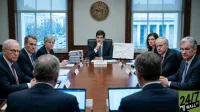
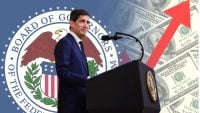
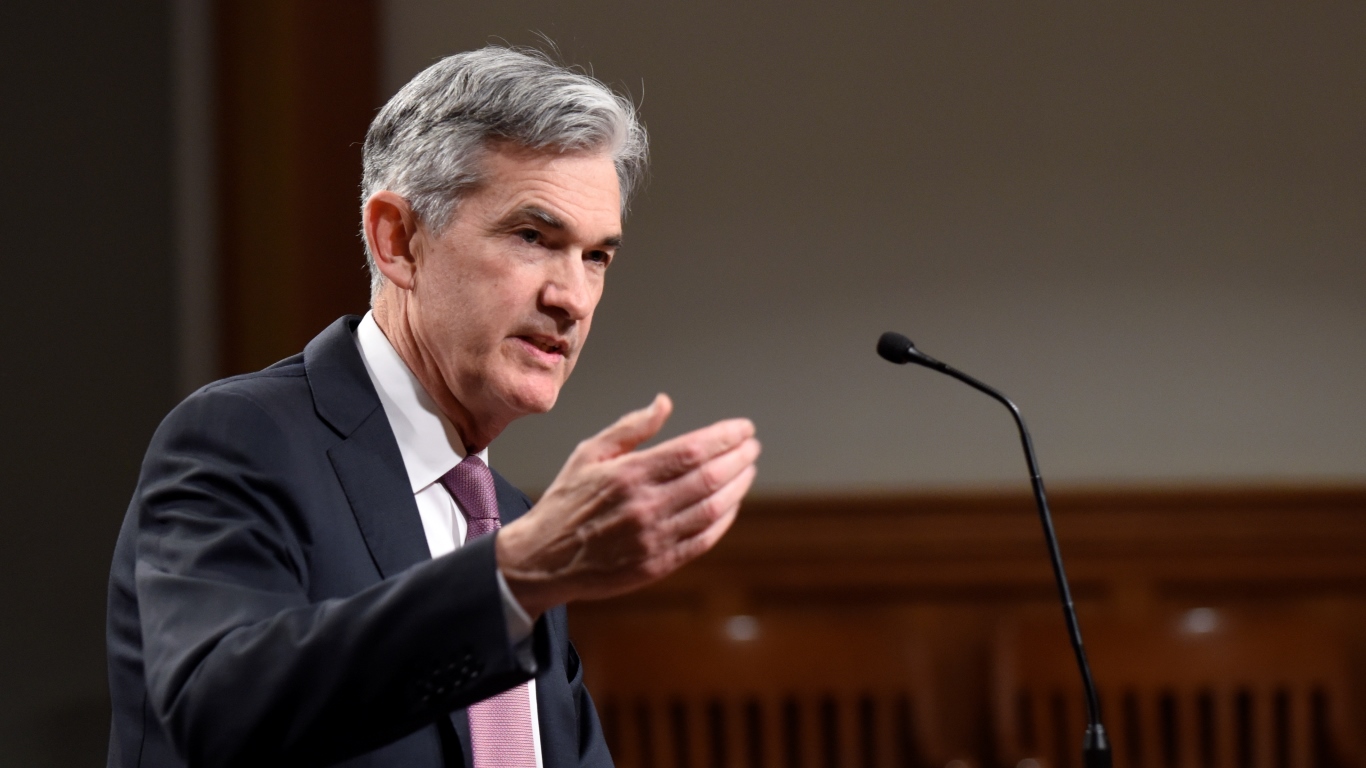
Jerome Powell passed the Federal Reserve gavel to Kevin Warsh while the committee appears to be drifting opposite to where the incoming chair has historically wanted to go. That is what CNBC’s Steve Liesman walked through, citing remarks from two…

Jerome Powell passed the Federal Reserve gavel to Kevin Warsh while the committee appears to be drifting opposite to where the incoming chair has historically wanted to go. That is what CNBC’s Steve Liesman walked through, citing remarks from two Fed presidents speaking overseas and a voting governor speaking the day before.
Austan Goolsbee was blunt. “The U.S. labor market, it’s been quite stable, and the thing that is going wrong is inflation. Stop. It was making progress. It stopped making progress last year and now has been rising. It’s the wrong way. So I’m more attuned to the inflation risks in the immediate term than to the labor market risks.” Neel Kashkari said much the same: “I am focusing heavily on inflation. I’m not ignoring it all the labor market. We need to pay attention to both sides. But the labor market is in decent shape right now, while inflation is simply much too high.”
Lisa Cook, a 2026 voting governor, went further: she said she could consider hiking rates, a phrase Fed officials had not been using at all. The Overton window on the FOMC has shifted, quietly, in a few weeks.
What the data is telling the Fed
The April PCE report explains the shift. Headline PCE ran at 3.77% year-over-year in April 2026, an acceleration from 3.53% in March. Core PCE, the Fed’s stickier gauge, ticked up to 3.29% from 3.24%. Energy is driving the headline level, but services inflation, driven by wages and rent, has been parked in a 3.42% to 3.58% band for a year. Goolsbee’s complaint that disinflation “stopped making progress” matches what the data shows.
Headline PCE has now climbed 1.31 percentage points from 2.46% in May 2025. That is a trend.
The Warsh transition risk premium
Liesman put the structural problem cleanly. “It is interesting that Powell hands off to Warsh a Fed that’s still technically has that subtle easing bias in its statement. And I’m pretty sure that’s not where the majority of the Fed is right now.” Warsh, historically a hard money voice, inherits a committee leaning the other direction.
Markets have noticed. Liesman flagged that December rate hike contracts are now trading at 52% probability, with March hike odds at 67% to 68%.
The Treasury curve confirms it. The 30-year yield closed at is nearly at 5%, with the long end having spiked to 5.18% on May 19 before easing. The 10-year sat at 4.48%. This is what a curve that has stopped believing in near-term cuts looks like.
How rate-sensitive sectors are positioned
The textbook response would be carnage in REITs and utilities. The actual response has been more nuanced. Vanguard’s REIT ETF (NYSEARCA:VNQ) is up 1% over the past month and 9% year to date, with the same 9% one-year gain.
Utilities, via the Utilities Select Sector SPDR (NYSEARCA:XLU), have not done as well in the recent stretch, down 3.5% over the past month though still up 3.4% year to date. Investors are pricing higher long rates into utilities, the more bond-proxy of the two, while REITs benefit from stickier rent dynamics that travel with inflation.
What retirement investors should think about
The consensus going into 2026 was for cuts. JP Morgan’s outlook noted that markets were pricing roughly 80 basis points of cuts through 2026, and Vanguard warned that the Fed would have limited scope to cut below an estimated neutral rate of 3.5%.
That consensus is unwinding in real time. For investors holding long-duration Treasuries on the expectation that yields would fall, the math has changed. Short duration, floating-rate exposure, and TIPS look more attractive on the margin. The BEA’s official release is on its PCE page, Vanguard’s SEC filings for VNQ detail the fund’s holdings, and the next PCE release will be the first inflation print to land squarely in Warsh’s lap.
Warsh has substantial convincing to do if he intends to push the cuts he has favored. The committee around him is no longer there.
Contact [email protected] for any questions or corrections.
Omor Ibne Ehsan is a writer at 24/7 Wall St. He is a self-taught investor with a focus on growth, cyclical, and dividend equities that have strong fundamentals, value, and long-term potential. He also has an interest in high-risk, high-reward investments such as penny stocks.