From $4.8 to $101: Rocket Lab’s Wild Ride Into an $8 Billion SpaceX Showdown
Rocket Lab (NASDAQ:RKLB | RKLB Price Prediction) shareholders who bought two years ago are now sitting on one of the loudest re-ratings in the market. The stock traded at $4.54 on July 1, 2024. It closed $101.65 on June 30,…


Rocket Lab (NASDAQ:RKLB | RKLB Price Prediction) shareholders who bought two years ago are now sitting on one of the loudest re-ratings in the market. The stock traded at $4.54 on July 1, 2024. It closed $101.65 on June 30, 2026, a staggering 2,138% two-year run. Retail investors are now treating the ticker like a proxy for the entire small-launch economy.
On June 29, the company announced it was buying Iridium Communications (NASDAQ:IRDM) in an $8 billion cash-and-stock deal valuing Iridium roughly 20% above its Friday close.
The re-rating from SPAC purgatory to $60 billion
Rocket Lab came public through a SPAC in August 2021 at a $4.1 billion valuation and then did nothing for years. It spent about three years trading at or below that price before surging in September 2024. The catalyst list is now long: 63.5% year-over-year revenue growth in Q1 FY26, a $2.20 billion backlog, an $816 million Space Development Agency contract for 18 satellites, and selection for the Department of War’s Space Based Interceptor program under Golden Dome for America alongside Raytheon (NYSE:RTX).
The market cap now sits around $60.2 billion, with the stock carrying a price-to-sales ratio of 89x on trailing revenue of $679.6 million. That is a multiple you only justify by promising you are going to be something much larger. Peter Beck just told investors what that something is.
Why buy Iridium instead of building
On TBPN’s Diet TBPN, John Coogan broke down the logic: Iridium pioneered LEO satellites 30 years ago and operates a fleet of 66 satellites connecting ships, mining sites, U.S. government agencies, and enterprise customers. It is profitable, boring, and cash-generative, with $438.6 million in EBITDA and a 23.2% operating margin. That is the opposite of Rocket Lab, which posted a $198.2 million net loss in FY25 while pouring cash into the reusable Neutron rocket.
Moreover, Beck framed the acquisition around what he calls the Space Application Equation. Iridium brings spectrum, an operational constellation, millions of customers, and profitability, while Rocket Lab contributes launch access and satellite manufacturing.
His pitch to shareholders, per Coogan’s reading: “1 plus 1 equals 3, not just 2.” Building spectrum rights, a constellation, and a customer base from scratch takes a decade. Writing an $8 billion check takes an afternoon. You can see the details in the Q1 FY26 8-K that set up this M&A firepower, with $1.205 billion in cash on the balance sheet.
The SpaceX shadow and what the crowd is betting
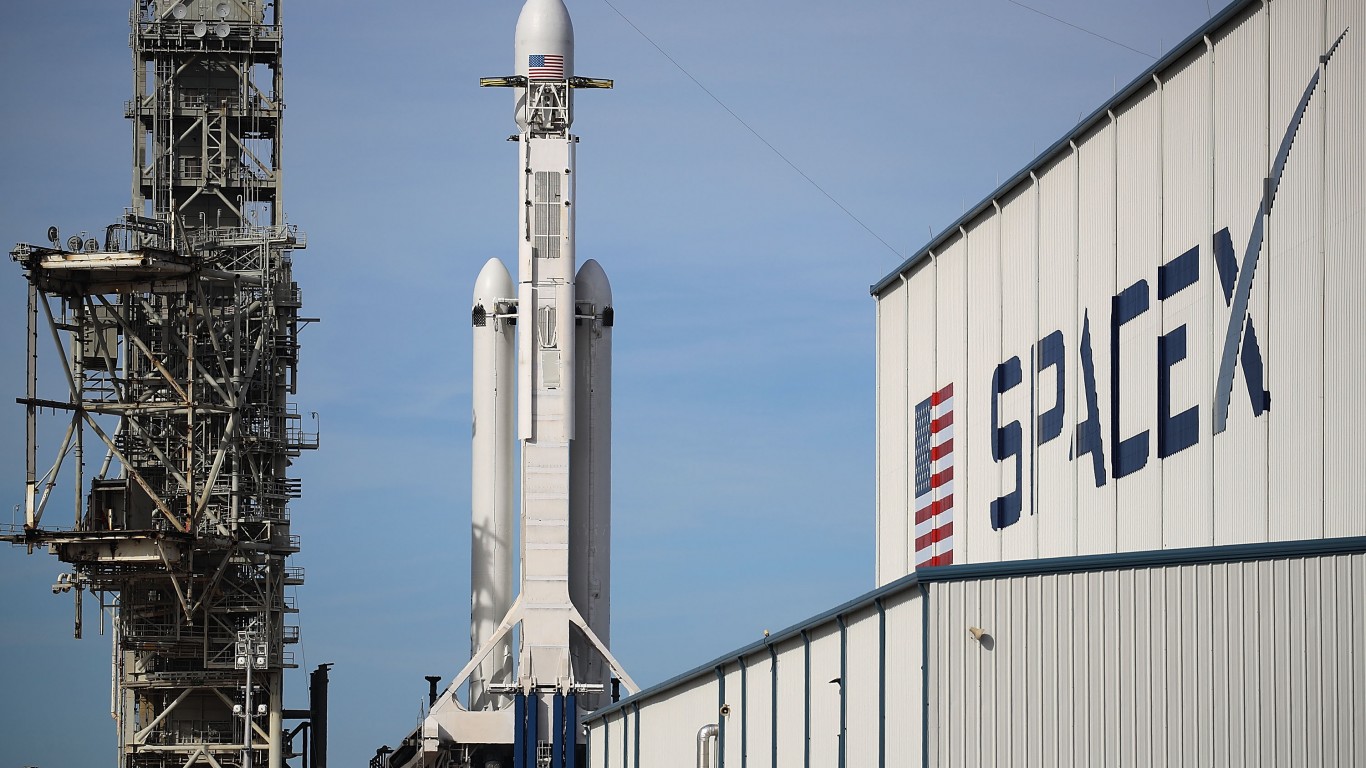
The obvious question is what this does against Starlink. SpaceX (NASDAQ:SPCX) already operates a roughly 10,000-satellite fleet, and by way of the SpaceX prospectus, Starlink’s connectivity segment is targeting a $1.6 trillion market. Iridium’s 66 satellites give Rocket Lab an immediate seat at the table in narrowband IoT, national-security comms, and maritime, where Iridium already grew its subscriber base to 2.56 million. It is a niche-and-defend strategy against a competitor optimized for consumer broadband.
Retail is buying it. Reddit’s r/stocks flipped from a bearish 25-to-39 sentiment score in late June to a peak of 85 (Very Bullish) on June 30 after the deal hit the wire. Iridium itself ripped, up 24.21% in the week ending June 30.
What can still go wrong
The Wall Street analyst target sits at $109.81, only modestly above current levels, and the stock has already dropped 29.15% from its late-May peak after the Nasdaq-100 inclusion trade unwound.
The Neutron first launch was pushed to Q4 2026 after a stage 1 tank test failure, integrating Iridium’s constellation with Rocket Lab’s manufacturing takes years, and the ATM offering raised $450 million in Q1 FY26 and diluted the very shareholders who have enjoyed the run. At 88 times sales, everything has to work.
Contact [email protected] for any questions or corrections.
Omor Ibne Ehsan is a writer at 24/7 Wall St. He is a self-taught investor with a focus on growth, cyclical, and dividend equities that have strong fundamentals, value, and long-term potential. He also has an interest in high-risk, high-reward investments such as penny stocks.