Jim Cramer Just Named His Favorite Stock, and It’s the Comeback Nobody Saw Coming
On June 30, Jim Cramer told Mad Money viewers his favorite stock is a company most people wrote off two years ago. "Intel, currently my favorite stock. CEO Lip-Bu Tan has turned this company around," he said. He dismissed the…

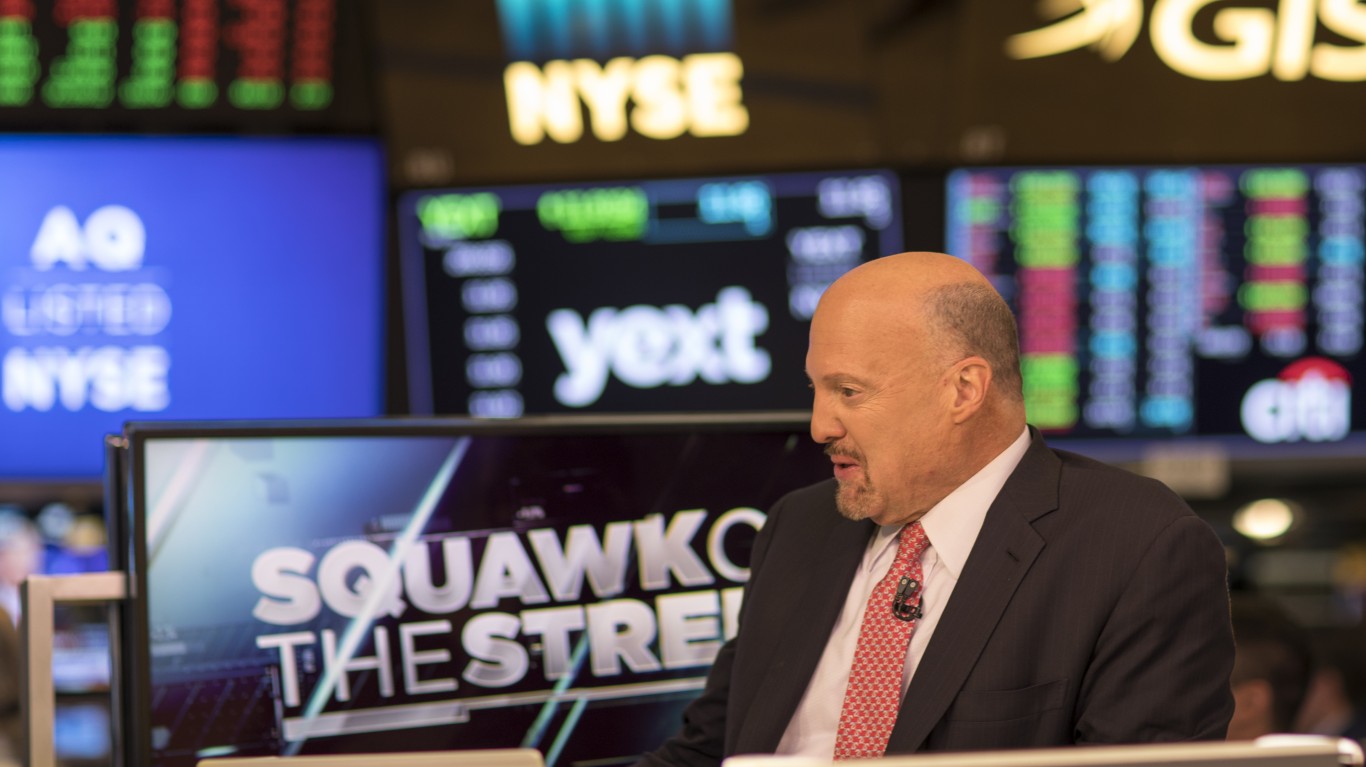
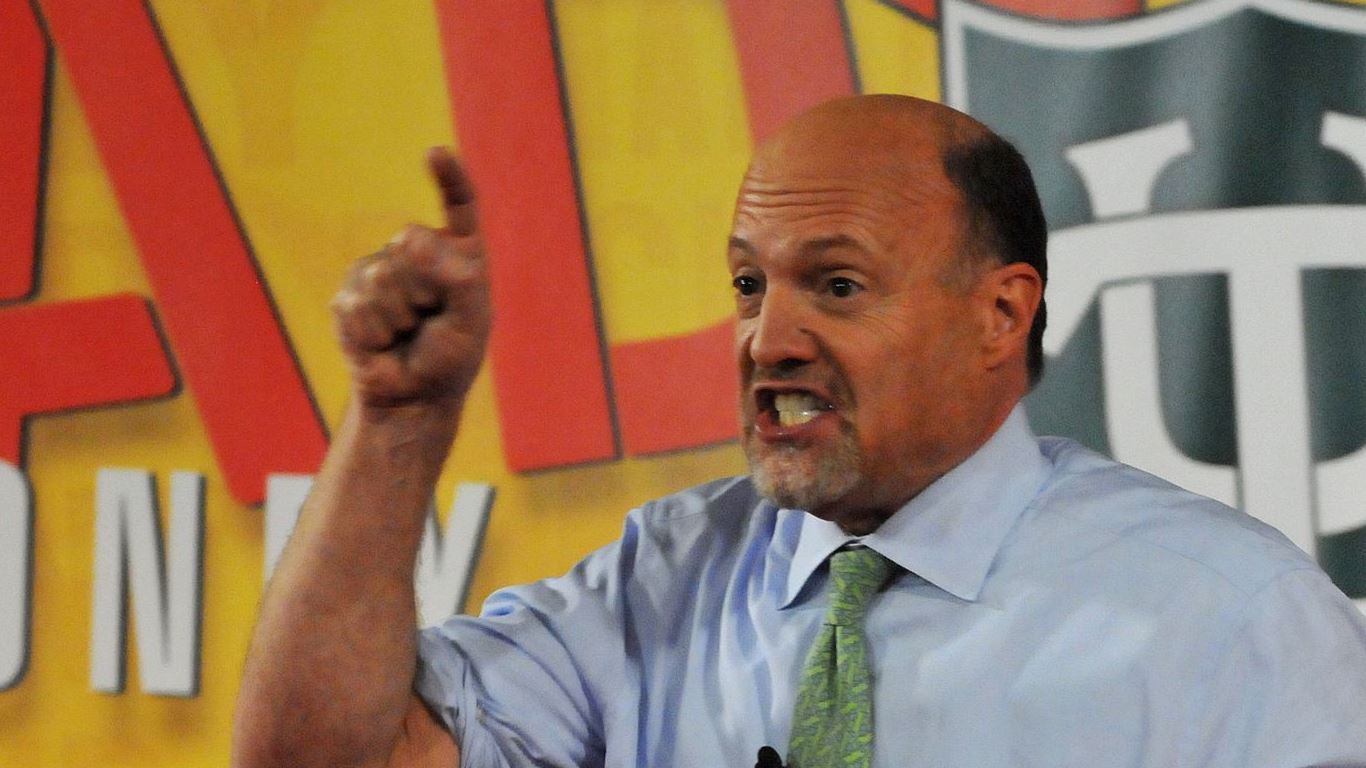
On June 30, Jim Cramer told Mad Money viewers his favorite stock is a company most people wrote off two years ago. “Intel, currently my favorite stock. CEO Lip-Bu Tan has turned this company around,” he said. He dismissed the mega-cap AI hyperscalers in favor of the chipmaker they all now depend on. The pick reflects a broader thesis he laid out the same night: “Wall Street is now rewarding tech companies with products in high demand and punishing their customers.”
Why Cramer Flipped on Intel
Intel (NASDAQ:INTC | INTC Price Prediction) has become the loudest turnaround story in semis. When Cramer made his call on June 30, the stock had surged roughly 278% year to date and touched an all-time intraday high of $142.35 that same day. The rally has since cooled, with Intel trading near $102 as of mid-August, still up approximately 175% for the year after a pullback driven by dilution concerns tied to a massive capital raise. CEO Lip-Bu Tan took over when the stock was near $20 and has since delivered seven consecutive quarters of revenue above expectations.
The Q1 fiscal 2026 print, released April 23, 2026, showed the early acceleration. Revenue came in at $13.577 billion, up 7.2% year over year. The Data Center and AI segment grew 22% to $5.052 billion, and Intel Foundry revenue rose 16% to $5.421 billion. Non-GAAP EPS of $0.29 blew past the $0.0127 consensus. Details in the Q1 8-K spell out the mechanics.
Then Q2 raised the bar further. Intel reported second-quarter revenue of $16.1 billion on July 23, up 25% year over year, marking the company’s fastest revenue growth in more than 15 years. The Data Center and AI segment accelerated sharply, climbing 59% to $6.3 billion. Non-GAAP EPS of $0.42 more than doubled the $0.21 analyst consensus. For Q3, management guided revenue of $15.8 to $16.8 billion.
Three Growth Engines Cramer Wants You to See
Cramer laid out three legs to the Intel story. First, CPUs remain essential for AI inference, and Tan himself said: “The next wave of AI will bring intelligence closer to the end user, moving from foundational models to inference to agentic. This shift is significantly increasing the need for Intel’s CPUs and wafer and advanced packaging offerings.” Second is advanced packaging and automotive, where margins run hot.
Third is the foundry, which is finally moving. Intel 18A ramped to high-volume manufacturing in Arizona and Oregon, and Intel Xeon 6 was selected as host CPU for NVIDIA (NASDAQ:NVDA) DGX Rubin NVL8 systems. Add the $5 billion NVIDIA equity investment and the $5.7 billion CHIPS Act disbursement, and the balance sheet looks nothing like the one investors were panicking about a year ago.
Insider behavior has lined up with that narrative as well. CFO David Zinsner acquired 37,015 shares of common stock on June 1, 2026, and 47 recent insider transactions showed a net buying direction at the time of publication.
The $20 Billion Capital Raise
The single biggest post-publication development is a statement of conviction in disguise. On August 10, 2026, Intel priced a $20 billion underwritten public offering of 210.5 million shares at $95 apiece, upsized from an initial $15 billion target. The deal drew more than $100 billion in institutional demand, a five-times oversubscription that signals how seriously the professional buy side is taking the foundry buildout. Net proceeds of approximately $19.7 billion are earmarked for capital expenditures and working capital. Intel simultaneously raised its full-year capex target to $20 billion from $18 billion, citing AI infrastructure demand that its existing factories cannot fully serve.
The dilution spooked retail investors initially, sending shares down roughly 4% on the announcement day. Institutional buyers, having reviewed Intel’s 2026 capital expenditure guidance and foundry ambitions, concluded the growth funded by the raise outweighs a roughly 4% dilution to existing holders. At the current price near $102, the consensus analyst target of approximately $115 implies meaningful room to run, though the question of how quickly the foundry can scale remains open.
The Memory Boom Cramer Is Riding Alongside
Cramer’s Intel pick sits inside a larger frame he keeps repeating: “The spend can only be defended by profitability, not press release.” That is why memory suppliers are getting retail flows. Micron Technology (NASDAQ:MU) reported fiscal Q3 revenue of $41.46 billion, up 346% year over year, with non-GAAP EPS of $25.11 and GAAP gross margin at 84.6%. Guidance for the following quarter calls for $50 billion in revenue. Micron’s data center revenue alone exceeded $25 billion in the quarter, putting it on an annualized run rate above $100 billion.
SanDisk (NASDAQ:SNDK) delivered its own record quarter when it reported fiscal Q4 2026 results on August 5, with revenue of $8.965 billion, up 372% year over year. The stock had rallied approximately 470% year to date heading into that report, before pulling back on guidance that, while strong, did not clear the lofty expectations priced in. For the full fiscal year, SanDisk’s datacenter revenue rose 437%. Cramer’s conviction that memory names were tripling in months was well-founded; the harder question now is sustaining that pace.
The Customers Are Taking the Punishment
The flip side of Cramer’s thesis lives in the compute chipmakers. Marvell Technology (NASDAQ:MRVL), which Jensen Huang has flagged as a potential trillion-dollar company, is up sharply year to date on custom-silicon tailwinds. AMD (NASDAQ:AMD) has also posted strong gains, with Lisa Su leaning into the Meta deal for up to 6 gigawatts of Instinct GPUs. Both are winning and volatile, and Cramer warns they could get repriced if hyperscaler capex slows without earnings to justify it.
Intel’s path forward runs through shipping 18A wafers, landing more Xeon sockets in Rubin racks, and keeping foundry losses shrinking. Cramer thinks Tan is doing exactly that. The $20 billion capital raise, oversubscribed five times over by institutional buyers, suggests a growing number of Wall Street professionals agree.
Editor’s note: This article has been updated to reflect Intel’s Q2 2026 earnings (revenue of $16.1 billion, up 25% year over year, the fastest growth since 2011), its $20 billion secondary stock offering priced at $95 per share on August 10, 2026, a corrected count of seven consecutive quarters of revenue beats, an updated analyst consensus price target of approximately $115, and revised year-to-date performance figures for both Intel and SanDisk to reflect post-July price action.
Contact [email protected] for any questions or corrections.
Omor Ibne Ehsan is a writer at 24/7 Wall St. He is a self-taught investor with a focus on growth, cyclical, and dividend equities that have strong fundamentals, value, and long-term potential. He also has an interest in high-risk, high-reward investments such as penny stocks.