Forget Nvidia: AMD Might Close the Gap Faster Than Anyone on Wall Street Expects
NVIDIA (NASDAQ:NVDA | NVDA Price Prediction) is the stock everyone points at, a $4.75 trillion monument to the AI buildout that just posted 85.23% revenue growth last quarter and guided to $91 billion for the next one. But the more…

NVIDIA (NASDAQ:NVDA | NVDA Price Prediction) is the stock everyone points at, a $4.75 trillion monument to the AI buildout that just posted 85.23% revenue growth last quarter and guided to $91 billion for the next one. But the more interesting setup right now is elsewhere. Advanced Micro Devices (NASDAQ:AMD) closed Thursday around $517.82 and ripped roughly 7% higher intraday today, and it is doing something NVIDIA structurally cannot do at its current size, which is compound off a smaller base while the largest AI buyers on earth publicly commit to its next-generation silicon.
Why the crowded NVIDIA trade is getting harder from here
NVIDIA is a great company that increasingly has a valuation problem. Its Q2 revenue guide of $91 billion explicitly excludes China Data Center compute, a bucket that contributed $4.6 billion a year earlier and is now effectively zero. Total supply-related commitments have ballooned to $119 billion, up from $50.3 billion two quarters back, and that kind of forward inventory positioning creates real downside if hyperscaler capex takes even a modest breath.
Data Center is now 92.3% of total revenue. That is one door for a $4.75 trillion company, and it opens onto a handful of hyperscale customers who now have public partnerships with AMD as well.
Polymarket traders already sense the ceiling. The most probable July close on NVIDIA sits at $192, and the probability of finishing this week above $200 is only 4.5%. Consensus is priced for consolidation, so any incremental dollar chasing NVIDIA is buying a stock the crowd already expects to stall.
AMD’s data center is inflecting while NVIDIA laps a huge base
Look at what the AMD segment has done in four quarters. Data Center revenue grew 14% in Q2 2025, then 22%, then 39%, and hit 57% year over year in Q1 2026 at $5.78 billion. Free cash flow jumped 252.96% year over year to $2.57 billion, non-GAAP gross margin expanded to 55%, and management guided Q2 to roughly $11.2 billion, up about 46% year over year with gross margin stepping to 56%. Net income grew 95.06% on a business roughly one-fifth the size of the incumbent, with a debt-to-equity ratio of 0.07.
Trailing P/E sits near 181x, forward P/E near 76x, and shares are up 148% year to date. So yes, you are paying up. You are paying up for a business whose Data Center growth rate is still accelerating while the incumbent laps ever-tougher comparisons, and for Client, Gaming, and Embedded segments that add a stability cushion NVIDIA no longer has.
The customer list that quietly closes the gap
Then there is the question of who is actually writing checks. Meta committed to 6 GW of AMD Instinct GPU deployment, with the first gigawatt powered by MI450. OpenAI selected AMD as a core preferred partner with another 6 GW planned. Oracle is deploying 50,000 GPUs on AMD’s Helios rack design.
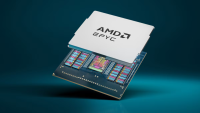
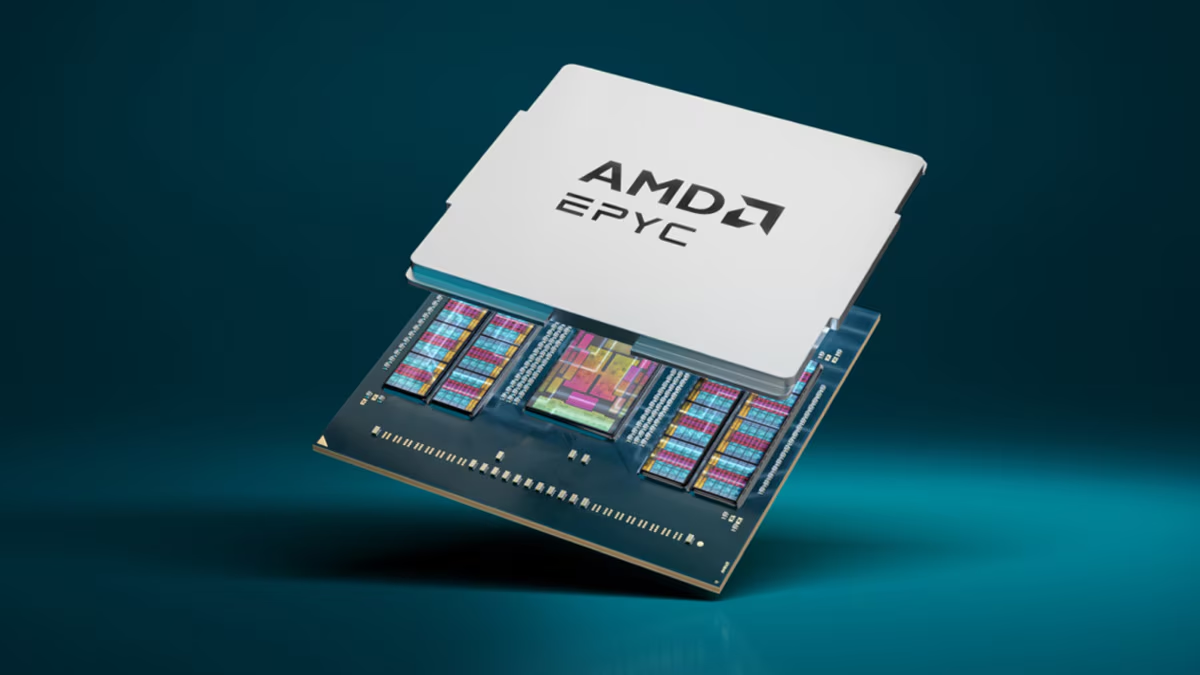
AWS, Google Cloud, Microsoft Azure, and Tencent are all expanding 5th Gen EPYC-powered cloud instances. On the Q1 call, Lisa Su said customer engagement around MI450 and Helios is strengthening with “leading customer forecasts exceeding our initial expectations”. When the two largest AI capex spenders on the planet independently sign multi-gigawatt commitments for silicon that hasn’t fully shipped, a credible duopoly is forming in real time.
Retirement portfolios tend to compound by owning businesses the crowd is still catching up to, and on the numbers above AMD’s data center trajectory and customer commitments are what to keep an eye on next to NVIDIA’s tougher comps.
Contact [email protected] for any questions or corrections.
Omor Ibne Ehsan is a writer at 24/7 Wall St. He is a self-taught investor with a focus on growth, cyclical, and dividend equities that have strong fundamentals, value, and long-term potential. He also has an interest in high-risk, high-reward investments such as penny stocks.