I’m Loading Up on AMD Because It Proves That Coming in Second Place Creates Asymmetric Upside
Second place in AI chips sounds like a consolation prize until you see who is writing the checks to keep it alive. Here is why the challenger seat looks more attractive than the throne right now.

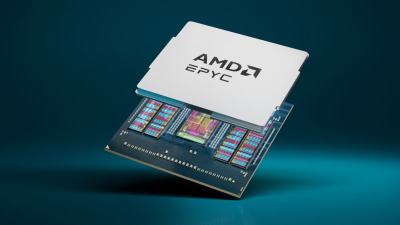
I keep hitting the buy button on Advanced Micro Devices (NASDAQ:AMD | AMD Price Prediction) because second place in this cycle is the seat I actually want to own. First place is priced like it will never stumble. Second place gets paid every time a hyperscaler writes a check to make sure it never has to depend on first place. That is the trade I keep funding, month after month.
The Core Reason I Keep Adding
The pull is simple. Cloud buyers are actively financing a credible alternative to NVIDIA (NASDAQ:NVDA), and AMD is that alternative. Meta signed up for up to 6 gigawatts of AMD Instinct GPUs. OpenAI committed to 6 gigawatts of AMD GPUs. Oracle Cloud is deploying 50,000 GPUs on AMD Helios racks in Q3 2026. Coming in second still means multi-gigawatt, multi-year contracts that reshape the earnings base.
The Receipts
Q1 FY2026 landed with revenue of $10.25 billion, up 37.9% YoY, and non-GAAP EPS of $1.37 beating the $1.29 consensus. Data Center revenue hit $5.78 billion, up 57% YoY. Free cash flow ran $2.566 billion, up 252.96% YoY. Management guided Q2 revenue to roughly $11.2 billion, about 46% YoY growth, with non-GAAP gross margin widening to around 56%.
Lisa Su called out that “Customer engagement around MI450 Series and Helios is strengthening, with leading customer forecasts exceeding our initial expectations.” The balance sheet supports the ramp: debt-to-equity of 0.071 and interest coverage of 28.2x. Full-year 2025 free cash flow more than doubled to $5.519 billion. That is a small-base compounder starting to compound.
Why Not Just Buy NVIDIA
I own the argument for NVIDIA. Q1 FY2027 revenue of $81.615 billion, up 85.23% YoY, with 75.0% gross margins is a business I respect. I do not want to pay for it here. NVIDIA carries a market cap of $5.14 trillion and a price-to-book of 32.65 against AMD’s 14.30. When guidance already assumes zero China Data Center compute revenue and management has committed $119.0 billion in supply, even a one or two point share loss squeezes the multiple. Polymarket puts a 72.5% probability on NVDA landing at $216 in July 2026, with probability collapsing above $224. That is a tight ceiling. NVDA is up 13.84% year to date. AMD is up 157.91%. The re-rating has already started.
The Real Risk
NVIDIA still holds roughly 85% market share of the AI accelerator market. If MI450 slips, or if ROCm fails to close the software gap, AMD’s Data Center growth stalls and the current P/E of 208 gets tested hard. Export controls are real too: MI308 restrictions to China cost $440M in net inventory charges in FY2025. What keeps me buying is that hyperscalers are the ones underwriting the roadmap. Meta, OpenAI, and Oracle are not signing gigawatt commitments to a product they expect to fail.
What Keeps The Buy Button Active
Analyst consensus target sits at $541.66 with 42 buy or strong buy ratings against zero sells. Forward P/E of 70 against 91.2% earnings growth gives me a PEG under 1.2. I am paying for the challenger the market pays cloud providers to keep alive. That is why I keep buying, and that is why I will keep buying every quarter that the design wins keep landing.
Contact [email protected] for any questions or corrections.
Alex Sirois is a financial writer with experience spanning both retail and institutional investing. He has written for InvestorPlace and held roles at BNY Mellon and Bernstein, giving him a perspective that bridges Main Street portfolios and Wall Street analysis.
Alex holds an MBA from George Washington University and has built his career across multiple industries, including e-commerce, education, and translation — a breadth of experience that informs how he breaks down complex financial topics for everyday investors. His writing is conversational, actionable, and grounded in long-term, buy-and-hold investing principles.
At 247 Wall St., Alex focuses on delivering analysis that is both accessible and useful, with a clear emphasis on helping readers make more informed decisions with their money.