How Nvidia Became The Black Sheep Of The Chip Stock Rally
NVIDIA’s fundamentals have never looked stronger, yet its stock is limping through 2026. NVIDIA (NASDAQ:NVDA | NVDA Price Prediction) is up just 3.2% year to date, a striking laggard in a sector where money is flooding into almost everything else.…


NVIDIA’s fundamentals have never looked stronger, yet its stock is limping through 2026. NVIDIA (NASDAQ:NVDA | NVDA Price Prediction) is up just 3.2% year to date, a striking laggard in a sector where money is flooding into almost everything else. That is the paradox: the company at the center of the AI buildout has become the black sheep of the chip rally.

An uneven rally
Advanced Micro Devices (NASDAQ:AMD) has ripped 171.25% year to date. Micron Technology (NASDAQ:MU) is up a stunning 304.62%. Intel (NASDAQ:INTC), still deep in a turnaround under Lip-Bu Tan, has surged 278.4% on DCAI momentum and NVIDIA’s own $5 billion equity investment. Broadcom (NASDAQ:AVGO), the custom-silicon story, is one example of another megacap stock that largely matches NVIDIA’s returns.
But the broader story is one of semiconductor stocks rallying. The VanEck Semiconductor ETF (Nasdaq: SMH) is up 59% year-to-date. The divergence looks set to continue today. The VanEck is up 3% premarket while NVIDIA shares are up just .3%, as of 8:40 a.m. ET. NVIDIA shares are under pressure on reports of delays across their upcoming lineup of Vera Rubin server systems.
The expectations trap
The earnings do not explain the tape. Revenue rose 85% year over year to $81.6 billion, with data center up 92% to $75.2 billion. CEO Jensen Huang framed it plainly: “Agentic AI has arrived, doing productive work, generating real value and scaling rapidly across companies and industries.” But NVDA trades at a forward P/E of less than 20 now, and when a name becomes the consensus AI trade, even a blowout can underwhelm a market that had already priced perfection. Polymarket sentiment tracks this: end-of-July close-above-$200 probability sits at just 43%.
The competitive shift
The narrative is fragmenting. NVIDIA still owns roughly 81% of the AI chip market, but Broadcom’s custom ASICs for Alphabet and Meta are eating the story, with Bloomberg Intelligence forecasting a 27% CAGR for custom ASICs through 2033 versus 16% for AI accelerators. Broadcom guided Q3 AI semiconductor revenue to $16.0 billion, more than 200% year over year. AMD’s Meta Instinct GPU deal anchors a multi-year hyperscaler thesis, and Lisa Su noted “leading customer forecasts exceeding our initial expectations” on MI450.
One important number to watch is the relative size of AMD compared to NVIDIA. Right now, AMD is worth about 18% of NVIDIA’s value. At the beginning of the year, AMD was worth less than 10% NVIDIA. Investors are still piling into companies benefiting from the data center buildout, they’re just not piling into NVIDIA.
The memory discipline trade
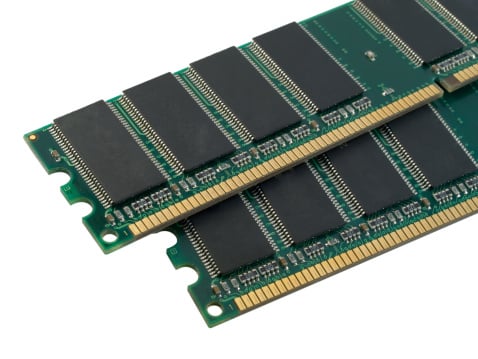
Micron is a different animal. Samsung, SK Hynix, and Micron have avoided the aggressive oversupply that crushed memory pricing in prior cycles, a meaningful break from history. Q3 revenue exploded 345.7% year over year to $41.46 billion, and CEO Sanjay Mehrotra pointed to multi-year Strategic Customer Agreements designed to lock in durability. NVIDIA has been smart about locking in its own memory supply as other companies like Apple (Nasdaq: AAPL) have been caught flat footed. And yet, the combined value of Micron, SK Hynix, and Samsung now rivals NVIDIA itself.
Most strikingly, Micron is now forecasting adjusted gross margins of 86% next quarter, above the peak gross margins NVIDIA ever achieved. Some estimates put half of all data center spend going toward memory in 2027. Simply put, the rise of memory is shifting the center of gravity in the data center trade away from NVIDIA and towards memory names.
The durability question
Which brings the market to the quiet question underneath all of it. Demand looks strong in 2027, but with hyperscalers now having to move into debt and equity offerings, the question of whether growth slows dramatically in 2028 is now front and center on investors minds. The ‘good’ news for NVIDIA investors is the company now trades for just 12X its forecasted 2028 earnings. If a slowdown does come, it’ll likely hit NVIDIA a lot less than names trading for 50X their forecasted 2028 profits.
Contact [email protected] for any questions or corrections.
I've spent more than 15 years inside enterprise software, working alongside the finance, sales operations, and HR leaders who run the revenue engines at some of the largest tech companies in the country.
My day job is helping enterprise executives make smarter decisions about retention, compensation, and growth. These are the same operational levers that show up in every earnings report investors actually read. That perspective shapes my writing for 24/7 Wall St.
The headline numbers are easy. The interesting stuff is underneath: how companies make money, what executives are worried about, and what any of it means for the person checking their 401(k) on a Sunday afternoon. I write about personal finance and business as someone who has spent her career inside the rooms where these decisions get made.