Analyst Dan Ives Calls Memory Chips the “Golden Child” of the AI Revolution with “15-to-1” Demand-to-Supply Imbalance
Wedbush's Dan Ives is calling one corner of the semiconductor market the single most important asset in the AI buildout, and he says the supply crunch powering it will not let up for years. The stocks he is watching right…


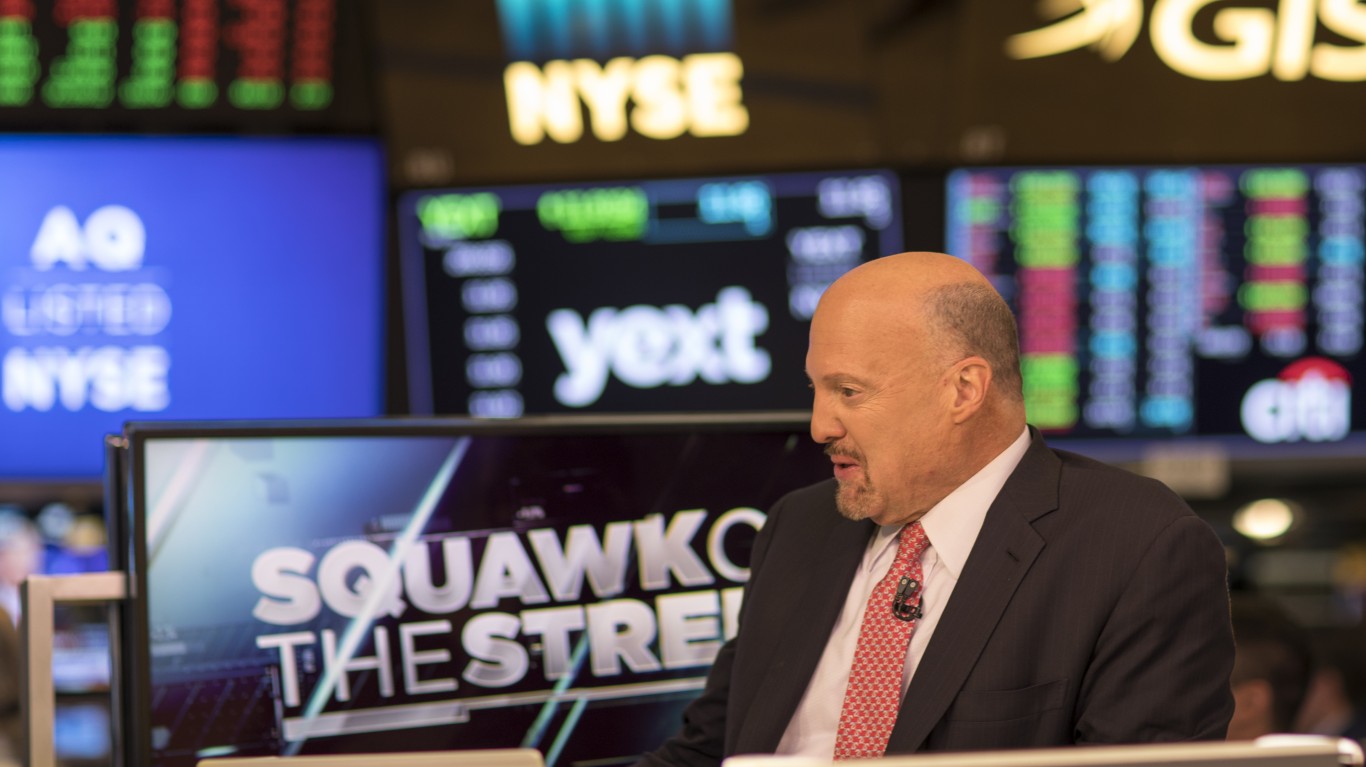
Wedbush Securities tech strategist Dan Ives argued on CNBC on Monday that memory chips have become the most valuable slice of the AI supply chain, and that SK Hynix’s blockbuster U.S. listing debut on Friday is the clearest signal yet that capital is rotating toward American-listed AI infrastructure names. “Those are the golden child really of this AI revolution. The reality is you’re not going to have equilibrium in terms of demand and supply at least until 2028.”
Ives quantified the supply and demand imbalance he sees: “We continue to think demand [to] supply 15 to 1 in terms of the chips,” he said, adding that for the first time in 30 years, the U.S. is ahead of China in tech, a shift he expects will draw more foreign listings to New York.
Micron Is the Purest U.S. Play on the AI Memory Shortage
The clearest expression of the memory rerating is Micron Technology (NASDAQ:MU | MU Price Prediction). Shares are up 243.33% year to date and 696.76% over the past year, carrying the company to a $1.1 trillion market cap. Fiscal Q3 revenue reached $41.456 billion, up 345.72% year over year, with GAAP gross margin expanding to 84.6% and non-GAAP EPS of $25.11 beating consensus expectations. Guidance calls for Q4 revenue of $50.0 billion ± $1.0 billion and roughly 86% gross margin.
CEO Sanjay Mehrotra told investors that “AI demand is driving DRAM and NAND data center bits TAM to exceed 50% of the industry TAM for the first time in calendar 2026” and that Micron can currently fulfill only “50% to two-thirds” of some customers’ demand. That is the supply squeeze Ives is monetizing thematically.
Why Dan Ives Still Likes Nvidia
Ives argued that NVIDIA (NASDAQ:NVDA) and the hyperscalers have become “the shiny new toy, shiny new object in terms of memory. The ones that are actually at the center, whether it’s the hyperscalers or Nvidia, those are almost in the penalty box.”
Ives believes Nvidia still plays a central role in the AI industry: “There’s one chip in the world fueling the AI revolution, and that’s led by the godfather of AI, Nvidia. Where is memory without Nvidia? Where’s memory without the hyperscalers?”
Ives cited that NVIDIA trades at its lowest valuation since 2019, even as Q1 FY2027 revenue hit $81.61 billion, with Data Center at $75.25 billion. The stock trades at a forward P/E of 24 and closed at $203.53 on Monday against an analyst target price of $301.62.
For investors mapping the AI stack, our team has covered the theme in our Free Report: 7 Stocks Powering the AI Boom.
TSMC Confirms the AI Chip Boom Is Still Accelerating
Ives pointed to Taiwan Semiconductor Manufacturing (NYSE:TSM) as a confirmation signal that the AI boom is accelerating. June revenue jumped 67.9% year over year to NT$442.68 billion, with first-half 2026 cumulative revenue of NT$2,404.48 billion, up 35.6%. Q2 results land July 16, 2026, three days from Ives’s segment. The stock is up 43.57% year-to-date.
Companies Making Money From the Memory-Chip Supercycle
Broadcom (NASDAQ:AVGO) posted Q2 AI semiconductor revenue of $10.80 billion, up 143% year over year, and guided Q3 AI revenue to $16.00 billion, over 200% growth. CEO Hock Tan tied the growth to “increasing demand for custom AI accelerators and AI networking.”
Lam Research (NASDAQ:LRCX) sells the deposition and etch tools that make HBM possible. Fiscal Q3 revenue reached $5.84 billion, up 23.8% year over year, with June-quarter guidance of $6.60 billion. South Korea and Taiwan together account for 46% of revenue, direct exposure to the SK Hynix and TSMC HBM ramps. Shares are up 105.04% year to date.
Key Takeaways
Ives’s broader argument is that memory chips have become one of the most valuable and supply-constrained parts of the AI infrastructure buildout. Micron offers the clearest direct exposure among U.S. companies, while NVIDIA, TSMC, Broadcom, and Lam Research each provide exposure to a different layer of the same investment cycle.
The next major signals to watch include TSMC’s July 16 earnings report, the start of HBM4E volume production in 2027, and any additional U.S. listings from Asian chipmakers.
Contact [email protected] for any questions or corrections.
Thomas Richmond is a financial writer and content strategist with 5+ years of experience covering stocks and financial markets. He has published over 500 articles focused on individual stock analysis, helping investors better understand business fundamentals, stock valuations, and long-term opportunities.
Thomas previously served as a Content Lead at TIKR, a stock research platform, where he helped scale the company’s blog to hundreds of articles per month and contributed to a weekly newsletter reaching more than 100,000 investors.
Outside of work, Thomas enjoys weight lifting and soccer.