Polymarket’s World Cup Bets Hit $3.9 Billion. Now Trump and Zuckerberg Want A Piece.
Prediction markets just had their coming-out party, and the numbers are staggering. $3,996,191,303 has traded on the “World Cup Winner” market as of July 6, 2026, per Polymarket, a single contract that has quietly surpassed the platform’s 2024 US presidential…


Prediction markets just had their coming-out party, and the numbers are staggering. $3,996,191,303 has traded on the “World Cup Winner” market as of July 6, 2026, per Polymarket, a single contract that has quietly surpassed the platform’s 2024 US presidential contract (~$4 billion). With the July 19 final still ahead, Bernstein projects total World Cup wagering could top $10 billion. Combined Polymarket and Kalshi World Cup volume is estimated at $4.8 billion to $6.4 billion as of early July 2026, and all-platform prediction-market volume hit roughly $44.8 billion to $50 billion in June 2026, a 75% jump from May.
Zoom out and the ramp gets wilder. Total 2026 prediction-market volume already crossed $130 billion through June, up from $50 billion in all of 2025. NYSE has invested $600 million in Polymarket; Kalshi raised $1 billion in May 2026 at a $22 billion valuation; Polymarket was valued at $15 billion in a March 2026 round. Polymarket has confirmed annualized revenue crossed $1 billion during the tournament surge.
What Prediction Markets Actually Are
A prediction market is a binary contract: yes or no, resolving at a defined event. The price trades between $0 and $1 and functions as an implied probability. France is the World Cup favorite at roughly 33% to 35% implied probability, Argentina at 16% to 17%, and Spain at 12% to 13% as of early July 2026. Regulators care about this framing because event contracts on CFTC-regulated venues are legally distinct from sportsbooks. That distinction is why brokers, exchanges, and now Big Tech are muscling in. Marquee Round of 16 match contracts drew $8 million to $15 million each, one trader staked more than $3 million on the Netherlands to beat Japan, and roughly $1.6 billion traded on teams priced at 1% or less. 60% of active Polymarket users had no prior on-chain trading history.
Trump Wants A Piece
President Trump has publicly vowed to protect prediction market companies amid insider-trading controversies, and his administration is actively rewriting federal rules that kept the industry suppressed for decades. Truth Social has announced its own prediction market plans. Donald Trump Jr. received a $300,000 Kalshi equity grant in early 2025 as its valuation soared. The CFTC under Trump has been broadly supportive of prediction markets as a regulated financial product, not illegal gambling. As one analyst called it, the modern industry is “a novel creation that only arrived at the dawn of the second Trump administration.”
Zuckerberg’s Arena
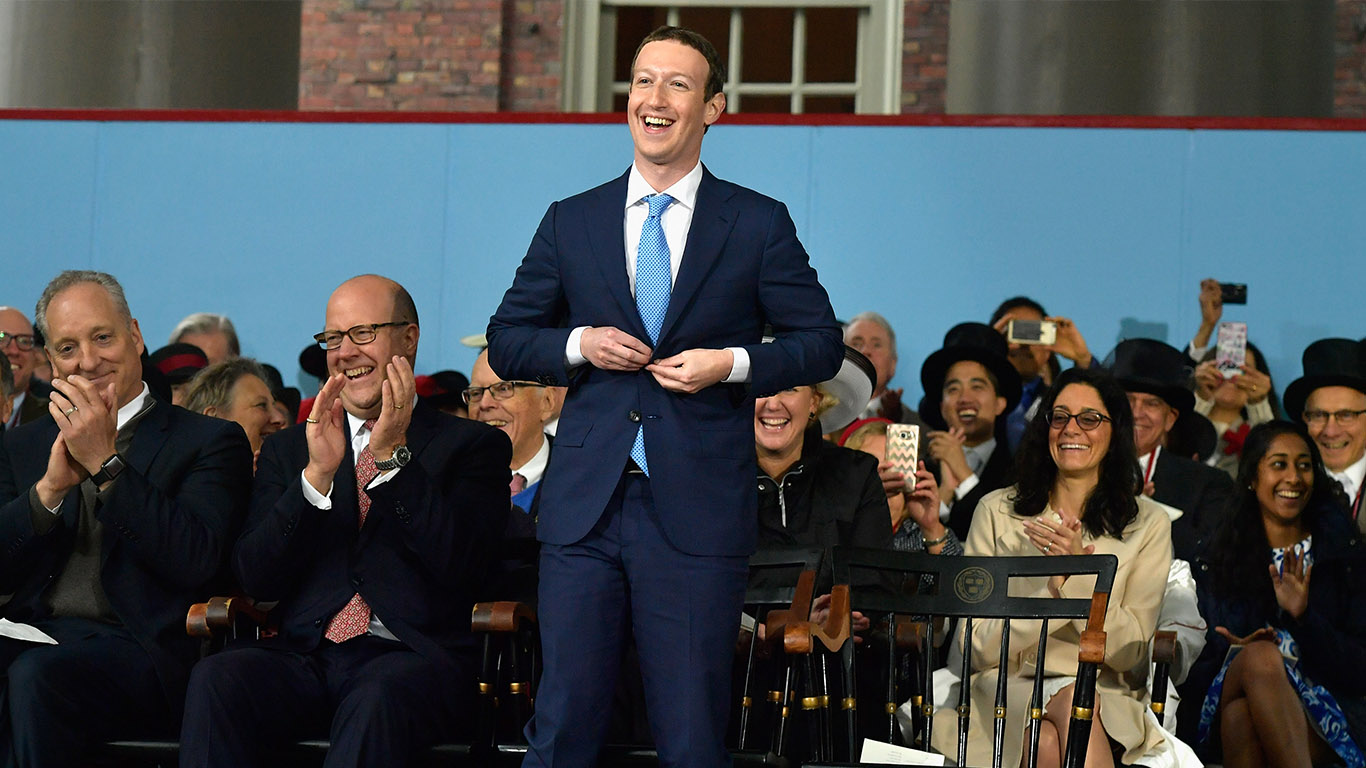
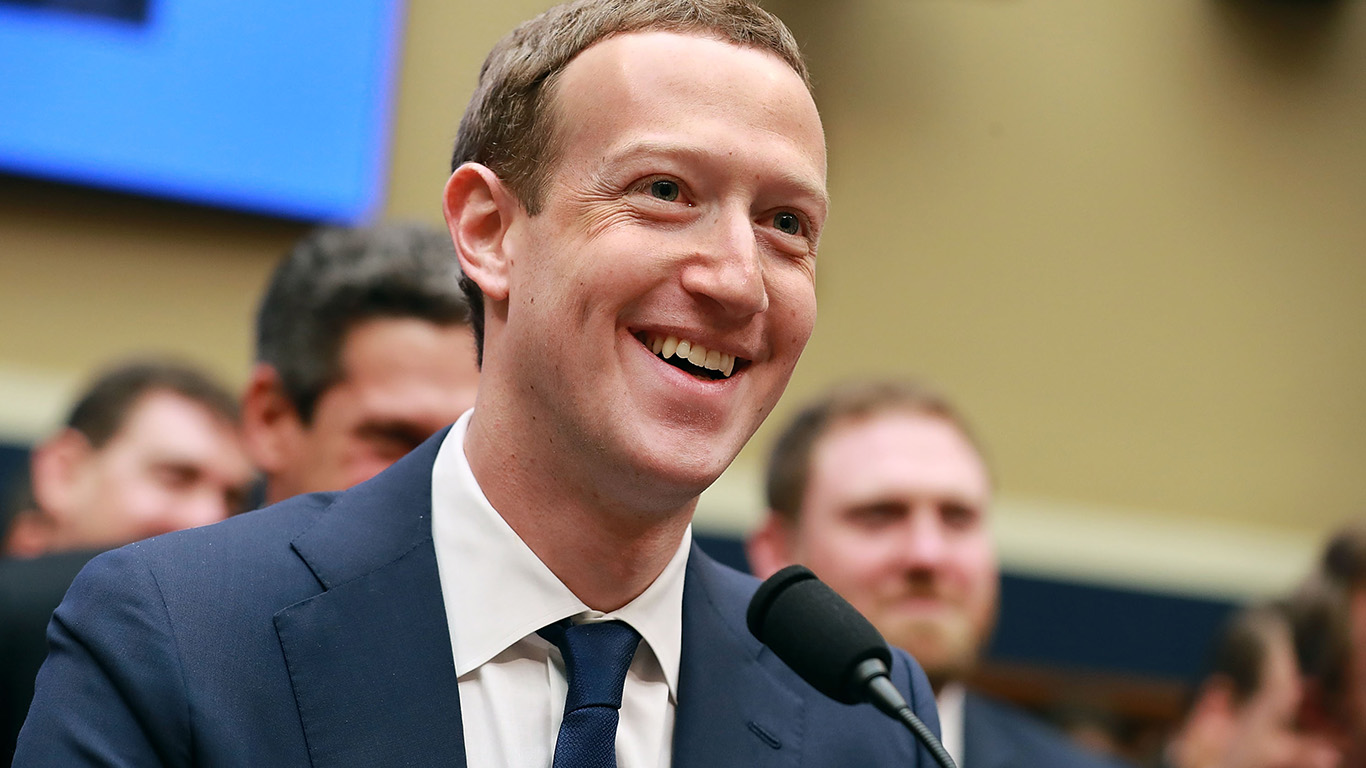
Mark Zuckerberg personally directed a small team to build a standalone prediction market app called Arena, first reported by the New York Times on June 23, 2026. He first met Kalshi CEO Tarek Mansour about an acquisition; talks fell apart, so Meta is building its own. Arena launches with play money (video-game points), sidestepping CFTC oversight while testing demand. Meta’s Llama AI auto-generates market questions, personalizes recommendations, and resolves markets near real-time.
The distribution edge is the whole thesis: Meta Platforms (NASDAQ:META | META Price Prediction) reaches 3.56 billion daily active users across Facebook, Instagram, WhatsApp, and Messenger. Insiders say Arena may not launch, but describe it as experimental and a top priority. Senator Richard Blumenthal was blunt: “Meta copied slot machines to addict kids to Instagram. Now Zuckerberg is turning his company into a prediction market. Meta’s business model is profiting from addiction.”
The Competitive Flood
Robinhood Markets (NASDAQ:HOOD) is the loudest public beneficiary. Its prediction-markets hub is running at roughly $350 million ARR, about 30% of Kalshi’s volume. Other Transaction Revenue (including Prediction Markets) surged 320% year over year to $147 million in Q1 2026, with a record 8.8 billion event contracts traded.
Coinbase Global (NASDAQ:COIN) acquired The Clearing Company in late 2025, and its prediction markets reached $100M+ annualized revenue in the first two full months (March).
CME Group (NASDAQ:CME) partnered with FanDuel for FanDuel Predicts while posting record Q1 2026 ADV of 36.2 million contracts, up 22% year over year.
Interactive Brokers (NASDAQ:IBKR) has rolled out event contracts alongside its core broker business, which posted Q1 2026 commission revenue up 19% year over year to $613 million. Gemini holds CFTC DCM and DCO licenses with an AI Command Center built on Grok from SpaceX AI, and ADI Predictstreet is FIFA’s first official prediction market partner for the 2026 World Cup.
The Legal Overhang Is A Concern
The regulatory picture is not settled. Eighteen states have blocked or banned Kalshi and Polymarket under gambling laws. Minnesota’s first outright ban makes operating one a state felony effective August 1, 2026. Michigan, Nevada, and Massachusetts have obtained court injunctions against Kalshi, and the CFTC reportedly opened an investigation into Polymarket. Federal courts are questioning whether sports event contracts are “meaningfully different from traditional sports betting.”
Criminal cases are stacking up: the DOJ has two Polymarket insider-trading cases (a special forces soldier who allegedly used classified Venezuela information, and a Google employee who used confidential search-trend data to earn more than $1 million). Israeli Air Force officers were also indicted for betting on the timing of Israeli and American strikes on Iran using insider military knowledge. Lawyers describe “legal limbo” with more than 30 pending lawsuits.
How To Play It From The Public Market
There is no pure-play public prediction-market stock. The closest exposure comes through the incumbents. Robinhood carries the highest revenue-mix leverage, with prediction markets already a distinct line item and HOOD shares up 42.54% in the past month. Interactive Brokers is a volume-tailwind story, with IBKR up 49.58% year to date through July 6, 2026. CME provides the regulated-plumbing angle via FanDuel Predicts. Coinbase is the wildcard: crypto revenue is under pressure, with COIN down 25.33% year to date, but its Kalshi-powered prediction stack is scaling fast. Meta is the speculative call option, with Arena still in stealth and META shares down 8.9% year to date at a 22 trailing P/E.
The IPO pipeline is the other watch item. Kalshi ($22B) and Polymarket ($15B) are the two most likely prediction-market IPOs, with Kalshi backed by NYSE’s $600 million. Retail participation is the fuel behind all of it: 32% of Gen Z and 24% of millennials say they participate in or are considering prediction markets or sports betting, per Northwestern Mutual.
What To Watch After The Final
Bernstein’s Gautam Chhugani projects volume reaching $240 billion in 2026 and possibly $1 trillion annually by 2030, an ~80% CAGR. The World Cup proved institutional scale. Whether the trajectory holds depends on what happens after July 19, when the momentum meets Minnesota’s felony statute, the CFTC’s Polymarket probe, and a docket of insider-trading prosecutions. That is the real match to watch.
Contact [email protected] for any questions or corrections.
I've spent more than 15 years inside enterprise software, working alongside the finance, sales operations, and HR leaders who run the revenue engines at some of the largest tech companies in the country.
My day job is helping enterprise executives make smarter decisions about retention, compensation, and growth. These are the same operational levers that show up in every earnings report investors actually read. That perspective shapes my writing for 24/7 Wall St.
The headline numbers are easy. The interesting stuff is underneath: how companies make money, what executives are worried about, and what any of it means for the person checking their 401(k) on a Sunday afternoon. I write about personal finance and business as someone who has spent her career inside the rooms where these decisions get made.