Top Wall Street Analyst Says AI Spending Is Delivering Real Returns: “When We Build a Data Center, It’s Already Pre-Sold”
Hyperscalers are posting record capital expenditures while free cash flow craters, yet Microsoft, Amazon, and Alphabet insist every data center is already sold before the first server goes in. A top Wall Street analyst breaks down whether investors are misreading…


Gil Luria, Head of Technology Research at D.A. Davidson, frames the debate over AI capital spending as a timing problem. Microsoft, Amazon, and Alphabet say their data center investments are already generating attractive returns because much of the capacity is sold before construction is complete. Investors are still waiting for those returns to become visible in reported cash flow.
“There’s a disconnect between what the companies are saying about return on investment from this AI spend and what investors feel,” Luria explained during a July 10 CNBC interview. “What investors see is diminishing cash flows, the lowest levels of cash flow margin they’ve seen in a long time.”
Luria believes both sides can be right. Hyperscalers are spending enormous sums upfront to meet contracted demand from customers such as OpenAI and Anthropic, while the revenue and cash flow from those investments will arrive over several years. The key question is whether cloud growth can accelerate quickly enough to justify the historic spending underway today.
OpenAI and Anthropic’s Cumulative Run Rate Climbed From Under $20B to Over $75B in 6 Months
The clearest evidence that this spending cycle is anchored in real consumption sits on the customer side. “OpenAI and Anthropic combined had less than $20 billion run rate just six months ago. Now they have more than $75 billion run rate. That’s a huge curve,” Luria said.
That is the readthrough Luria wants investors to focus on. “For Microsoft, Amazon and Google… what those three companies are saying is these investments are already coming at good returns. You just don’t see that yet. When we build a data center, it’s already pre-sold. We know what it’s going to cost to build and operate. We’re marking that up substantially to our customers, and therefore there’s a good return.”
Microsoft Nearly Doubled Capex Without Sacrificing Its Margins
Microsoft’s (NASDAQ:MSFT | MSFT Price Prediction) Q3 FY26 capex totaled $30.88 billion, up 84.39% year-over-year, while operating margin held at 46.3% and the AI business reached a $37 billion annual run rate, up 123% year-over-year. Commercial remaining performance obligations reached $627 billion, an enormous pre-sold backlog.
Luria pointed to the offset that keeps margins steady: “We saw Microsoft do layoffs at Xbox to make sure that they can show that their revenue acceleration is happening with stable margins. That’s a sign of good returns.” He also expects Azure growth to accelerate from 40% in upcoming guidance. Microsoft shares are down 20.17% year-to-date through July 9, 2026, trading at $384.36.
Amazon Is Spending $200 Billion to Meet Explosive AI Demand
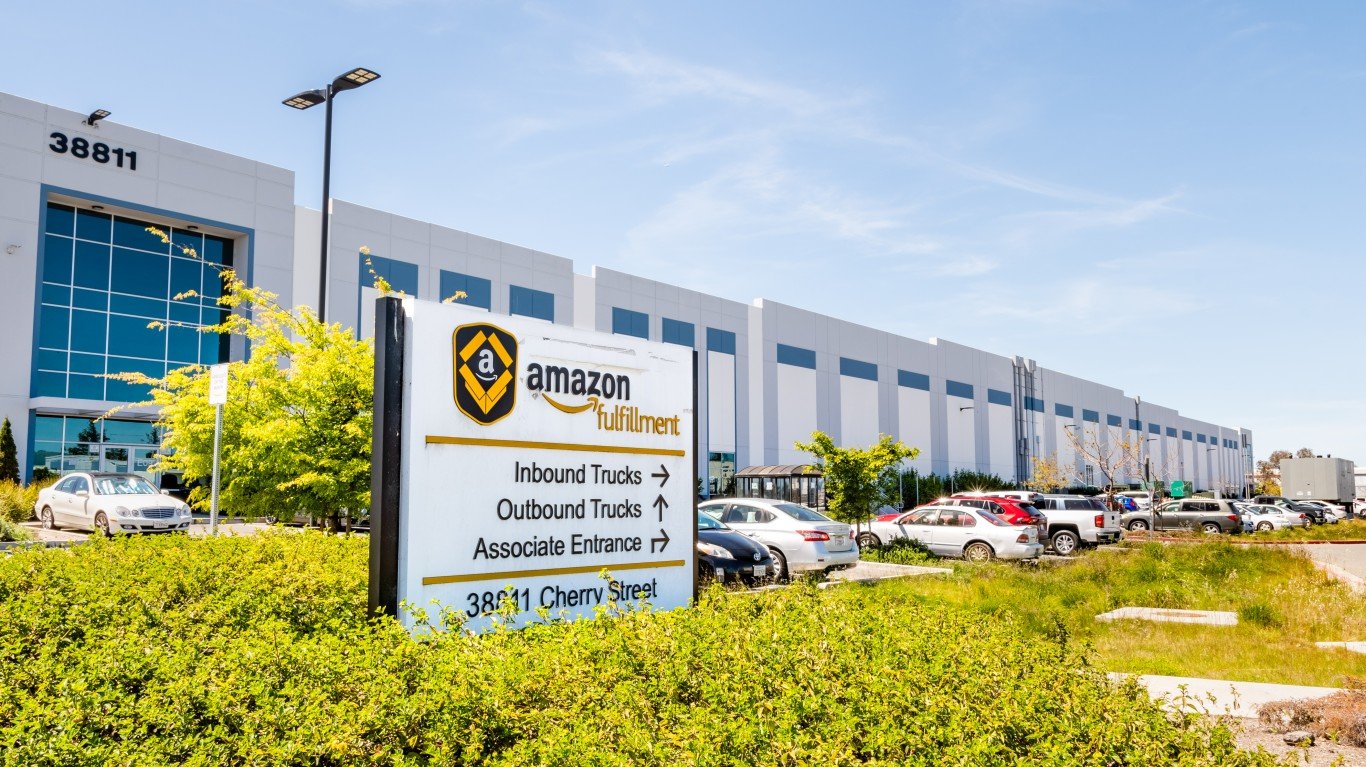
Amazon (NASDAQ:AMZN) posted AWS revenue of $37.587 billion in Q1 2026, up 28%, the fastest growth in 15 quarters, at a 37.7% operating margin. The custom chips line topped a $20 billion revenue run rate, growing triple digits year-over-year. Anthropic committed to up to 5 GW of Trainium capacity and OpenAI to roughly 2 GW starting in 2027. Q1 capex climbed to $44.203 billion, and full-year 2026 capex is guided at roughly $200 billion.
Google Cloud Grew 63% as Free Cash Flow Fell 47%
Alphabet (NASDAQ:GOOGL) posted the most dramatic acceleration. Google Cloud revenue grew 63% to $20.03 billion, with backlog nearly doubling quarter-on-quarter to over $460 billion. Capex more than doubled to $35.67 billion, and 2026 capex is guided at $175-$185 billion. Free cash flow fell to $10.12 billion, down 46.63% year-over-year. That is exactly the cash flow compression Luria described. Alphabet shares are up 14.81% year-to-date.
What to Watch Next
Luria’s thesis rests on a multi-year gap between when hyperscalers spend money and when investors see the returns. Data centers require enormous upfront capital, while the revenue and cash flow they generate will likely arrive over years one through five. In the meantime, Microsoft, Amazon, and Alphabet are protecting margins by cutting costs elsewhere and pointing to pre-sold capacity, accelerating cloud growth, and enormous backlogs as evidence that the demand is real.
The near-term test will be whether Azure accelerates from 40% growth and whether AWS and Google Cloud sustain their recent momentum. Microsoft’s $627 billion commercial backlog, Amazon’s capacity commitments from Anthropic and OpenAI, and Alphabet’s cloud backlog above $460 billion all support the hyperscalers’ argument.
Contact [email protected] for any questions or corrections.
Thomas Richmond is a financial writer and content strategist with 5+ years of experience covering stocks and financial markets. He has published over 250 articles focused on individual stock analysis, helping investors better understand business fundamentals, stock valuations, and long-term opportunities.
Thomas previously served as a Content Lead at TIKR, a stock research platform, where he helped scale the company’s blog to hundreds of articles per month and contributed to a weekly newsletter reaching more than 100,000 investors.
He specializes in breaking down complex companies into clear, actionable insights for everyday investors, with a focus on fundamentals-driven research.
His work has also been featured on platforms including Seeking Alpha and Sure Dividend.
Outside of work, Thomas enjoys weight lifting and soccer.