‘An Absolute Casino.’ The $500 Billion Leveraged ETF Craze Proving Buffett Right
Warren Buffett called it a casino. A sitting Treasury Secretary called it lottery behavior. Now a half-trillion dollars in concentrated leverage is quietly reshaping how everyday stocks move, and almost nobody in the chain wants it to stop.

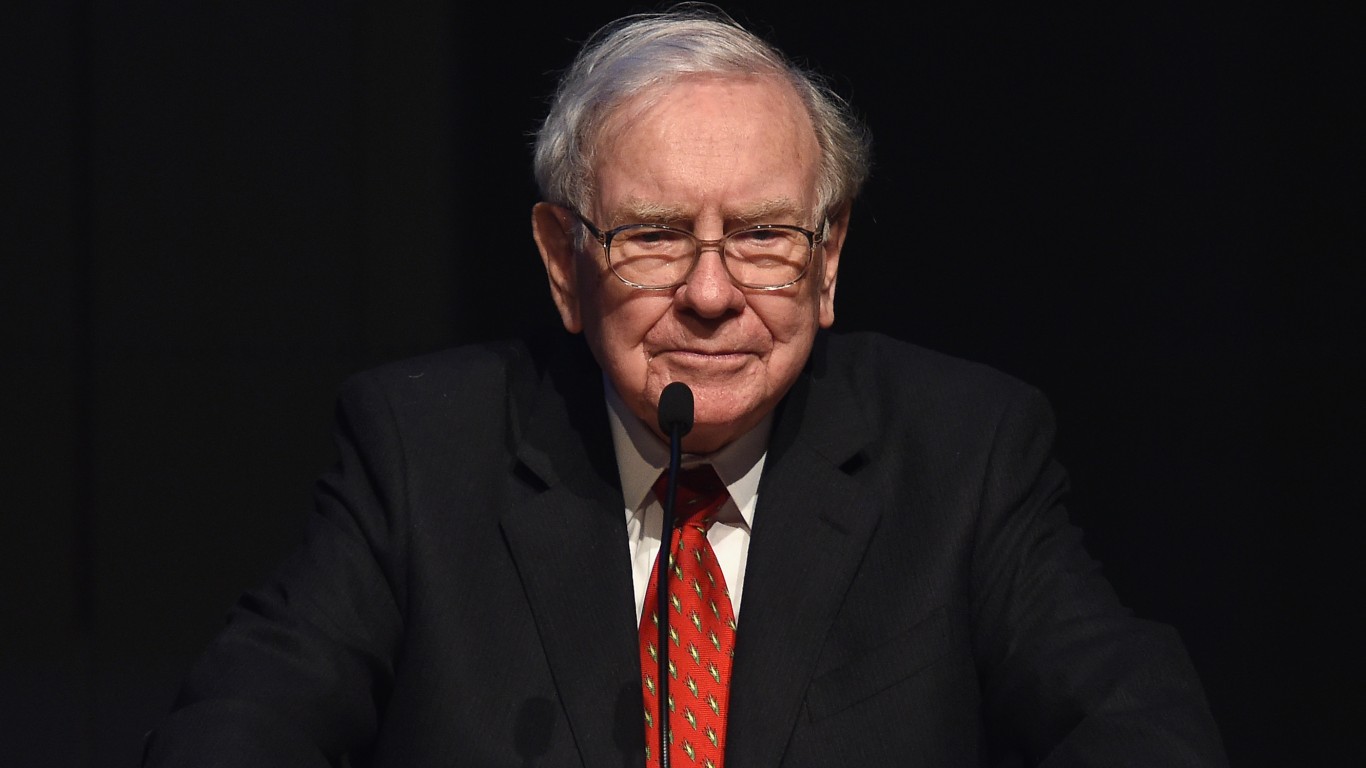
“We’ve never had people in a more gambling mood than now,” Warren Buffett told CNBC on May 2, 2026, during Berkshire Hathaway’s annual meeting. On one-day options, he was blunt: “That’s not investing. It’s not speculating. It’s gambling, just totally.” His metaphor for the moment: “I’ve compared the markets to a church with a casino attached. The casino has gotten very attractive to people.” Buffett rarely names the mechanism behind his concern. The data does it for him, and it points directly to leveraged and inverse ETFs.
What the Numbers Show
Per Todd Sohn, ETF strategist at Baird Strategas, roughly $200 billion sits in leveraged and inverse ETF funds, a universe that has grown to more than 860 products. Because these products use derivatives, that $200 billion controls a notional value near $500 billion, representing real market exposure about 2.5 times the money actually invested. AUM runs 13:1 leveraged long versus short: for every $1 bet on things falling, $13 is bet on things rising. The exposure is concentrated almost entirely in tech. This is what Buffett describes without ticker symbols: a behavioral warning backed by half a trillion dollars of one-directional leverage.
What These Products Actually Are
A leveraged ETF uses derivatives and borrowed money to deliver a multiple (usually 2x or 3x) of a benchmark’s daily return. The catch is that they reset daily, engineered for one-day holds, not buy-and-hold portfolios. ProShares UltraPro QQQ (NASDAQ:TQQQ), the 3x Nasdaq-100 fund, alone holds approximately $38 billion in assets, making it the largest leveraged ETF in the United States by a comfortable margin. A 10% drop in the Nasdaq-100 translates to roughly a 30% loss for TQQQ holders in a single session. The math only cuts one way when it reverses.
The Part That Changes How Stocks Trade
Leveraged ETFs must rebalance at the end of each session to maintain their target multiple, making them mechanical forced buyers into rallies and forced sellers into declines. With $500 billion in notional leverage concentrated in tech, that daily rebalancing has become a meaningful structural force in US equity markets. Sohn ties it directly to whipsaws in Micron Technology (NASDAQ:MU | MU Price Prediction) and SanDisk (NASDAQ:SNDK). Micron dropped 5.35% on one Monday alone; SanDisk shed 8.63% in the same session. Those same companies had just posted seven consecutive EPS beats at Micron and a 59.67% EPS beat at SanDisk. The retail investor watching Micron lurch on a quiet news day is feeling the downstream wake of concentrated leverage rebalancing. Market makers like Citadel Securities (a market maker, distinct from the Citadel hedge fund) and Jane Street profit from the volatility that rebalancing manufactures.
Joshua Brown Says the Quiet Part Out Loud
Brown, CEO of Ritholtz Wealth Management, seized on Sohn’s data in a LinkedIn post around July 7, 2026. His core observation: “The modern investor doesn’t need margin to speculate anymore. No brokerage platform is doing anything to discourage this. In fact, I think they love it. I know the market makers like Citadel [Securities] and Jane Street do.” Brokers earn more from active trading, market makers earn more from volatility, and no one in the chain carries an incentive to slow the wheel.
The Scale, and a Warning From Treasury
Nearly 700 new ETFs debuted in 2026 through mid-year, roughly 200 of them leveraged or inverse, the vast majority tied to single stocks, per Motley Fool. Leveraged ETF average daily trading volume hit about $45 billion in 2026, up 50% year over year, per Seeking Alpha. Zero-day-to-expiration options now account for roughly half to nearly two-thirds of all SPX options volume on a typical day, according to Cboe data as of early 2026. Treasury Secretary Scott Bessent addressed the same speculative impulse in a May 1, 2026 Associated Press interview: “There are a lot of young people, mostly young men, going to blue-collar construction jobs, playing the lottery. It drives me crazy.” His prescription was direct: “The best thing you can do is not play the lottery.” A Berkshire legend and a sitting Treasury Secretary flagging the same underlying behavior in the same month is a convergence worth noting.
The Counterpoint
Leveraged ETFs are legal, fully disclosed products. Sophisticated traders use them for short-term tactical hedging, and the products serve a legitimate role in the market. The 13:1 long tilt partly reflects genuine optimism about AI capital spending and memory pricing, optimism that Micron’s approximately 346% year-over-year revenue growth in its fiscal third quarter of 2026 arguably validates. And timing markets on behavioral alarms has historically cost investors money.
Still, the structure is what it is: half a trillion dollars of daily-resetting, tech-concentrated leverage, with every party in the chain paid to keep the wheel spinning. As Brown put it: “It’s an absolute casino. The only thing missing is Siegfried and Roy.”
Editor’s note: This update reflects that TQQQ’s net assets have grown to approximately $38 billion (from the $32 billion figure cited at publication), that the leveraged ETF universe now spans more than 860 products, and that Micron’s fiscal Q3 2026 results confirmed approximately 346% year-over-year revenue growth. The 0DTE options volume figure has also been updated with Cboe’s early 2026 data showing 50% to nearly 63% of SPX options volume.
Contact [email protected] for any questions or corrections.
I've spent more than 15 years inside enterprise software, working alongside the finance, sales operations, and HR leaders who run the revenue engines at some of the largest tech companies in the country.
My day job is helping enterprise executives make smarter decisions about retention, compensation, and growth. These are the same operational levers that show up in every earnings report investors actually read. That perspective shapes my writing for 24/7 Wall St.
The headline numbers are easy. The interesting stuff is underneath: how companies make money, what executives are worried about, and what any of it means for the person checking their 401(k) on a Sunday afternoon. I write about personal finance and business as someone who has spent her career inside the rooms where these decisions get made.