SpaceX at $135: Why You Should Buy SpaceX Ahead of the Planned Starship “Explosion”
Prediction markets expect SpaceX's next Starship test to end in a fireball, retail investors are fleeing, and the stock has shed nearly 30% in a month. That collision of fear and misread engineering might be exactly what serious buyers have…


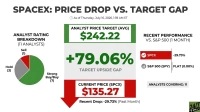
SpaceX (NASDAQ:SPCX | SPCX Price Prediction) trades at $135.27, and the setup ahead of Starship Flight Test 13 is worth examining closely. The stock has round-tripped back to its $135 IPO price after peaking above $225, and the pullback collides with a developmental launch that prediction markets are already treating as a fireball.
SPCX gives public-market investors direct exposure to Elon Musk’s launch, Starlink, and defense franchise. The business dominates U.S. orbital launch cadence, anchors the Space Force’s National Security Space Launch Phase 3 awards, and operates a satellite broadband network that has become core infrastructure. The stock’s pullback reflects a 29.73% one-month drawdown tied to a global tech rout and rising anxiety about the next Starship test, rather than a fundamental miss.
Why the Discount Is the Opportunity
At current levels, buyers pick up SpaceX at its offering price while the company’s addressable market widens. Analyst consensus sits at $242.22, implying 79.06% upside, with 7 Buy, 3 Hold, and 1 Sell ratings. The spread reflects growing conviction on Starlink monetization and defense contracts.
The bull case runs through iterative design. As Defiance ETFs CIO Sylvia Jablonski put it, “SpaceX is a multi-platform infrastructure company involved in launch, communications, defense, and AI connectivity, with Starlink poised to exceed expectations.” Bloomberg’s Eric Balchunas notes SpaceX is now held by approximately 200 ETFs, a structural bid that did not exist at IPO. Every successful Starship iteration pulls forward the reusability curve that Falcon 9 took roughly seven years to mature.
Why the Fireball Scares the Market
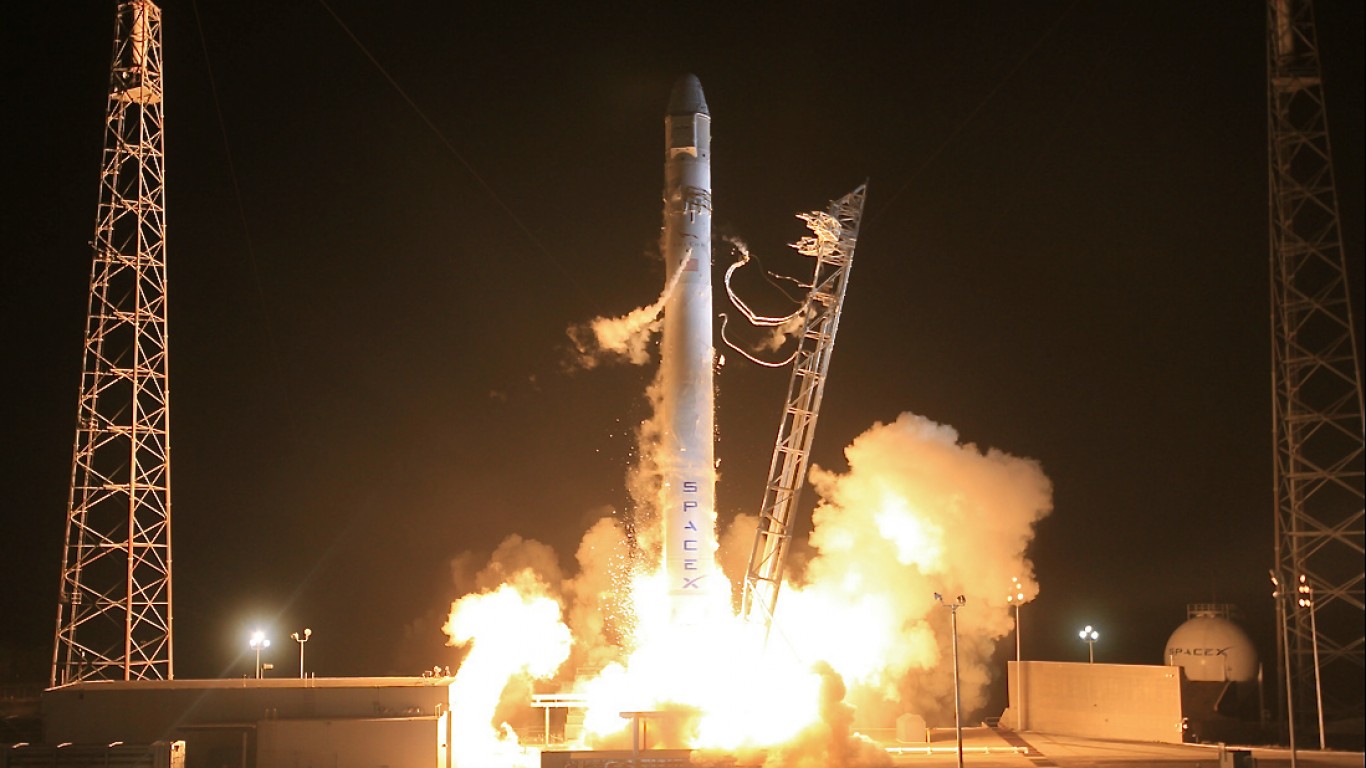
Bears see a company priced for perfection heading into a launch that Polymarket handicaps at an 89% probability of explosion. The chopstick booster catch sits at just 0.65%, and Flight Test 12 resolved with a booster explosion. The Atlantic argued SpaceX’s IPO was driven by capital hunger for the AI race, not fundamentals, tagging the stock with a bearish sentiment score of -0.382899. CNBC flagged that the average post-IPO buyer is nearly underwater, and the one-week decline of 8.79% shows the selling continues.
Why Patience Has a Case
The hold argument is timing. Polymarket assigns a 55.5% probability of SPCX closing above $130 by month-end and only a 36% probability above $140. If the booster disintegrates on camera, retail flows may push shares lower before recovering. Waiting for the post-launch result avoids buying into a headline-driven downdraft.
What the Numbers Say
SPCX trades at $135.27 against an $242.22 consensus target across 11 covering analysts, an implied 79.06% upside. The dislocation shows in recent performance: SPCX is down 29.73% over the past month while the S&P 500 is essentially flat, and down 8.79% in the past week against a 1.26% gain for the index.
Sentiment is bifurcated. Of 14 recent news items, 8 skewed bullish and only 1 bearish, yet the composite sentiment index reads 42.07, neutral. Prediction market crowds have run a 66.7% correct rate on prior SPCX resolutions, with a tendency to underestimate upside.
The Verdict: Front-Run the Panic
At $135, SpaceX is a Buy. The path to appreciation runs through interpretation. A planned termination, hypersonic breakup, or intentional ocean crash counts as an explosion on Polymarket, but on SpaceX’s engineering scorecard it is a data-gathering step toward rapid reusability. When the smoke clears and the next iteration flies weeks later, the 29% drawdown starts to look like a mispriced entry.
The near-term catalyst is the launch itself, with 95% probability of flying by July 31. Medium term, Starlink monetization and awarded launch tranches under the NSSL and Space Development Agency pipelines carry the fundamental story. What invalidates the thesis: a total-loss event that grounds the fleet for quarters, or a Starlink competitor closing the gap on cost per bit.
Purchasing SpaceX at its IPO price the week retail expects a fireball is the sort of positioning that analyst desks typically endorse only after the outcome is known.
Contact [email protected] for any questions or corrections.
Alex Sirois is a financial writer with experience spanning both retail and institutional investing. He has written for InvestorPlace and held roles at BNY Mellon and Bernstein, giving him a perspective that bridges Main Street portfolios and Wall Street analysis.
Alex holds an MBA from George Washington University and has built his career across multiple industries, including e-commerce, education, and translation — a breadth of experience that informs how he breaks down complex financial topics for everyday investors. His writing is conversational, actionable, and grounded in long-term, buy-and-hold investing principles.
At 247 Wall St., Alex focuses on delivering analysis that is both accessible and useful, with a clear emphasis on helping readers make more informed decisions with their money.