Jim Cramer Says Semiconductor Stocks Are “Going Down.” Buy These 2 Dividend Stocks Instead
Jim Cramer is flashing warning signs on semiconductor stocks and one high-flying AI name he says still has further to fall, but he sees two dividend stocks built to weather exactly this kind of chaos.

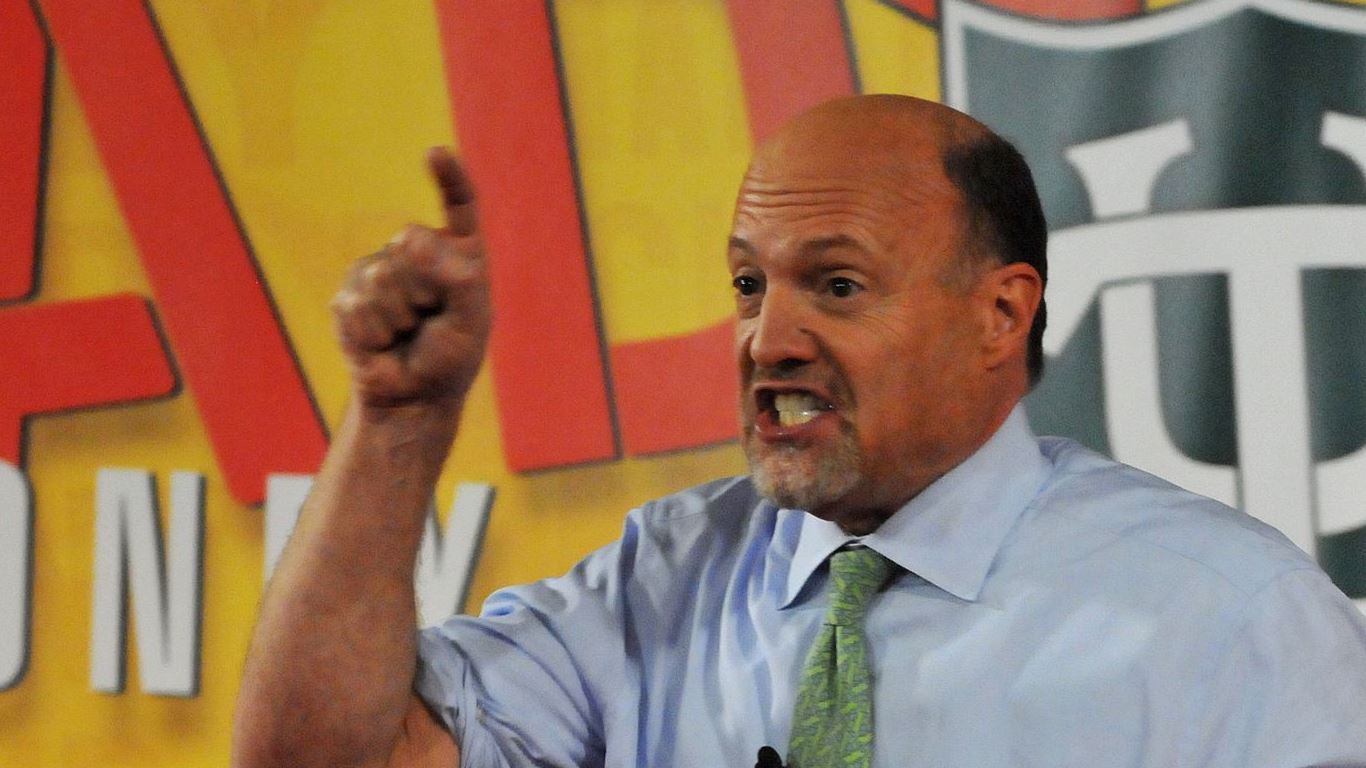
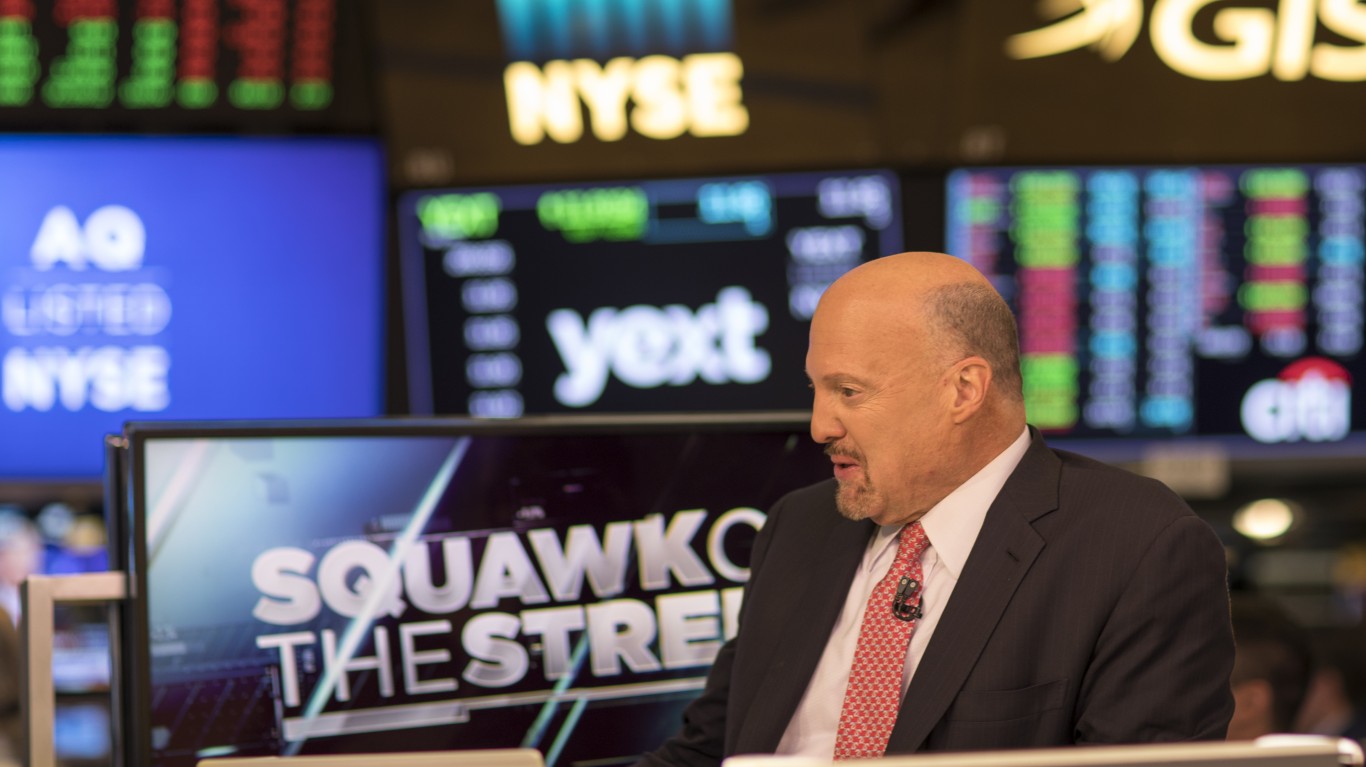
Jim Cramer believes forced selling is creating opportunities, but investors should resist buying too early. During his July 17, 2026, Mad Money Lightning Round, he recommended two defensive dividend stocks while urging patience on semiconductors and highly speculative names. His message was direct: “The speculative hands are being margined out. They’re going to get rid of them, and you’ll get a better price if you want to buy.“
Wait to Buy Semiconductors Until the Margin Sellers Are Gone
On a caller’s semiconductor question, Cramer urged patience: “It’s a semiconductor and all semiconductor stocks are going down. May I suggest that you wait a few more days until we get rid of all the margin players, and you’re going to find a bottom. I don’t see it yet.”
NVIDIA (NASDAQ:NVDA | NVDA Price Prediction) fundamentals have remained anything but fragile. Q1 FY2027 delivered $81.6B in revenue, up 85% year-over-year, with Data Center revenue of $75.2B — a 92% YoY increase driven by Blackwell architecture deployments across hyperscalers and sovereign AI customers. Free cash flow for the quarter reached $49B, and the company raised its quarterly dividend 25-fold to $0.25 per share. NVIDIA subsequently reported Q2 FY2027 revenue of $96.2B, up 106% year-over-year, with Data Center at $89.0B, underscoring that the underlying business acceleration Cramer acknowledged has only continued since his warning.
Cramer Warns Nebius Is “Not Done Going Down”
Cramer’s sharpest warning targeted Nebius Group (NASDAQ:NBIS): “It is at the nexus of the craziness right now. There are a lot of hedge funds that own it, and I think they’re in a lot of trouble. This stock is not done going down. There’ll be another time to buy it, but that time is not now.”
Shares fell sharply in the days leading up to Cramer’s comments, closing at $171.77 on July 16. Since then, the company’s fundamentals have evolved materially. Nebius reported Q2 2026 revenue of $582M, a 454% year-over-year surge, with its AI cloud unit contributing $575M of that total at a 50% adjusted EBITDA margin. Annualized run-rate revenue reached $3B by the end of June, up 598% year-over-year. The company ended the quarter with $8B in cash and reaffirmed full-year guidance of $3B to $3.4B in revenue. Even so, Q2 capital expenditures hit $5.7B as Nebius races to build out a 5 gigawatt global data center footprint, and the stock still trades at a steep multiple relative to near-term earnings power.

Cramer Says Clorox’s 5% Yield Is Finally Worth Buying
Cramer’s headline call was on Clorox (NYSE:CLX). “I read my first positive note about Clorox in a great deal of time today. That was a price target increase that made me say 5% yield. You know what? We want to buy it.“
At the time of that call, Clorox paid $1.24 per quarter, or $4.96 annualized, against a closing price of $98.71 on July 16. The stock trades at 15x forward earnings with a 0.53 beta, a classic defensive setup. Clorox has since raised its quarterly dividend to $1.25, bringing the annualized payout to $5.00 per share, which keeps the yield comfortably above 5% at recent trading levels. The company has now raised its dividend for 50 consecutive years.
Fiscal Q3 delivered mixed signals. Adjusted EPS came in at $1.64, beating the $1.55 estimate, though management sharply lowered FY2026 guidance to $5.45-$5.65 in adjusted EPS, citing ERP transition costs, inventory normalization, and GOJO integration dilution as headwinds to organic sales. CEO Linda Rendle described results as “mixed, with continued momentum in some parts of our portfolio and slower-than-anticipated market share recovery in others.” The low beta and durable payout are precisely what Cramer sees as insulation against margin-driven market volatility.

Why Cramer Prefers Coca-Cola Over Its Largest Bottler
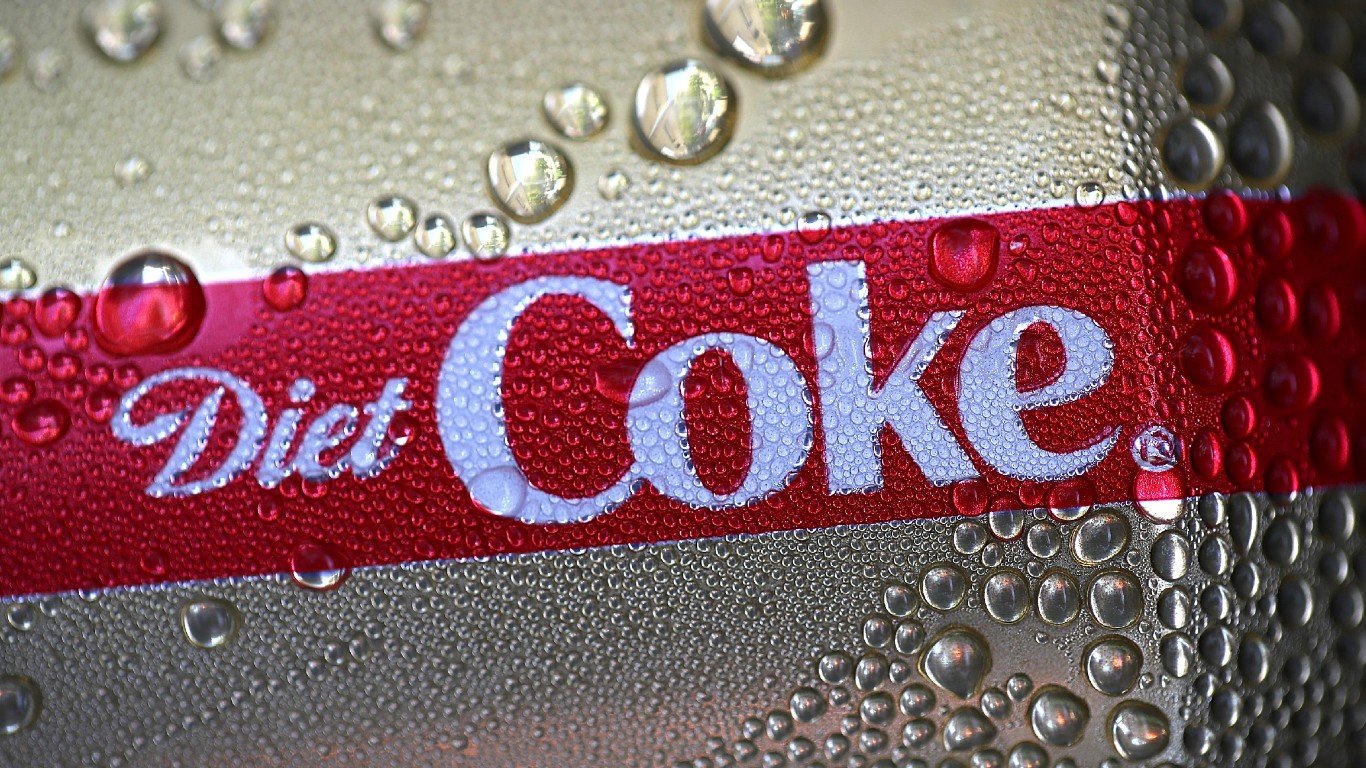
Asked about the bottlers, Cramer chose the parent: “I would go for Coke. I think that’s a better stock.” Coca-Cola (NYSE:KO) was already up more than 23% year-to-date at the time of Cramer’s call, driven by a strong Q1 2026 that delivered comparable EPS of $0.86 on 12% revenue growth. The company has since posted Q2 2026 results that extended that momentum: comparable EPS of $0.97 beat the $0.93 estimate, net revenues rose 7% to $13.4B, and global unit case volume grew 5%, boosted in part by FIFA World Cup demand. Management raised full-year guidance, now projecting organic revenue growth of about 5% and comparable EPS growth of 9% to 10%. Coca-Cola pays $0.53 quarterly. Its bottler, Coca-Cola Consolidated, posted a 70 basis point gross margin contraction from aluminum tariff costs and yields materially less on its $0.25 quarterly payout.
Quanta’s Record $53.4 Billion Backlog Makes This Selloff Worth Watching
Quality cyclicals are not immune to margin-driven selloffs. Quanta Services (NYSE:PWR) pulled back from $788 to around $630 in the weeks around Cramer’s comments, even after posting what was then a record $48.5B backlog. That backlog figure has since grown further: Quanta reported Q2 2026 revenue of $9.6B (up 41% year-over-year) and a new record backlog of $53.4B, prompting management to raise full-year 2026 revenue guidance to a range of $39.3B to $39.7B. The core investment thesis Cramer identified remains intact: let leveraged sellers finish exiting, then step into companies where cash flow, dividends, and long-cycle backlog provide a durable foundation.
Key Takeaways
Cramer sees Clorox and Coca-Cola as dependable defensive holdings while semiconductors may become attractive once forced selling subsides. More speculative names such as Nebius could have further to fall. The opportunity, in Cramer’s view, will come after leveraged sellers have been cleared out and strong businesses can be purchased at more attractive prices.
Editor’s note: This article has been updated to reflect Nebius Group’s Q2 2026 revenue of $582M (up 454% year-over-year), correcting the earlier figure of $399M; Quanta Services’ record backlog of $53.4B as reported in its Q2 2026 results, up from the $48.5B Q1 figure cited at publication; Clorox’s dividend increase to $1.25 per quarter (annualized $5.00) effective August 2026; and Coca-Cola’s Q2 2026 comparable EPS of $0.97 and raised full-year guidance, along with NVIDIA’s Q2 FY2027 revenue of $96.2B reported after publication.
Contact [email protected] for any questions or corrections.
Thomas Richmond is a financial writer and content strategist with 5+ years of experience covering stocks and financial markets. He has published over 500 articles focused on individual stock analysis, helping investors better understand business fundamentals, stock valuations, and long-term opportunities.
Thomas previously served as a Content Lead at TIKR, a stock research platform, where he helped scale the company’s blog to hundreds of articles per month and contributed to a weekly newsletter reaching more than 100,000 investors.
Outside of work, Thomas enjoys weight lifting and soccer.