Options Traders Bet $550M Against Tesla Ahead of Earnings
With Tesla's earnings days away, options desks are flashing an unusually bearish signal, and a credible new rival is arriving just in time to complicate the story for bulls still betting on the Elon Musk premium.

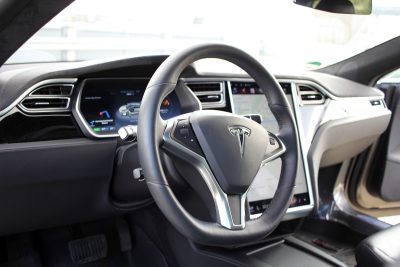
On CNBC’s Fast Money segment titled “A Big Tech Pullback… And Time to Sell Tesla? 7/17/26,” the panel spent much of the block picking apart why the Elon Musk premium built into Tesla’s (NASDAQ: TSLA | TSLA Price Prediction) stock is thinning out just days before the company reports Q2 results on July 22.
The Panel’s Case: Fundamentals Unclear, Technicals Weakening
The host framed the setup by saying “the fundamental marginal catalyst is still very unknown” and that “the technicals are frankly the more interesting way to look at the stock right here.”
One trader argued Tesla had been trading as a cheaper listed proxy for SpaceX, a trade that is now unwinding: “people are thinking maybe I just buy SpaceX… they’re not buying a proxy.” Another panelist added that “the magic of Elon too is starting to dissipate” as robotaxi and humanoid robot milestones keep slipping.
The financials give that view something to lean on.
Tesla’s full-year 2025 net income fell nearly 47% to $3.79 billion, while vehicle deliveries declined 9% year over year. Fourth-quarter deliveries dropped 16% from a year earlier to 418,227 units.
Jim Cramer highlighted the deteriorating earnings trend, noting that Tesla’s EPS peaked at $4.07 in 2022 before declining 23% in 2023, 22% in 2024, and another 31% in 2025. The first quarter of 2026 provided some relief, with revenue rising 15.8% year over year to $22.39 billion and automotive gross margin recovering to 21.1%, helped in part by one-time warranty and tariff benefits disclosed in the company’s 8-K.
Options Desks Are Bearish
CNBC options analyst Mike Khouw estimated that the day’s options activity translated into roughly $550 million of net short delta exposure in Tesla shares. The options market was pricing in an implied move of about 7% in either direction through earnings, with call and put positioning roughly balanced overall—a setup Khouw described as “slightly more bearish than usual.”
One notable trade was the September 400/300 put spread, which traded roughly 6,000 contracts at about $35 per spread. The options chain also reflected a defensive tilt. For the September 18 expiry, put volume totaled 61,128 versus 19,591calls, producing a 3.12 put/call volume ratio.

Enter Rivian’s R2 as a Direct Model Y Rival
The panel also flagged a competitive wrinkle Tesla has largely avoided: a credible mass-market EV competitor. Rivian (NASDAQ: RIVN) is beginning external R2 deliveries of a mid-size SUV positioned squarely against the Model 3 and Model Y.
Q1 revenue rose to $1.381 billion, up 11% YoY, with deliveries of 10,365 vehicles, up 20%. Rivian reaffirmed 2026 delivery guidance of 62,000–67,000 vehicles and ended the quarter with $4.83 billion in cash, cash equivalents, and short-term investments. The company also has access to a DOE loan of up to $4.5 billion for its Georgia plant and an Uber partnership that includes up to $1.25 billion of investment through 2031, supporting deployment of up to 50,000 autonomous R2 robotaxis.
Contact [email protected] for any questions or corrections.
Ian Cooper is a veteran market analyst and investment strategist with more than 20 years of experience covering stocks, commodities, and macro trends. Since 1999, he has helped investors identify market opportunities using a blend of technical analysis, fundamental research, and market sentiment.
He is the creator of the ADD News Flow Strategy, which focuses on trading market reactions to major news events and investor psychology. Cooper was also among the analysts who warned about the 2008 financial crisis and major financial institution collapses ahead of the broader market.
Before joining 247 Wall St., Cooper wrote extensively for InvestorPlace and other financial publications, covering market trends, trading strategies, and investment opportunities.