‘You Don’t Have a $1,000 Problem, You Have a $104,000 Problem’: Dave Ramsey to Law Grad Eyeing Refi
A new law grad called Dave Ramsey live to ask about refinancing her student loans, and his response reframed the entire question in a way that exposes the mistake most borrowers make before they ever talk to a lender.

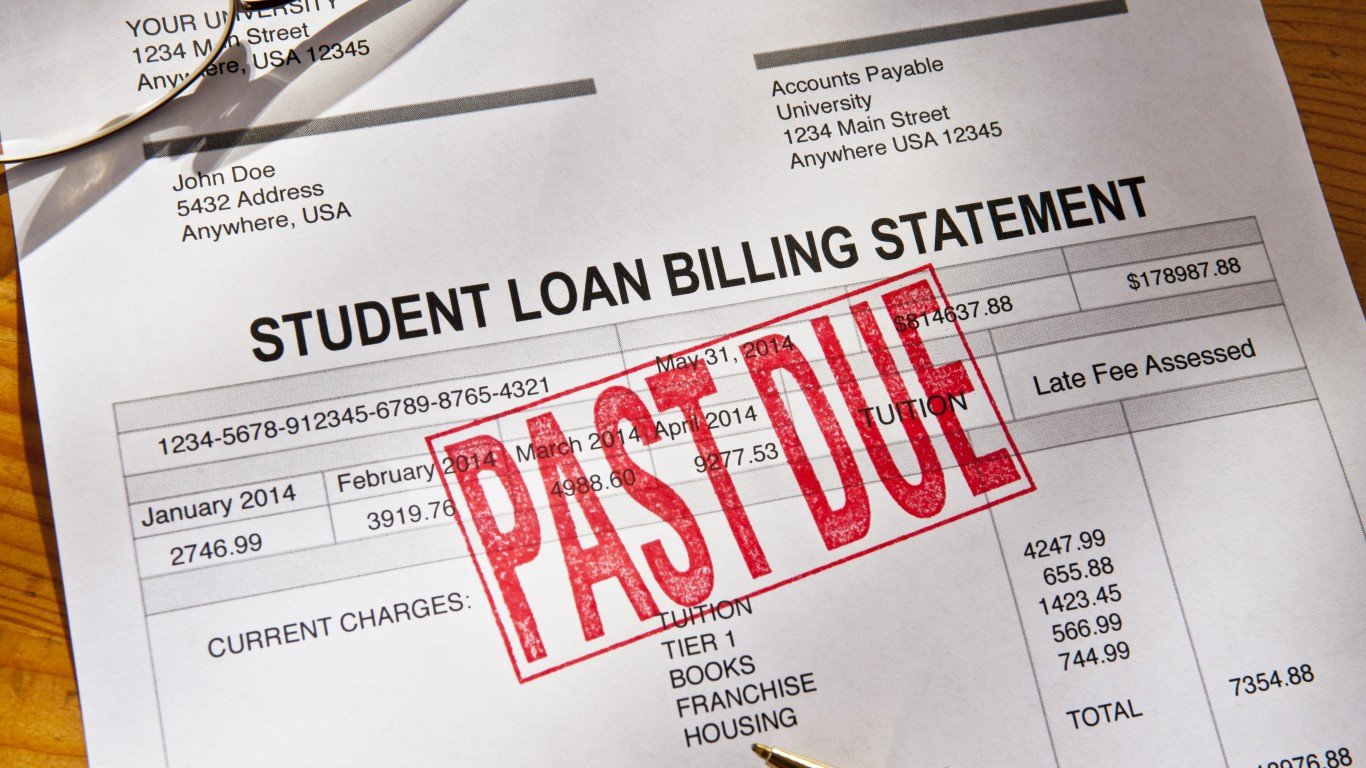
On the September 3 episode of The Ramsey Show, a new law school graduate called in asking whether to refinance about $104,000 in student loans from roughly 8% down to roughly 6%. She planned to be debt free in two years. Dave Ramsey ran the arithmetic on air and delivered the line at the top of this article: “You don’t have a $1,000 problem, you have a $104,000 problem.”
The stakes for anyone hearing that quote are concrete. Spend three months rate shopping a refinance while ignoring the payoff plan, and you can save a rounding error while losing a year of momentum. Ramsey’s point was that the lender you pick is worth pennies compared with the paycheck you deploy.
Why Ramsey’s Refinance Math Actually Holds Up
The verdict is simple. For a borrower who genuinely intends to clear the balance in 24 months, refinancing from 8% to 6% is a small win worth a few hundred dollars, while the payoff plan is the main event.
When you pay a loan down aggressively, your average outstanding balance runs at roughly half the starting balance across the payoff window. On a $104,000 loan cleared in two years, the average balance earning the 2-percentage-point savings is about $50,000. Ramsey did the calculation live and landed at roughly $1,000 in total savings. That is the correct order of magnitude for a two-year timeline.
Contrast that number with the cash the borrower still has to produce. She has to find $104,000 in principal in 24 months. Ramsey’s framing: “The important thing is to find the other $103,000 during two years by living on nothing, not going out to eat, and starting your law career on beans and rice. That’s 98% of the equation.”
Behavior is 98% of the outcome, refinancing 2%. Stretch the payoff to 10 years and the refi savings grow into real money. Keep it at two years and the refi is a footnote.
Payoff Horizon Flips the Whole Answer
Payoff horizon decides everything. Same $104,000, same 8% to 6% move, wildly different results depending on how long the debt is carried:
- Two-year payoff: Average balance around $50,000, roughly $1,000 saved. Refinance is optional.
- Ten-year payoff: Average balance is similar but carried five times longer. Savings run into the low five figures. Refinance is worth doing.
The second variable is loan type. Federal student loans carry income-driven repayment, Public Service Loan Forgiveness eligibility, death and disability discharge, and administrative forbearance. Refinancing federal debt into a private loan is a one-way door. You cannot undo it. Rachel Cruze flagged private student loans in default as the narrow case where refinancing options deserve a real look, while federal loans are a one-shot decision. The Consumer Financial Protection Bureau’s 2026 private education loan report confirms the same asymmetry: federal loans offer grace periods, income-based repayment, and cancellation programs that private lenders do not match.
Income Is the Real Lever
Earlier in the same episode, Ramsey told a master’s graduate carrying $69,644 in student debt who was eyeing a $37,000 car: “Your number one wealth building tool is your income. As long as you’re giving that away in car payments and student loans, you’re going to be what’s known as a middle class broke person.”
The math backs the sermon. If your student loan rate sits at 8% and you park cash in a blue chip dividend payer like Ford (NYSE:F | F Price Prediction) at a roughly 5.4% yield, the loan is beating the dividend by close to 3 points before tax. Ford’s preferred securities trading as F-PB, F-PD, and F-PC carry fixed coupons, but none of them beat an 8% pre-tax hurdle on a reliable basis for a taxable retail holder. Paying the loan is the guaranteed return.
What to Do Before You Sign Any Refinance
- Confirm the loan type. Log into studentaid.gov to see which balances are federal Direct, FFEL, or Perkins. Anything federal you refinance into a private loan loses IDR, PSLF, and hardship protections permanently.
- Set a payoff horizon in writing. Two years, five years, or ten. The horizon determines whether refinancing is worth an afternoon or worth ignoring.
- Run the average-balance shortcut. Take your rate savings, apply it to roughly half your starting balance, and multiply by the years you will carry the debt. If the result is under a few thousand dollars, focus on cash flow instead.
- Attack income and expenses first. A second job, a signing bonus applied to principal, or six months of aggressive expense cuts almost always beat any rate you can shop.
Ramsey’s line lands because the arithmetic lands. On a two-year payoff, the lender is a footnote and the borrower is the story.
Data Sources
- Ramsey Show personal finance Q&A supplied the caller scenario, Ramsey’s on-air math, the $103,000 lifestyle quote, the master’s graduate quote on income, and Rachel Cruze’s private-loan carve-out.
Contact [email protected] for any questions or corrections.
Jake has been been working in financial media for almost 15 years. He focuses on all things personal finance for 24/7 Wall St. with high hopes to educate and entertain. Most recently, Jake spent 12 years working various roles at The Motley Fool. He started copy editing fool.com content, worked on premium and marketing campaigns, and helped launch The Ascent, a personal finance brand.
His work has been featured on platforms like MSN, Yahoo Finance, USA Today, and more. He's written about credit cards, social security, ETFs, savings accounts, and just about anything else you can imagine when thinking about money. Jake love to cook, play golf, and tell people he's never had a cavity. (It's true!)