Jim Cramer Says Stop Betting on Volatile Tech Stocks and Buy These “Boring” Sectors Instead
Jim Cramer compared owning tech stocks to being tied to railroad tracks while a freight train approaches, and he has a very specific set of sectors in mind as the escape route.

This post may contain links from our sponsors and affiliates, and Flywheel Publishing may receive compensation for actions taken through them.
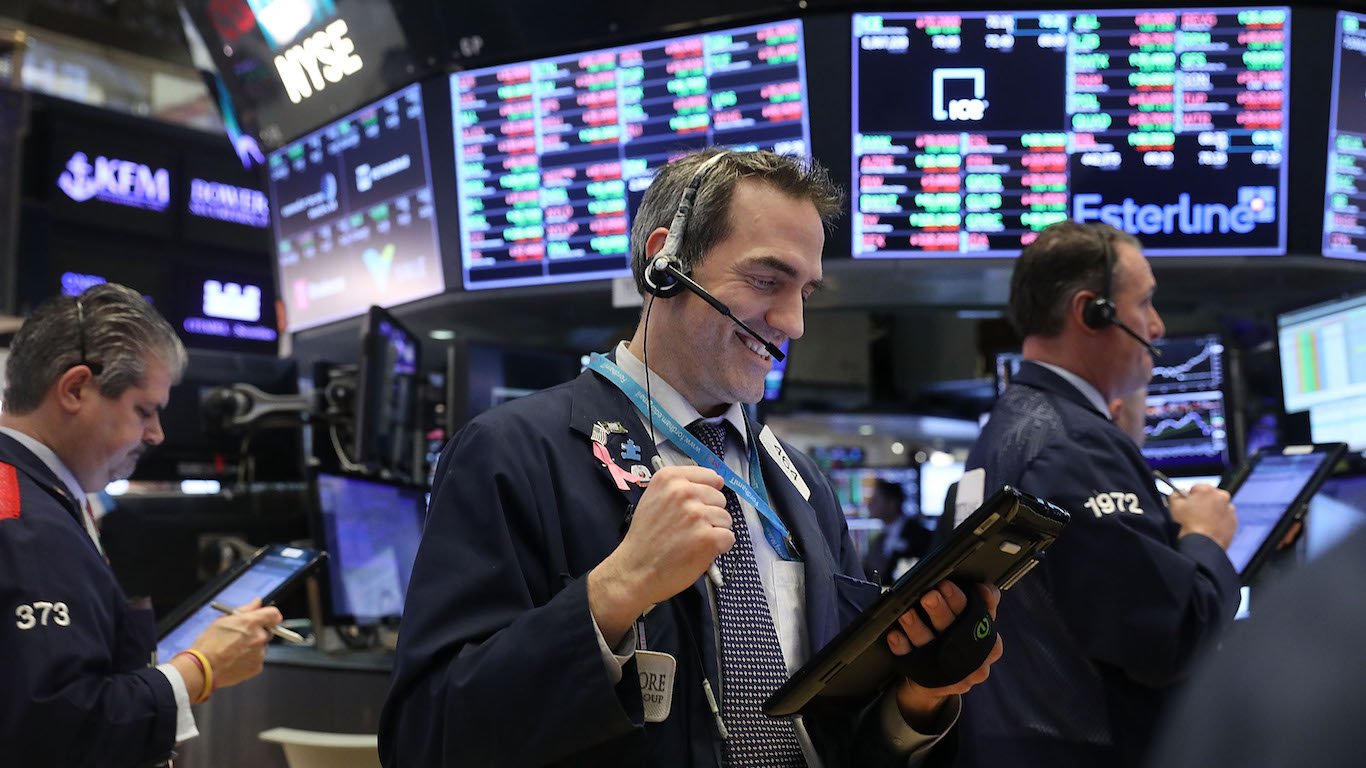
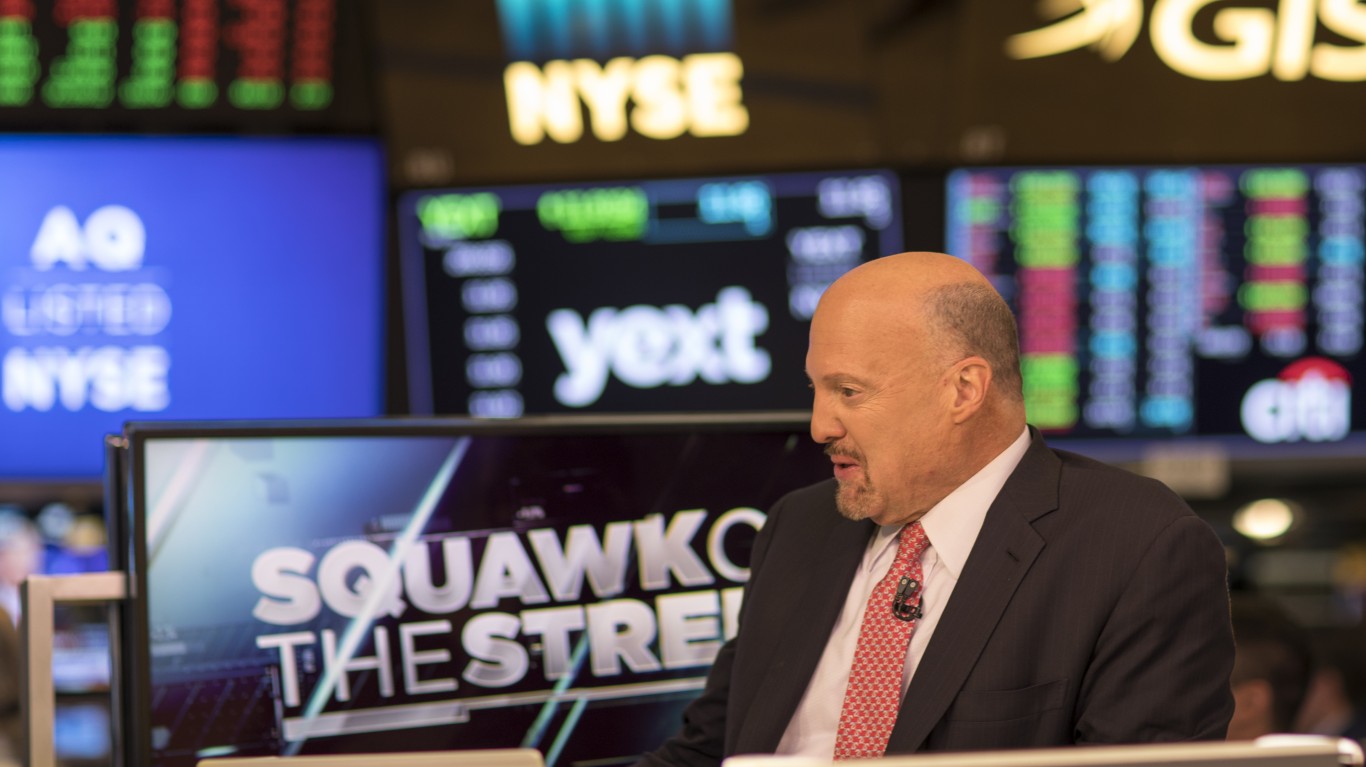
Jim Cramer used his Tuesday, July 21, CNBC Squawk on the Street appearance to deliver one of his most emphatic sector rotation calls of the year: move away from semiconductors, software, and AI-linked mega-caps, and toward banks, trucking, and steadier cash-flow industrials. The 10-year Treasury sat at 4.55% that day, the VIX at 18.77 had jumped 24.9% in a week, and Cramer argued that chip volatility is at a 30-year high relative to the broader market.
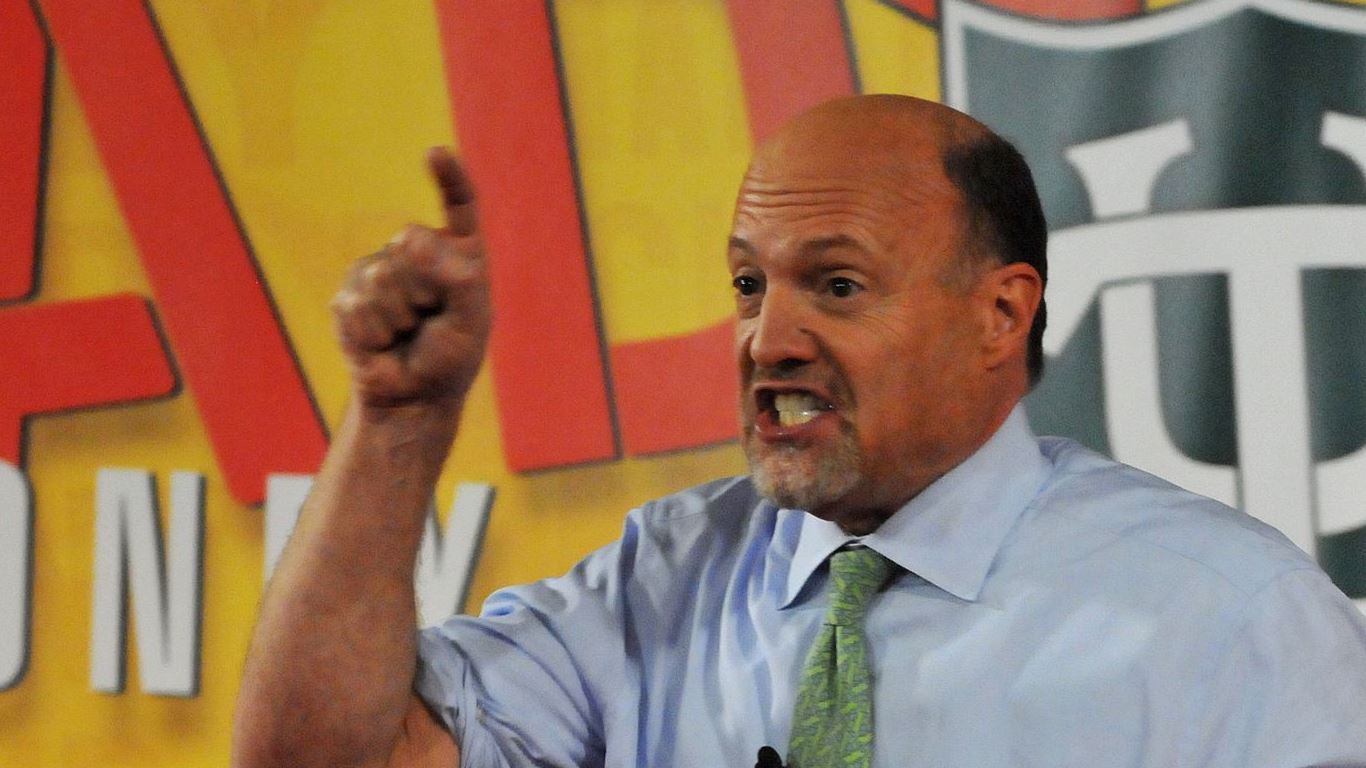
His case rested on a visceral image. “Every day when you come in, when you’re with tech… you’re basically tied up in front of a freight train on the tracks, and someone cuts it just before you die. And I don’t want that. I would rather be in JP Morgan.“ He added: “With the exception of Apple, I fully expect at the end of the day to be down. Maybe today’s the day where I make some money in Micron. But right now… can I please be in a trucking company that’s about to report?” The pair of quotes capture precisely the frustration driving his call: not a fundamental objection to tech’s long-term trajectory, but exhaustion with the day-to-day whiplash of owning it.
Cramer Rotates Into Banks as JPMorgan’s Earnings Soar
JPMorgan Chase (NYSE:JPM | JPM Price Prediction) posted Q2 2026 results that gave Cramer’s rotation call a concrete data point. On a reported basis, the bank earned $7.70 in diluted EPS and $58.0 billion in managed revenue; excluding significant items (a $4.6 billion Visa share gain and $1.0 billion in equity investment gains), adjusted EPS came in at $6.14, well ahead of the Wall Street consensus of $5.44. ROTCE on a reported basis reached 29%, while the adjusted figure was 23%. Equity Markets revenue jumped 86% year over year to $6.03 billion, and the board authorized a fresh $50 billion buyback effective July 1. Wells Fargo (NYSE:WFC) reported similarly strong results on July 14.
JPMorgan CEO Jamie Dimon said the U.S. economy has “demonstrated notable resiliency this year, with stronger business investment and hiring,” aided by AI-driven capital investment and fiscal stimulus. JPMorgan also raised its quarterly dividend 10% to $1.65 per share for Q3 2026, reflecting the board’s confidence in the bank’s capital position. Shares trade at a trailing P/E of 15x with an analyst price target of $367.45, indicating analysts see a sliver of upside from the stock’s $345.23 close on Tuesday.

J.B. Hunt’s Intermodal Profit Climbs 58%
J.B. Hunt Transport Services (NASDAQ:JBHT) delivered Q2 EPS of $1.91 versus a $1.73 consensus on revenue of $3.50 billion, up 19.4% year over year. Intermodal was the clear standout: the segment posted $1.75 billion in revenue, a 22% gain, while intermodal operating income surged 58% to $150.9 million. Intermodal loads of 578,072 also set a quarterly volume record, the company’s first double-digit volume growth quarter in more than a decade. These results validated Cramer’s instinct, and similar strength could spread to the broader freight sector as shippers continue to shift cargo from trucking to rail.
The stock’s performance over the past year reinforces the appeal of the “boring” trade. Its low-drama compounding profile stands in sharp relief against the whipsaw volatility Cramer described in chip names.
Corning’s Reversal Shows Why Cramer Is Leaving Volatility Behind
Corning (NYSE:GLW) crystallized Cramer’s frustration. “I owned Corning for the trust. It went up 100 [basis] points over a period of a month. I was a genius then. It lost 100 points in two days. I’m an idiot,” he said. The stock had been down sharply in the weeks before Cramer’s comments, yet remained up substantially over the prior year, making it a perfect illustration of how AI-adjacent names can punish even strong underlying businesses with sudden reversals.
The fundamentals at Corning are, in fact, robust. Q2 2026 Optical Communications revenue grew 32% year over year to $2.07 billion, led by a 65% surge in Enterprise Networks sales as AI data center buildout accelerated. Total core revenue rose 17% to $4.74 billion, and core EPS climbed 30% to $0.78. CEO Wendell Weeks said Corning “finalized two more hyperscaler deals similar in size and duration to our recently announced multiyear, up-to-$6 billion agreement with Meta,” and during Q2 the company also signed a multiyear, multibillion-dollar agreement with Amazon for optical fiber and cable supply to U.S. data centers. The business is growing fast, but its valuation swings have made it feel like tech rather than the steady industrial holding Cramer originally wanted.
What to Watch Next
Cramer’s thesis is straightforward: extreme volatility has made technology stocks draining to own, regardless of the underlying growth story. Banks such as JPMorgan and freight carriers such as J.B. Hunt offer a different kind of compounding, one grounded in rate tailwinds, volume records, and disciplined cost structures rather than the daily drama of AI sentiment cycles. The broader rotation could accelerate if AI capital spending moderates or if investors continue prioritizing earnings certainty over narrative momentum.
Editor’s note: This pass corrected Cramer’s CNBC appearance date from July 20 to July 21, updated JPMorgan’s Q2 2026 EPS to reflect both the reported ($7.70) and adjusted ($6.14) figures with the accurate Wall Street consensus of $5.44, revised managed revenue to $58.0 billion, corrected reported ROTCE to 29% (adjusted: 23%), added the JPMorgan dividend increase to $1.65 per share, and updated Corning’s Optical Communications Q2 2026 result from the previously stated 36% rise to $1.85 billion to the confirmed 32% rise to $2.07 billion, including new context on Corning’s Amazon and NVIDIA agreements and J.B. Hunt’s record intermodal volume quarter.
Contact [email protected] for any questions or corrections.
Thomas Richmond is a financial writer and content strategist with 5+ years of experience covering stocks and financial markets. He has published over 250 articles focused on individual stock analysis, helping investors better understand business fundamentals, stock valuations, and long-term opportunities.
Thomas previously served as a Content Lead at TIKR, a stock research platform, where he helped scale the company’s blog to hundreds of articles per month and contributed to a weekly newsletter reaching more than 100,000 investors.
He specializes in breaking down complex companies into clear, actionable insights for everyday investors, with a focus on fundamentals-driven research.
His work has also been featured on platforms including Seeking Alpha and Sure Dividend.
Outside of work, Thomas enjoys weight lifting and soccer.