Corning’s Tariff Immunity Comes Down to One Strategic Choice, CEO Says
Corning's CEO went on national television and told investors that tariffs are essentially a non-issue for the company, citing two specific figures about its U.S. manufacturing footprint. The explanation traces back to a philosophy Corning adopted long before trade wars…


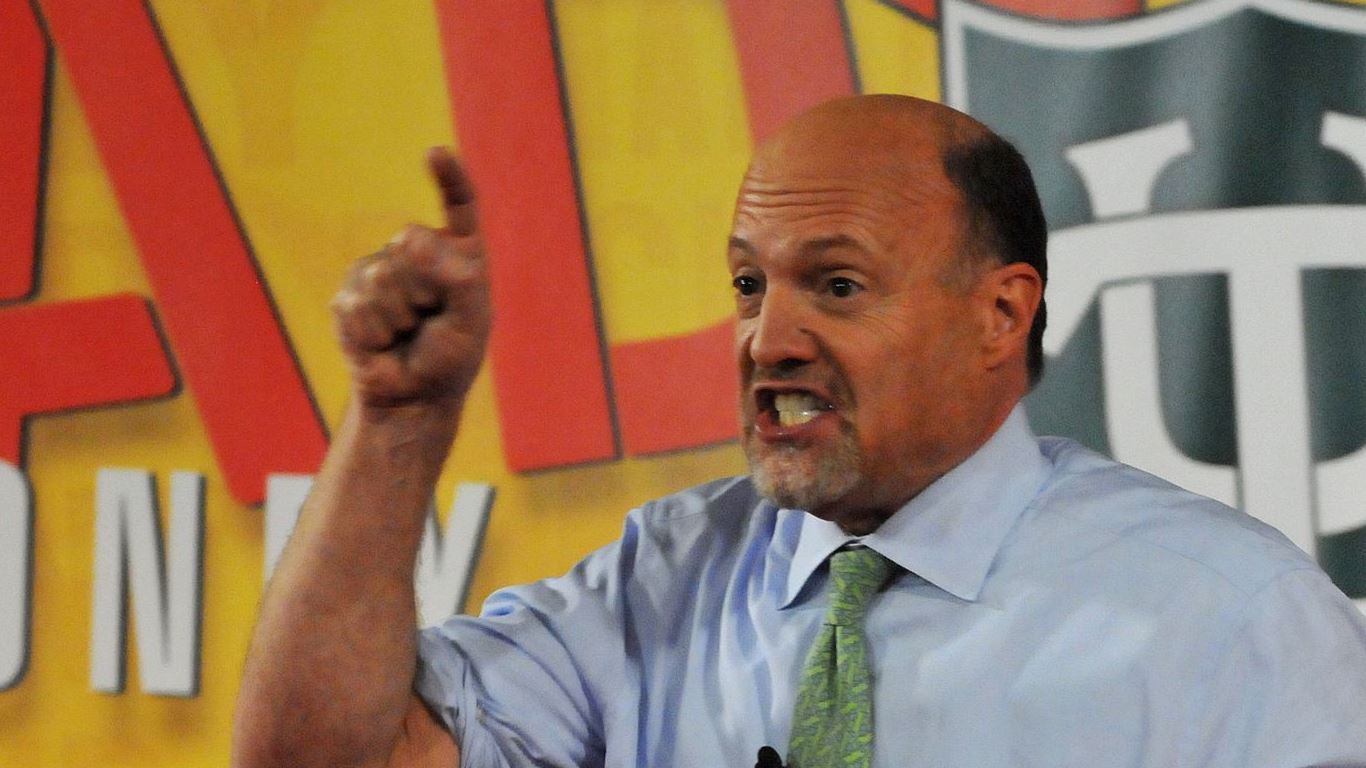
On Jim Cramer’s Mad Money on August 14, 2026, Corning (NYSE:GLW | GLW Price Prediction) Chair and CEO Wendell Weeks was asked a question that many retirement-focused shareholders have been asking themselves this year: are tariffs hurting the business? His answer was blunt.
“No. Tariffs really have de minimis impact on us and that’s because of our philosophy,” Weeks said. “You got a sense of that today in the factory we locate close to our customers because the primary way that we win is with innovation.”
The Two Numbers Behind the Claim
Weeks then offered the specific figures that anchor the argument: “So as a result, let’s take the U.S. for example. 90% of our U.S. revenue is created by U.S. origin products. Only 1% of what we sell in the United States we make in China. So tariffs, because of our fundamental philosophy and our values tend not to have a significant impact on us.”
Those two figures, attributed to Weeks on the broadcast rather than to a formal company disclosure, are the spine of the case. If 90% of what Corning sells into the United States is made in there, and only 1% of U.S. sales originate from Chinese factories, the surface area exposed to Section 301 duties and the ongoing U.S.-China trade friction is narrow by construction.
A Strategy That Wasn’t Designed as a Tariff Hedge
The mechanism Weeks described predates the current tariff cycle. Corning has long placed plants near its largest customers and competed on product innovation rather than low-cost labor arbitrage. That posture shows up in the current customer roster: the Kentucky facility producing 100% of iPhone and Apple Watch cover glass, the Nvidia partnership to expand U.S. optical connectivity manufacturing, and the Amazon multi-billion-dollar agreement for U.S. data center fiber, cable, and connectivity. A footprint built for proximity to customers happens to also insulate the company from import duties.
The Gap Between the Stock and the Thesis
Cramer’s question was premised on tariffs weighing on the stock even as the underlying business seemed unaffected. The price data reflects that tension. Corning opened at $169.74 as of August 17, 2026, up 9.6% over the prior month, but still up 93.4% year to date and 158.8% over the past year.
The Q2 numbers back Weeks’ operational confidence. Core EPS of $0.78 beat consensus of $0.75, Optical Communications revenue rose 32% year over year to $2.07 billion, and core operating margin expanded 190 basis points to 20.9%. Guidance called for Q3 core EPS of $0.85 to $0.89, roughly 28% growth.

For investors weighing tariff risk against fundamentals, the CEO drew the line clearly. Whether the market accepts 90% and 1% as the right frame is what to watch as Corning heads into Q3.


Contact [email protected] for any questions or corrections.
Trey has been an editor and author at 24/7 Wall St. for more than a decade, where he has published thousands of articles analyzing corporate earnings, dividend stocks, short interest, insider buying, private equity, and market trends. His comprehensive coverage spans the full spectrum of financial markets, from blue-chip stalwarts to emerging growth companies.
Beyond 24/7 Wall St., Trey has created and edited financial content for Benzinga and AOL's BloggingStocks, contributing additional hundreds of articles to the investment community.
Trey's editorial expertise extends across multiple publishing environments. He served as production editor at Dearborn Financial Publishing and development editor at Kaplan, where he helped shape financial education materials. Earlier in his career, he worked as a writer-producer at SVE. His freelance editing portfolio includes work for prestigious clients such as Sage Publications, Rand McNally, the Institute for Supply Management, the American Library Association, Eggplant Literary Productions, and Spiegel.
Outside of financial journalism, Trey writes fiction and has been an active member of the writing community for years, moderating workshop sessions at regional conventions.