This Is America’s Worst Car Brand
One American car brand has collapsed so completely that its parent company may never be able to save it, and a major new consumer survey just confirmed how far it has fallen.

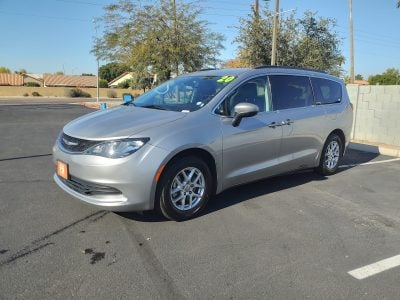
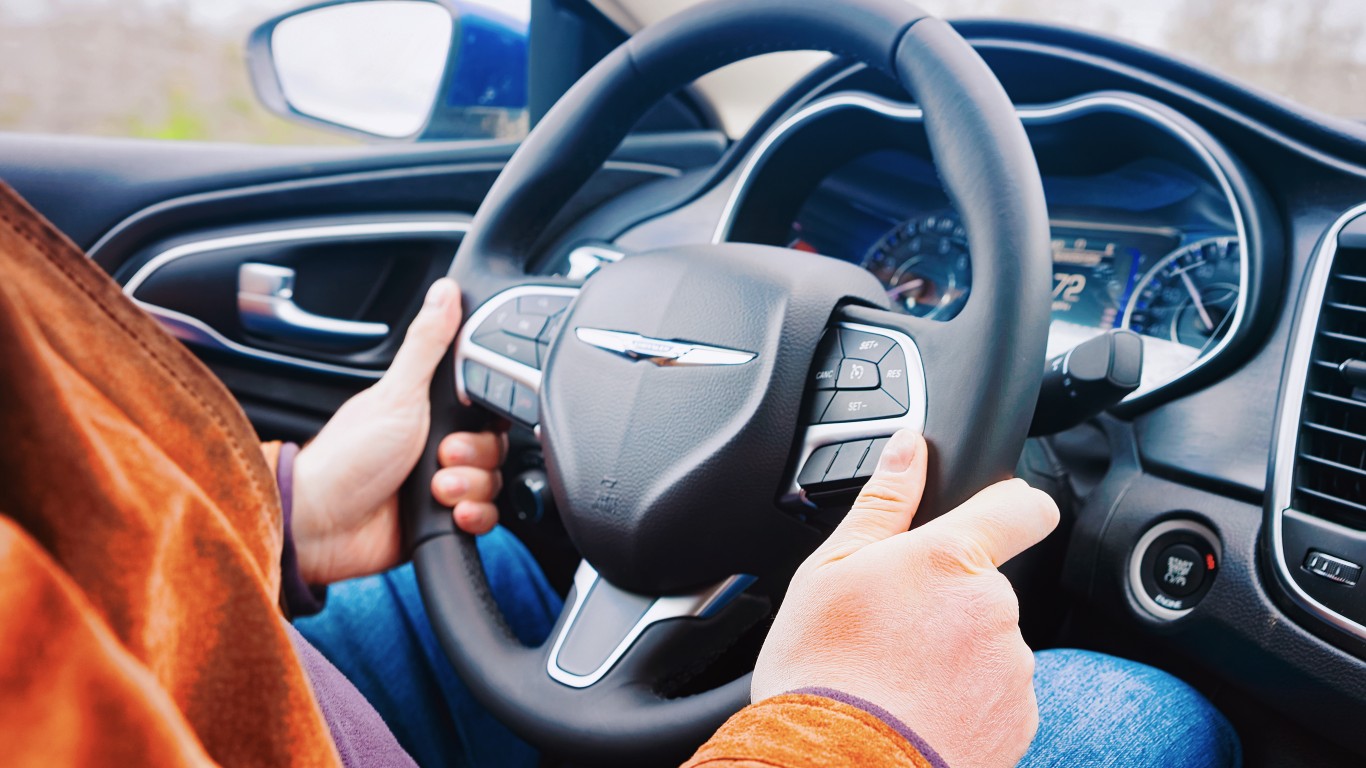
A new, widely followed survey shows that Chrysler is America’s worst car brand. Additionally, other data show that over the last several years, its sales have been declining. Its parent company wants to revive the brand, but that may be impossible.
The American Customer Satisfaction Index tracks dozens of product and service categories. These range from athletic shoes to banks to cell phones. Its most recent study is of cars and is known as the ACSI Automobile Study 2026. Its conclusions are based on 6,699 surveys that were in the field from July 2025 to June 2026.
Its auto research results are broken into two segments. One is mass market cars, and the other is luxury cars. Mass market cars include brands like Toyota (NYSE: TM | TM Price Prediction), Ford (NYSE: F), and Chevy. Luxury cars include auto brands like Mercedes, BMW, and Cadillac.
Both segments consider comfort, driving performance, safety, dependability, exterior and interior appearance, mobile apps, websites, technology, driving distance, and trade-in value.
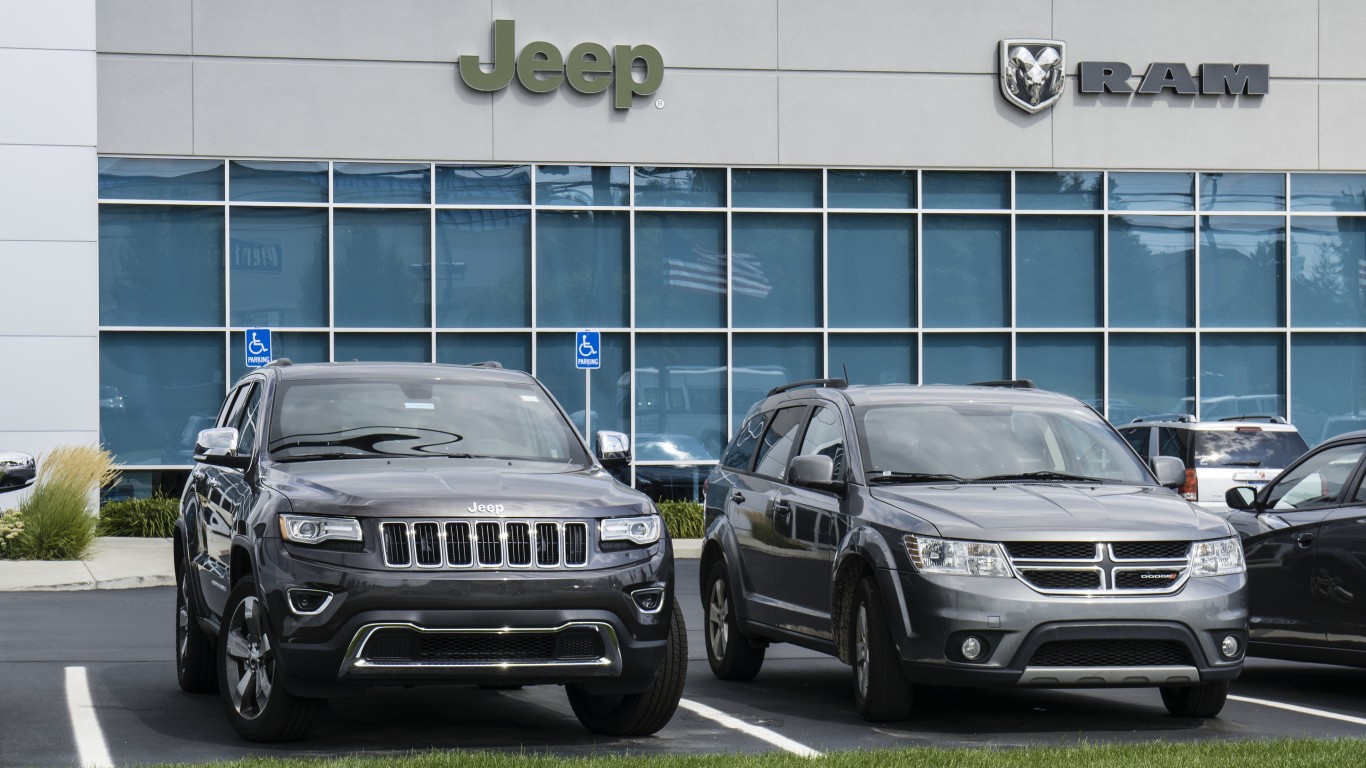
The Automobile Study included 16 mass market brands that were rated on a scale of 1 to 100. The average score among these was 78. At the bottom, Chrysler’s score was 67. The brand is owned by Stellantis (NYSE: STLA). It also owns Jeep, Ram, and Dodge. Each of these also scored poorly.
At the top of the mass market brand list, Toyota had a score of 83. Japan’s largest car company often does well in research about brand quality. Subaru was second at 81. It also typically posts high scores in other research.
Chrysler has several problems. One is the number of models it has. The other is that its sales have been plunging. According to CNBC, “The Chrysler brand sold nearly 600,000 vehicles in 2005. In 2024, it sold fewer than 125,000 — an 80% decline in two decades.” One theory about why this has happened is that Stellantis has not made any investment in the brand and its product lineup.
There was a time when Chrysler was one of America’s Big Three car companies, along with Ford and GM (NYSE: GM). Today, it sells only two minivans, which are the Pacifica and Voyager.
Stellantis says it wants to turn Chrysler around. That would be nearly impossible. It would have to greatly expand its product lineup to include traditional SUVs and most likely sedans. SUVs would put it in competition with Stellantis’ Jeep brand. Pickups would put it in competition with its Ram brand.
For the time being, there is no reason to think Chrysler will do better. It has fallen apart so severely that a reset would cost billions of dollars. Stellantis has 15 other brands to attend to.
Contact [email protected] for any questions or corrections.
Douglas A. McIntyre is the co-founder, chief executive officer and editor in chief of 24/7 Wall St. and 24/7 Tempo. He has held these jobs since 2006.
McIntyre has written thousands of articles for 24/7 Wall St. He is an expert on corporate finance, the automotive industry, media companies and international finance. He has edited articles on national demographics, sports, personal income and travel.
His work has been quoted or mentioned in The New York Times, The Wall Street Journal, Los Angeles Times, The Washington Post, NBC News, Time, The New Yorker, HuffPost USA Today, Business Insider, Yahoo, AOL, MarketWatch, The Atlantic, Bloomberg, New York Post, Chicago Tribune, Forbes, The Guardian and many other major publications. McIntyre has been a guest on CNBC, the BBC and television and radio stations across the country.
A magna cum laude graduate of Harvard College, McIntyre also was president of The Harvard Advocate. Founded in 1866, the Advocate is the oldest college publication in the United States.
TheStreet.com, Comps.com and Edgar Online are some of the public companies for which McIntyre served on the board of directors. He was a Vicinity Corporation board member when the company was sold to Microsoft in 2002. He served on the audit committees of some of these companies.
McIntyre has been the CEO of FutureSource, a provider of trading terminals and news to commodities and futures traders. He was president of Switchboard, the online phone directory company. He served as chairman and CEO of On2 Technologies, the video compression company that provided video compression software for Adobe’s Flash. Google bought On2 in 2009.