Want $11,000 a Year on $100K? This Fund Owns the Lenders Banks Won’t Compete With
SGOV investors are watching their monthly payouts shrink with every Fed cut, and a rival ETF operating in a corner of credit that banks have largely abandoned is paying out at a rate that makes the T-bill math look almost…


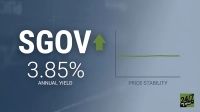
Holders of the iShares 0-3 Month Treasury Bond ETF (NYSE:SGOV) are collecting whatever the front end of the Treasury curve pays and nothing more. That is the point of SGOV: park cash, sleep at night, earn what T-bills earn. With the 4-week bill at 3.7% and the 13-week at 3.85%, a $100,000 SGOV position generates roughly $3,700 to $3,900 a year in interest. For an income-focused investor who wants a real paycheck, that is thin. There is a different ETF built around lenders operating in a corner of credit that banks have largely abandoned, and it distributes at a materially higher rate.
What SGOV Does Well
Where the Ceiling Sits
The problem is the ceiling. Every Fed cut trims the SGOV payout. Over the past year, the fund’s monthly distributions have fallen roughly a fifth as rates eased. If the Fed continues cutting, SGOV income shrinks in step. For someone using this position as a long-term income sleeve rather than short-term cash storage, the reinvestment risk is real and one-directional.
The Alternative: BIZD
The VanEck BDC Income ETF (NYSEARCA:BIZD) holds publicly traded business development companies, the non-bank lenders that finance middle-market private firms after Dodd-Frank pushed banks out of that space. BDC loans are overwhelmingly senior secured and floating-rate, which anchor income to short-term benchmarks rather than long-duration ones. With credit card APRs at 20.94% and the 10-year Treasury at 4.54%, the spread BDCs earn between their funding cost and their loan yields remains wide.
The distribution math is what draws income investors. BIZD paid $1.5236 per share over the trailing 12 months, at a current price of $12.47. That works out to a double-digit distribution yield, and a $100,000 position sized at recent quarterly payouts would generate income in the ballpark of the headline $11,000 figure. Full-year 2024 distributions were $1.8190, and 2025 came in at $1.6708, so the payout has compressed modestly as base rates have fallen, but it has never approached SGOV’s range.
The Tradeoffs, Stated Plainly
This is not a like-for-like swap. BIZD carries equity-like drawdown risk. Its one-year total return is -15.33%, and it is down 6.7% year-to-date, even as it continues to distribute. SGOV returned 3.87% over the same year, with essentially no volatility. Over five years, BIZD is up 25.3% in price, plus distributions, so the total return has been meaningfully positive, but the ride is nothing like that of a T-bill fund. (For readers weighing how much of a portfolio should chase yield, the Paycheck Portfolio Method framework offers a useful lens.)
Two more items deserve flags. BIZD’s headline expense ratio understates its true cost because the underlying BDCs pass through acquired fund fees, which historically push the all-in cost well above 10%. And BIZD distributions are largely ordinary income, unlike SGOV’s Treasury interest, which is exempt from state tax. In a taxable account, that gap narrows the net advantage.
How to Approach the Switch
A wholesale move from SGOV to BIZD swaps a cash-equivalent for a credit-cyclical equity position. A more measured path is to size BIZD as an income sleeve alongside, not in place of, short-Treasury holdings. Investors sensitive to drawdowns can scale in during periods of BDC discount to net asset value rather than at par. In taxable accounts, holding BIZD in an IRA or Roth avoids the ordinary-income drag; SGOV’s state-tax exemption often makes it the better choice in taxable accounts regardless.
Weighing the Two Roles
For genuine short-term cash holdings, SGOV continues to perform. If it is long-duration income capital sitting in short bills because you have not found something better, BIZD offers roughly triple the current yield in exchange for credit risk, NAV volatility, and less favorable tax treatment. The right answer depends on which of those two jobs your money is actually doing.
Contact [email protected] for any questions or corrections.
David Beren has been a Flywheel Publishing contributor since 2022. Writing for 24/7 Wall St. since 2023, David loves to write about topics of all shapes and sizes. As a technology expert, David focuses heavily on consumer electronics brands, automobiles, and general technology. He has previously written for LifeWire, formerly About.com. As a part-time freelance writer, David’s “day job” has been working on and leading social media for multiple Fortune 100 brands. David loves the flexibility of this field and its ability to reach customers exactly where they like to spend their time. Additionally, David previously published his own blog, TmoNews.com, which reached 3 million readers in its first year. In addition to freelance and social media work, David loves to spend time with his family and children and relive the glory days of video game consoles by playing any retro game console he can get his hands on.