Move Over, Micron: Expert Predicts New Industry Will Soon Have Microsoft, Amazon, and Data Centers Over a Barrel
One investor says natural gas is about to do to Microsoft and Amazon what memory chip shortages did to cloud giants, and the squeeze could arrive within six months.


Matt Smith, a Limited Partner at Chronometer Partners, recently appeared on the Invest Like the Best podcast with a provocative prediction: natural gas is about to become the biggest bottleneck to the AI buildout, and counterparty risk in gas is being severely underestimated. “Counterparty risk isn’t something we’ve really talked about during the last couple of years in the AI boom,” he stated.
Smith reached for a memory-market analogy that lands directly on hyperscalers like Microsoft (NASDAQ:MSFT | MSFT Price Prediction) and Amazon (NASDAQ:AMZN). “Imagine being short memory a year ago or 18 months ago and finding out all of a sudden you’re short memory. That is what this natural gas market looks like to us, not 2 years out, but 6+ months out,” he asserted. The nod is to how Micron Technology (NASDAQ:MU) chip tightness became a real cost line for cloud giants.
Smith argues that natural gas could become “20, 30, or 40% of their cost of doing business” for hyperscalers at the exact moment they’re hitting escape velocity on AI profitability. He’s skeptical of fuel-cell alternatives: “We are very cynical whether you can deploy fuel cells at scale because there isn’t the gas in the system to power those 24/7, 365.”
If the thesis plays out, producers, pipelines, and export terminals hold the leverage. Here are five names and two ETFs that could be interesting.
The Producer Squeeze
EQT Corporation (NYSE:EQT) is the largest U.S. gas producer and just announced a 10-year supply deal for a 2-gigawatt power generation facility in West Virginia. EQT stock trades at a P/E ratio of 9x with an analyst target of $67.16, though EQT shares are down 7% year to date (YTD) and EQT Corporation just posted a Q2 2026 earnings miss.
Expand Energy (NASDAQ:EXE) is the largest low-cost U.S. gas producer post the Southwestern merger. Expand Energy’s Q1 2026 revenue rose 100% year over year (YoY), and Expand Energy signed a 20-year LNG (liqued/liquefied natural gas) deal with Delfin FLNG starting 2031. Expand Energy stock is down 19% YTD, reflecting gas price sensitivity.
Antero Resources (NYSE:AR) sells 2.3 Bcf/d (billion cubic feet per day) along the LNG fairway and is the largest U.S. producer-exporter of NGLs (natural gas liquids). Antero Resources’ Q1 2026 EPS beat by 51%. Antero Resources stock carries realized-price risk if the LNG spread compresses.
The Pipeline and Export Chokepoints
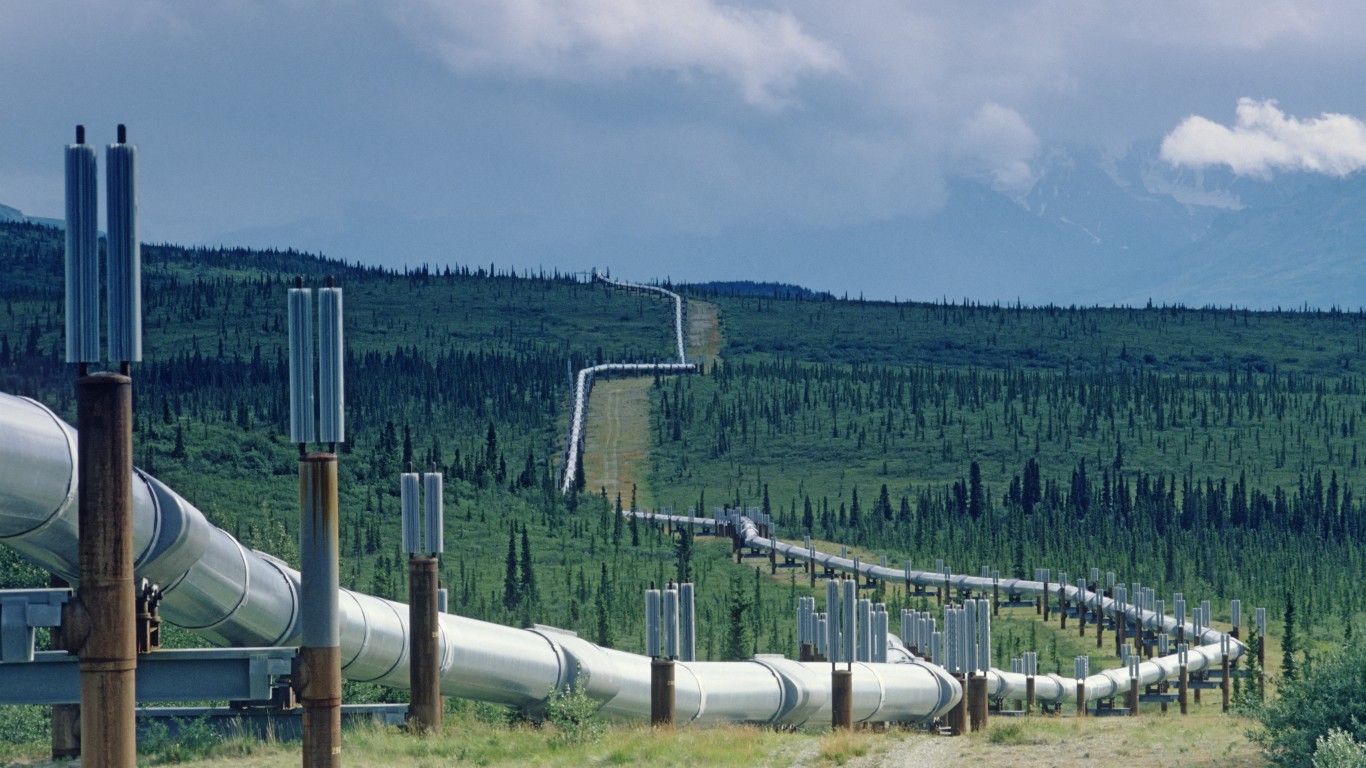
Williams Companies (NYSE:WMB) moves roughly a third of U.S. gas and is executing over $7 billion of power-innovation capital, including the 682 MW Project Neo behind-the-meter build and the Aristotle pipeline for Ohio data centers. Williams Companies stock is up 24% YTD, and Williams shares trade at a P/E ratio of 33x, reflecting a lot of good news.
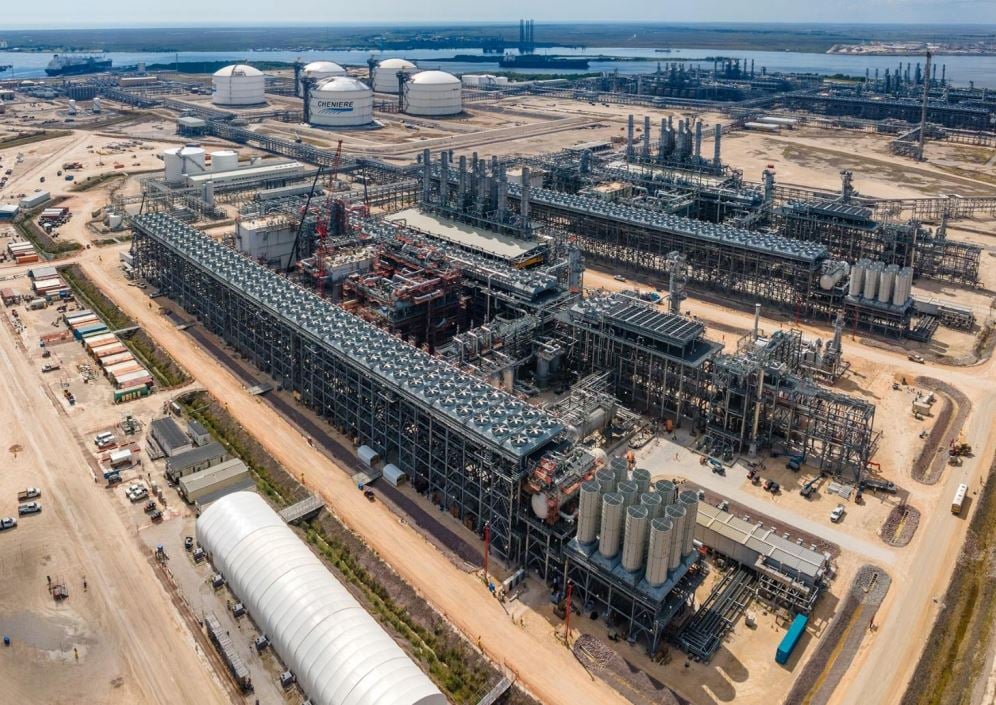
Cheniere Energy (NYSE:LNG) is the largest U.S. LNG exporter and just raised FY2026 EBITDA guidance to $7.25 billion to $7.75 billion. Cheniere Energy stock is up 36% YTD, with over 40 mtpa (million tonnes per annum) of new capacity in permitting. Permitting delays and long-lead construction are the main risks.
Two ETFs With Warnings Attached
The United States Natural Gas Fund (NYSEARCA:UNG) tracks gas futures directly. The fund suffers from contango and negative roll yield that erode returns even when spot prices rise, making it better for short-term views than long holds.
The ProShares Ultra Bloomberg Natural Gas ETF (NYSEARCA:BOIL) is a 2x leveraged fund with roll drag and daily-reset compounding decay, making it a short-term trading tool rather than buy-and-hold. Gas swings violently: the Henry Hub spot peaked at $30.72/MMBtu (one million British thermal units) on January 23 before normalizing near $2.83/MMBtu by July 13.
The Bottom Line
Smith’s “6+ months out” timeline remains a prediction with inherent timing uncertainty. Producers carry commodity, weather, and execution risk, and the leveraged ETF can lose value quickly even if the broad thesis is right.
The EIA projects U.S. LNG export capacity climbing to 27.7 Bcf/d by 2030 while data centers could hit 12% of U.S. electrical demand by 2028. That supply-demand math is what Smith is leaning on.
Investors interested in the theme could watch how hyperscaler capex disclosures reference gas supply and whether producers layer on more long-dated power-gen contracts. Given the volatility involved in gas exposure, traders should consider keeping their position sizes modest.
Contact [email protected] for any questions or corrections.
David Moadel is financial writer specializing in stocks, ETFs, options, precious metals, and Bitcoin. David has written well over 1,000 articles for leading online publications, helping investors understand markets, income strategies, and risk.His work has appeared in The Motley Fool, InvestorPlace, U.S. News & World Report, TipRanks, ValueWalk, Benzinga, Market Realist, TalkMarkets, Finmasters, 24/7 Wall St., and others.With a master’s degree in education, David has taught at the elementary, high school, and college levels. That teaching background shapes his writing style: clear, educational, and practical. David has also built a loyal social-media audience by providing trustworthy financial content on YouTube, X/Twitter, and StockTwits.