




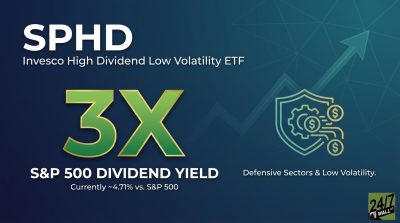
Invesco S&P 500 High Dividend Low Volatility ETF (NYSEARCA:SPHD) screens the S&P 500 for the highest-yielding names, then filters for the lowest realized volatility, producing a portfolio built for shallower drawdowns and steady monthly checks. The fund currently yields 4.4%, slightly above the 4.2% baseline, and trades near $52. The question: is that income stream durable, and does SPHD actually cushion portfolios when markets sell off?
How SPHD Generates Its Income
Those defensive sectors make up roughly two-thirds of the fund, which is why SPHD carries a beta of 0.60. A beta that low means SPHD historically moves about 60 cents for every dollar the broader market moves.
Monthly payments have climbed steadily. The June 2026 distribution was $0.2106 per share, and the trailing 12-month total sits at $2.33. Full-year 2025 payouts totaled $1.97, up from $1.61 in 2024. That reflects both higher underlying dividends and an annual rebalance that rotated into fatter-yielding names.
Where the Income Actually Comes From
The top five weights concentrate the income story: Healthpeak Properties near 3.7%, Altria Group near 3.6%, Kraft Heinz near 3.2%, Verizon near 3.1%, and Pfizer near 2.8%. Altria and Verizon are proven cash-flow machines with decades of uninterrupted distributions, and Pfizer generates enough free cash flow to cover its payout even through pipeline transitions. Kraft Heinz cut its dividend in 2019 and runs a payout ratio that leaves less cushion than the others. Healthpeak, a healthcare REIT, is required by REIT rules to distribute most of its taxable income, so its dividend safety hinges on occupancy and rent trends.
At the fund level, the aggregate payout ratio sits near 73%. That means the average holding sends nearly three of every four earnings dollars back to shareholders, which is elevated but not extreme for a portfolio built from mature, cash-generative businesses. The top 10 holdings account for about 30% of assets, so a dividend cut from one of the largest names would sting but not break the distribution.
Total Return Versus the Broader Market
Over five years, SPHD returned about 47% against SPY’s roughly 71%. SPHD trails in bull markets, the price paid for a lower-beta portfolio, and the yield partially closes that gap for income-oriented holders.
The 10-year Treasury yields nearly 4.6%, modestly above SPHD’s payout. Investors accepting equity risk here are doing so for dividend growth and price appreciation, not a yield premium over risk-free bonds. Payments have grown roughly 40.5% recently, which supports accepting that spread.
The Verdict on SPHD’s Distribution
Contact [email protected] for any questions or corrections.
















 Top Gaining Stocks
 Top Losing Stocks